
RFK Jr. at HHS: A Year of Controversy and Change
Science1 views

RFK Jr. at HHS: A Year of Controversy and Change

D

Dr. Emily Roberts

Staff Writer

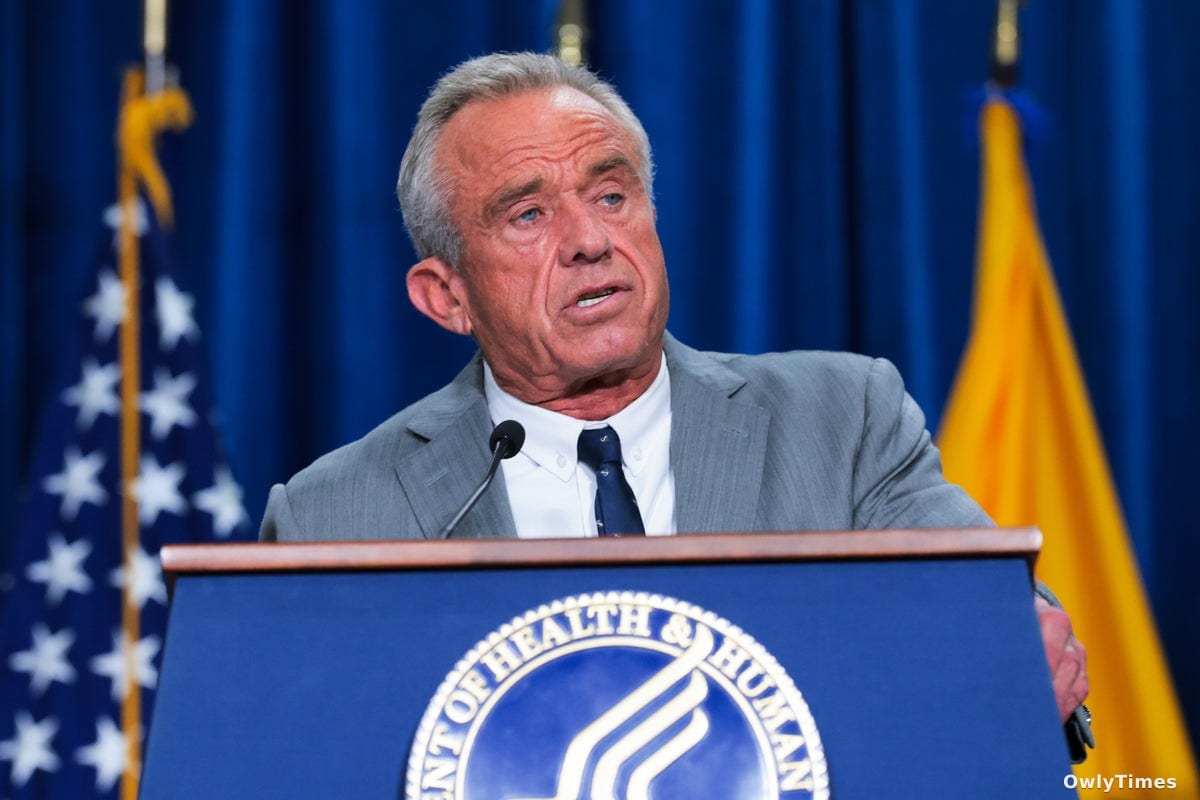
Just a year ago this week, the U.S. Senate confirmed Robert F. Kennedy, Jr., a vocal critic of vaccines and an environmental attorney, to lead the sprawling $1.7 trillion Department of Health and Human Services. The confirmation vote unfolded along strict party lines, tallying 52 in favor to 48 against, with Senator Mitch McConnell of Kentucky, a polio survivor, casting the sole Republican dissenting vote. Prior to his confirmation, Kennedy had made several sworn pledges to the Senate, including commitments to refrain from dismissing competent personnel and to champion transparency within the department. He also expressed support for vaccines and a standardized childhood immunization schedule, alongside a dedication to “pro-good science.”

However, health experts contend that Kennedy’s actions since assuming office have sharply diverged from these initial assurances. His tenure at HHS has witnessed a significant reduction in the recommended childhood vaccine schedule, now protecting against 11 diseases instead of 17. This shift has been accompanied by the dismissal of thousands of public servants, many of whom are scientists, and a replacement of established scientific protocols at agencies like the Centers for Disease Control and Prevention, the Food and Drug Administration, and the National Institutes of Health with what scientists describe as misleading “gold-standard” directives. Furthermore, judicial rulings have blocked attempts to curtail departmental funding, deeming them unlawful.

Secretary Kennedy has articulated his broader objectives to both Congress and the public. In a September address before a Senate panel, he outlined his vision as “enacting a once-in-a-generation shift from a sick care system to a true health care system that tackles the root causes of chronic disease.” His “Make America Healthy Again” (MAHA) agenda, now closely aligned with President Donald Trump’s “Make America Great Again” movement, positions Kennedy at the forefront of a novel and unconventional American political alliance, uniting a distrust of scientific consensus with deep-seated skepticism toward the medical and food industries. A recent KFF survey indicates that approximately four in ten parents express support for the MAHA movement.

“Who could object to the fundamental aim of ‘Making America Healthier Again’? Parents naturally desire healthier lives for their children,” remarked Sandro Galea, dean of the Washington University in St. Louis School of Public Health and author of Within Reason: A Liberal Public Health for an Illiberal Time. While many of the MAHA movement’s goals—including bolstering stagnant U.S. life expectancy, improving childhood health, and addressing overmedicalization—are shared by public health professionals, Galea cautioned that “some of its ideas, frankly, will ultimately prove detrimental.” He specifically cited Kennedy’s decisions regarding vaccines as likely to trigger outbreaks and the resurgence of preventable infectious diseases like measles. “We haven’t witnessed an HHS tenure quite like this in our lifetimes,” Galea stated.

HHS serves as a crucial social insurance pillar for the U.S., alongside its roles in medical research and public health. The agency oversees vital programs like Social Security, Medicare, and Medicaid, as well as the FDA, CDC, and NIH. Despite the recent turbulence, many core functions of HHS continue uninterrupted: monthly payments reach nearly 75 million recipients through Social Security, Supplemental Security Income, or both; one in five Americans receives Medicaid coverage; and the Affordable Care Act, administered by the department, remains accessible to over 24 million individuals nationwide, even amidst Trump administration efforts to reduce health insurance and food assistance. In February, Kennedy announced a $100 million pilot program to provide outreach, medical treatment, and support to homeless individuals and those struggling with substance use disorders in eight cities—a bipartisan response to the ongoing overdose crisis.

This initiative, however, followed layoffs within the HHS’s Substance Abuse and Mental Health Services Administration and the abrupt cancellation and subsequent reinstatement of $2 billion in funding for its programs in January. Such fluctuations have become commonplace at HHS under Kennedy’s leadership. During his first year, he dismissed his own appointed CDC director, linked Tylenol to autism with scant evidence, and controversially suggested allowing bird flu to “run through” poultry flocks—a proposal experts warn could inflate chicken prices and accelerate viral spread. In total, the agency experienced the departure of over 17,000 civil servants through firings and resignations in 2025, including numerous scientific leaders at the FDA, CDC, and NIH. An HHS spokesperson defended Kennedy’s personnel reductions as necessary to eliminate “bloated bureaucracies that were long overdue.”

During the September Senate hearing, Kennedy accused a critical lawmaker of “unfounded assertions” and was observed using his mobile phone while another senator spoke. “We are questioning the efficacy of vaccines,” stated Senator Bill Cassidy of Louisiana, the physician chair of the Senate health committee. Kennedy countered, “You are mistaken,” referencing Cassidy’s crucial Republican vote in support of his confirmation last February.

“He projects an image of a privileged, entitled individual,” observed Georges Benjamin, executive director of the American Public Health Association, whose organization called for Kennedy’s resignation in April following the widespread layoffs at the CDC, FDA, and other health agencies. “He is demonstrably out of his depth in this role, lacking experience and training in the areas he is impacting, and causing considerable harm.”

Kennedy’s history with vaccines is well-documented. He served on the board of the antivaccine nonprofit Children’s Health Defense (formerly the World Mercury Project) from 2015 until 2024, an organization that has spearheaded numerous lawsuits against vaccine manufacturers. This stance proved strategically advantageous in the post-pandemic political landscape, appealing to Republican voters. During his confirmation hearing, Kennedy declined to disavow the unsubstantiated link between vaccines and autism, a recurring theme among groups promoting vaccine hesitancy. “Reports have suggested I am antivaccine or anti-industry,” Kennedy stated. “I am neither; I am pro-safety.” He clarified that his definition of safety centers on his own judgment.

The FDA’s former top vaccine official, Peter Marks, resigned in March, citing Kennedy’s preference for “subservient confirmation of his misinformation and lies” over truth and transparency. Marks had previously resisted political pressure to expedite COVID-19 vaccine approvals without rigorous safety testing. An HHS official asserted that Marks “has no place at FDA” due to his opposition to the secretary’s efforts to “restore science to its golden standard and promote radical transparency.”

In May, Kennedy removed COVID-19 vaccines from the list of recommended shots for healthy pregnant adults and children without consulting CDC safety panel experts. Subsequently, he dismissed those experts and replaced them with individuals described by scientists as unqualified and ideologically opposed to vaccination. He then redirected $500 million in funding from mRNA vaccine research aimed at combating COVID-19 and influenza, falsely claiming their effectiveness had diminished as viruses evolved. This action was followed by the dismissal of Susan Monarez, the then-CDC chief and a microbiologist, who refused to endorse the panel’s votes, which she characterized as “newly filled with people who have publicly expressed antivaccine rhetoric” in a Wall Street Journal op-ed.

Kennedy later claimed Monarez had deemed him “untrustworthy,” a denial she offered in Senate testimony. “The question before us is whether we will uphold our commitment to our children and grandchildren—ensuring their safety from diseases we fought so hard to eradicate: polio, measles, diphtheria, whooping cough, and many others,” Monarez stated at the September 17 Senate hearing. “Undoing that progress would not only be reckless—it would be a betrayal of every family that trusts us to protect their health.”

In December, Kennedy’s newly formed vaccine panel voted to discontinue recommending hepatitis B vaccination for all newborns, a disease responsible for 1.1 million deaths worldwide in 2022. HHS subsequently reduced the number of recommended childhood vaccine shots to protect against 11 diseases instead of 17, basing the decision on the practices of Denmark, a nation with a relatively small and homogenous population and universal publicly funded healthcare. Most recently, the vaccine panel chair, a cardiologist, informed POLITICO that the panel’s focus this year will be on examining vaccine side effects rather than its traditional mission of assessing vaccine effectiveness.

Kennedy’s rhetoric has also extended to the wellness sphere. “I observe children traversing airports today..., and I see these kids burdened by mitochondrial challenges,” Kennedy remarked in August at a Texas “Make America Healthy Again” state-law-signing ceremony. Ashish Jha, formerly the Biden administration’s pandemic response coordinator, dismissed this as “wacky, flat-earth voodoo stuff” on X (formerly Twitter). However, for Kennedy’s MAHA supporters, it likely resonated. Concerns about mitochondria have transitioned from a niche area of medical research to a cornerstone of the trillion-dollar wellness industry, which embraces medical “freedom” alongside exercise, vitamins, and the assertions of influencers like Casey Means, Trump’s nominee for surgeon general, who attributes many chronic diseases to “mitochondrial dysfunction.”

In May, at a Senate Finance Committee hearing, Kennedy called for an end to genetic research into the causes of autism, suggesting instead that “environmental toxins” were the primary culprit. Kennedy frequently asserts that there is an “autism epidemic,” though the recent rise in cases is largely attributable to improved diagnostic practices.

A MAHA commission report released by HHS in September reflected the movement’s characteristic blend of genuine concerns—such as rising childhood obesity and illness—with Kennedy’s “pet peeves and scientifically dubious claims that fail to address the root causes of poor health in children,” according to Peter Lurie of the Center for Science in the Public Interest. Alongside calls for research on the effects of cell-phone signals on health and vaccine injuries, the report downplayed investigations into pesticides and the food industry, disappointing some environmental advocates.

In September, Kennedy echoed Trump’s suggestion that Tylenol use during pregnancy causes autism—another belief embraced by the wellness industry—despite weak evidence. Scientists caution that if a link exists, it may be attributable to the fevers and infections Tylenol is intended to treat, rather than the medication itself. Nevertheless, HHS initiated proceedings to add a warning to the pain reliever’s label.

January’s revision of U.S. nutrition guidelines from HHS also incorporated elements of the wellness movement, advocating for the consumption of “real food” such as beets, strawberries, and beans—foods endorsed by wellness nutritionists and, apparently, Mike Tyson, who promoted the changes in a Super Bowl commercial. The guidelines embrace whole milk and red meat despite decades of research linking saturated fat to heart disease.

These recommendations align with a pattern in Kennedy’s actions, Benjamin says. “I see him as a sort of environmental purist,” rejecting conventional medicine in a manner akin to his past opposition to pollution as an environmental lawyer. Fatty “real” foods appear less threatening within a worldview shaped by fears of “artificial” substances causing harm, even if prescription drugs like statins demonstrably reduce the risk of heart disease. “He is an advocate, and he views the world as a place for advocacy, not the balanced perspective of a scientist or physician,” Benjamin concluded.

Kennedy’s political ambitions are now intertwined with the MAGA movement. “Don’t you want a president that is going to make America healthy again?” Kennedy asked at an August 23, 2024, campaign rally in Arizona, endorsing Trump. During Trump’s introduction of Kennedy, the former president announced his intention to release the assassination files of Kennedy’s uncle, John F. Kennedy.

Kennedy’s life has been tragically marked by the deaths of his father and uncle. His alignment with Trump followed an attempted assassination of Trump on the campaign trail. His famous political family’s rejection of his Trump endorsement, described as a “betrayal” by his brother, Maxwell Taylor Kennedy, further underscores his unique legacy.

“RFK, Jr., certainly possesses his own goals and ideology that overlap with Trump’s and are also distinct,” observed Pamela Herd of the University of Michigan’s Gerald R. Ford School of Public Policy. “However, he will ultimately be constrained by the parameters of the Trump administration.”

In essence, Kennedy represents just another politician leading a federal agency during the Trump era. He remained silent as the EPA rolled back mercury pollution regulations, despite previously criticizing such proposals in 2017. He has also yielded to the administration’s industry allies by softening calls to regulate ultraprocessed foods. Furthermore, Kennedy’s overarching goal of reversing chronic disease has repeatedly clashed with the current political landscape, as noted by Axios. By curtailing research on illness among minorities and disadvantaged populations, he undermined efforts to address diabetes, heart disease, cancer, and COVID-19. In an interview with ABC News, Kennedy asserted that administration funding cuts at federal agencies were “not affecting science,” yet more than 3,800 grants were ultimately terminated or frozen at NIH and the National Science Foundation.

During a December campaign-style briefing at HHS headquarters, Kennedy announced sweeping plans to restrict gender-affirming care for U.S. minors, recognizing political activists and conservative politicians in his opening remarks. Gender-affirming care had not previously been a focus for Kennedy or the wellness industry but represents an area where the Republican party sees a strategic advantage.

“The MAHA and MAGA movements are intersecting circles in a Venn Diagram,” concluded David Lewis of Vanderbilt University. Currently, these two movements form a political coalition anchored by Trump, ensuring a continued influence on American health policy. Ultimately, Kennedy’s tenure at HHS is most significantly defined by his dismissal of scientific leaders and the substitution of expertise with political activism, particularly in reshaping the childhood vaccine schedule. The politicization of science, experts warn, may prove difficult to reverse. MAHA and MAGA are now inextricably linked.

D

About Dr. Emily Roberts

Health and Science writer with a PhD in Molecular Biology. Covers medical breakthroughs and scientific discoveries.

Related Articles