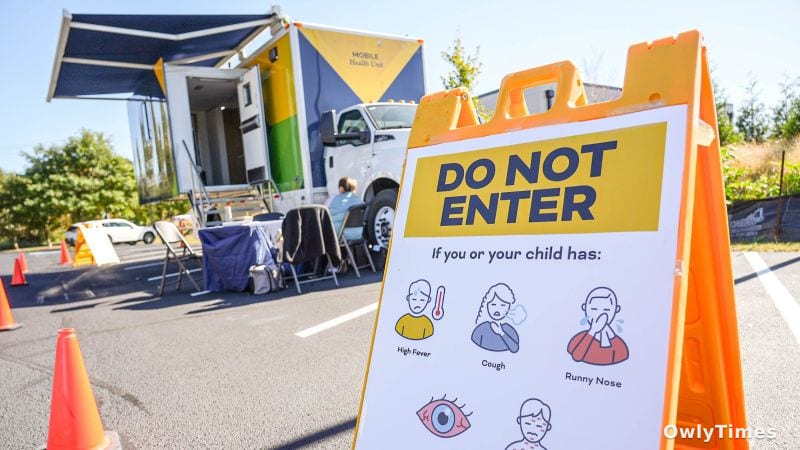

The escalating measles cases across the United States aren’t simply a return of a childhood illness; they represent a stark failure of preventative medicine and a growing public health challenge rooted in declining vaccination rates. While headlines focus on the raw numbers – over 1,100 cases reported this year as of February 26th, already six times the typical annual total – the deeper story lies in understanding why this is happening now, and what the consequences are beyond individual infections. The current surge isn’t a natural resurgence of a disease that was once contained, but a predictable outcome of eroding public trust in vaccines and the resulting gaps in community immunity.
The Centers for Disease Control and Prevention’s data, published Friday, paints a concerning picture. For every 1,000 children infected with measles, approximately one will develop encephalitis, a dangerous brain inflammation. Tragically, up to three per 1,000 will succumb to the disease. These aren’t abstract statistics; they represent real risks to children, risks that are almost entirely preventable. Last year alone, nearly 2,300 cases – the highest since 1991 – resulted in three deaths, all among unvaccinated individuals. Paul Offit, an infectious disease physician at the Children’s Hospital of Philadelphia, bluntly states the situation: “So, can we expect another death? Yes, I think we’re getting there where we can expect another death. And it is unconscionable.” This isn’t a prediction of inevitable tragedy, but a statistical projection based on the current trajectory and the known severity of the disease.
Original reporting: CNN.
The overwhelming majority – 96% – of cases this year involve individuals who haven’t received the measles-mumps-rubella (MMR) vaccine or haven’t completed the two-dose series. This isn’t a coincidence. The MMR vaccine is remarkably effective, offering approximately 97% protection against measles. The current outbreak isn’t a failure of the vaccine, but a failure to utilize it widely enough to maintain herd immunity, the indirect protection conferred when a large percentage of the population is vaccinated. More than 80% of cases are occurring in children and teens, with roughly one in four affecting children under five, highlighting the vulnerability of the youngest members of our communities.
South Carolina is currently experiencing a particularly severe outbreak, with at least 985 cases since October, centered in Spartanburg County where vaccination rates are notably low. While cases are slowing, thanks to rapid case identification and increased vaccination efforts – nearly 17,000 MMR vaccines were administered in January – the state’s epidemiologist, Linda Bell, cautions that “This is not over yet. It’s not nearly over yet.” The state is dedicating significant resources to containment, with 90 staff members and incoming support from the CDC Foundation, but the underlying issue remains: pockets of unvaccinated individuals continue to fuel transmission. The situation in South Carolina isn’t isolated; outbreaks are also simmering in Utah/Arizona and along Florida’s Southwest coast, linked to Ave Maria University.
The narrative often frames vaccine hesitancy as a personal choice, but it’s a choice with significant public health consequences. William Schaffner, an infectious disease expert at Vanderbilt University Medical Center, emphasizes the severity of measles, stating, “Measles is a fierce infection, and we should be preventing it. It can strike any healthy, normal child in its most severe fashion.” The current outbreaks are forcing healthcare systems to adapt, as evidenced by Prisma Health’s new masking policy in emergency departments and labor & delivery units in South Carolina. These measures are reactive, attempting to contain spread after it has begun, rather than proactive prevention through widespread vaccination.
Limitations to consider include the varying accuracy of case reporting across states. The Johns Hopkins University Center for Outbreak Response Innovation tracker often reports higher case totals than the CDC, suggesting potential underreporting in some areas. Furthermore, the data doesn’t fully capture the indirect costs of outbreaks – the strain on healthcare resources, the disruption to schools and workplaces, and the anxiety experienced by communities. The focus on case numbers also risks obscuring the individual suffering caused by this preventable disease.
Looking ahead, the immediate priority is to increase vaccination rates, particularly in areas experiencing outbreaks. However, simply administering vaccines isn’t enough. Public health officials need to address the root causes of vaccine hesitancy, building trust and providing accurate information to counter misinformation. The Pan American Health Organization’s upcoming determination in April regarding the continued elimination of measles in the US will be a critical moment. But beyond that decision, we need to ask ourselves: what will it take to rebuild public confidence in vaccines and ensure that future generations are protected from this dangerous, yet preventable, disease? Will we see a sustained commitment to public health infrastructure and education, or will we continue to cycle through preventable outbreaks, accepting the tragic consequences as an inevitable part of life?





