
Beyond the Headlines: Assessing a Year of Disruption at HHS
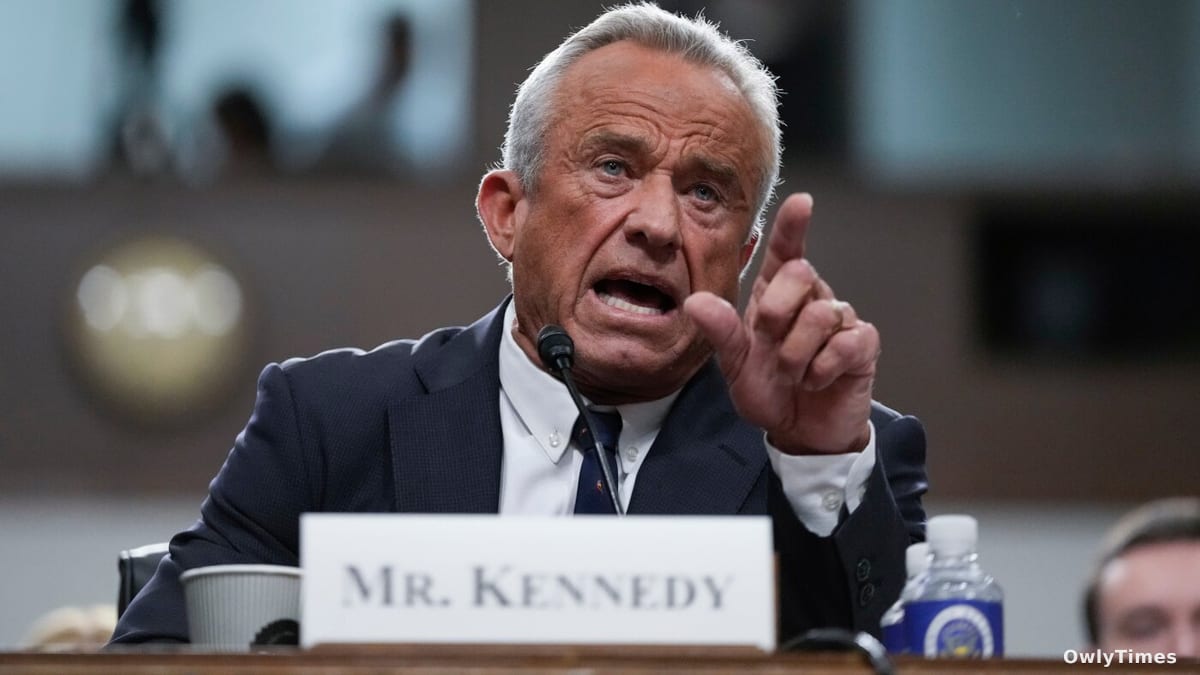
The recent editorial in The Lancet – a stark, almost unprecedented condemnation of a sitting Secretary of Health and Human Services – isn’t simply a critique of Robert F. Kennedy Jr.’s first year in office. It’s a symptom of a deeper fracture: a growing distrust in established scientific institutions, and the accelerating politicization of public health. While headlines scream “failure,” the Lancet’s assessment, and the reactions to it, reveal a complex situation where the very definition of “success” in public health is now fiercely contested. The journal doesn’t allege malfeasance in the traditional sense, but rather a systematic dismantling of decades of scientific consensus and a prioritization of ideology over evidence-based policy. This isn’t about a few policy disagreements; it’s about a fundamental challenge to the role of science in governance.
Reporting from NPR informs this analysis.
The Lancet editorial, appearing with a blank front cover save for the damning quote – “The destruction that Kennedy has wrought in 1 year might take generations to repair, and there is little hope for US health and science while he remains at the helm” – meticulously details specific actions taken under Kennedy Jr.’s leadership. These include the dismissal of agency staff, revisions to established health guidelines, cuts to research funding, and a consistent undermining of vaccine policy. It’s crucial to understand that the editorial doesn’t simply assert these actions are harmful; it frames them as a deliberate rollback of progress, potentially jeopardizing public health for years to come. The timing is particularly pointed, coinciding with a surge in measles cases – the U.S. has already surpassed 1,000 cases in 2026, threatening the nation’s “elimination status” for the disease, a status achieved through widespread vaccination. This isn’t a coincidence; the Lancet directly links Kennedy Jr.’s policies to the resurgence of preventable diseases.
However, the narrative isn’t monolithic. Kennedy Jr. himself has openly expressed contempt for mainstream medical journals, claiming they are “corrupt” and beholden to pharmaceutical interests, even suggesting government scientists might avoid publishing in them. This stance, while inflammatory, taps into a pre-existing current of skepticism towards the medical establishment, fueled by concerns about industry influence and a perceived lack of transparency. His allies, such as National Institutes of Health Director Jay Bhattacharya, echo this sentiment, framing Kennedy Jr.’s actions as “fixing the mess” created by these institutions. This highlights a key tension: the perception of a broken system, ripe for disruption, versus the potential consequences of dismantling established safeguards. It’s not simply a matter of pro-science versus anti-science, but rather competing visions of what a trustworthy public health system looks like.
It’s also vital to acknowledge the Lancet’s own history. The journal’s past publication – and subsequent retraction – of the discredited Andrew Wakefield paper linking vaccines to autism casts a shadow over its current critique. Critics are quick to point this out, arguing that the Lancet lacks the moral authority to condemn others for promoting misinformation. While this is a valid point, and a crucial reminder of the fallibility of even the most prestigious institutions, it doesn’t invalidate the specific concerns raised about Kennedy Jr.’s actions. The Lancet’s past mistake doesn’t excuse present policy decisions that demonstrably contradict established scientific consensus. It does, however, underscore the importance of rigorous self-reflection and transparency within the scientific community itself.
Looking ahead, the immediate question isn’t whether the Lancet’s assessment is “fair” or “accurate,” but rather what the long-term consequences of these policies will be. Will the cuts to research funding stifle innovation and delay progress on critical health challenges? Will the erosion of trust in vaccines lead to further outbreaks of preventable diseases? And perhaps most importantly, what will be the lasting impact on the relationship between science and government? The next steps in research should focus on quantifying the direct impact of these policy changes – tracking vaccination rates, monitoring disease outbreaks, and assessing the effectiveness of revised health guidelines. But beyond the data, we need a broader conversation about how to rebuild trust in public health, not by silencing dissenting voices, but by fostering a culture of transparency, accountability, and evidence-based decision-making. Will the upcoming 2028 election cycle bring a shift in priorities, or will the current trajectory continue, further entrenching the politicization of public health? That’s the scenario public health officials, and concerned citizens, should be watching for most closely.