
Are we really winning the war against wildlife crime with a flurry of high-tech gadgets, or are we just applying a Band-Aid to a gaping wound? The headlines trumpet record seizures thanks to AI and rapid DNA testing, but the uncomfortable truth is that trafficking in endangered species is still a $20 billion industry, and the UN admits it’s nowhere near its 2030 eradication goal. The real story here isn't the shiny new tools—it's the systemic failures that allow this devastation to continue, and whether technology can truly overcome deeply entrenched criminal networks and global demand.
For decades, conservation efforts were hampered by a lack of resources and reliance on outdated methods. Rangers patrolled vast territories with limited equipment, relying on gut instinct and often facing overwhelming odds. Now, a wave of technologies initially developed for urban security and scientific research are being repurposed for the wild, offering a glimmer of hope. In December, Interpol announced record animal seizures through Operation Thunder 2025, coordinating 134 countries and leveraging digital forensics and AI to expose trafficking networks. José Adrián Sanchez Romero, an operations coordinator at Interpol’s environmental security subdirectorate, put it plainly: “The success of Thunder 2025 shows that modern threats demand modern tools.” But a successful operation, while encouraging, doesn’t equate to systemic change. It’s a snapshot, not a solution.
This piece references the technologyreview.com report.
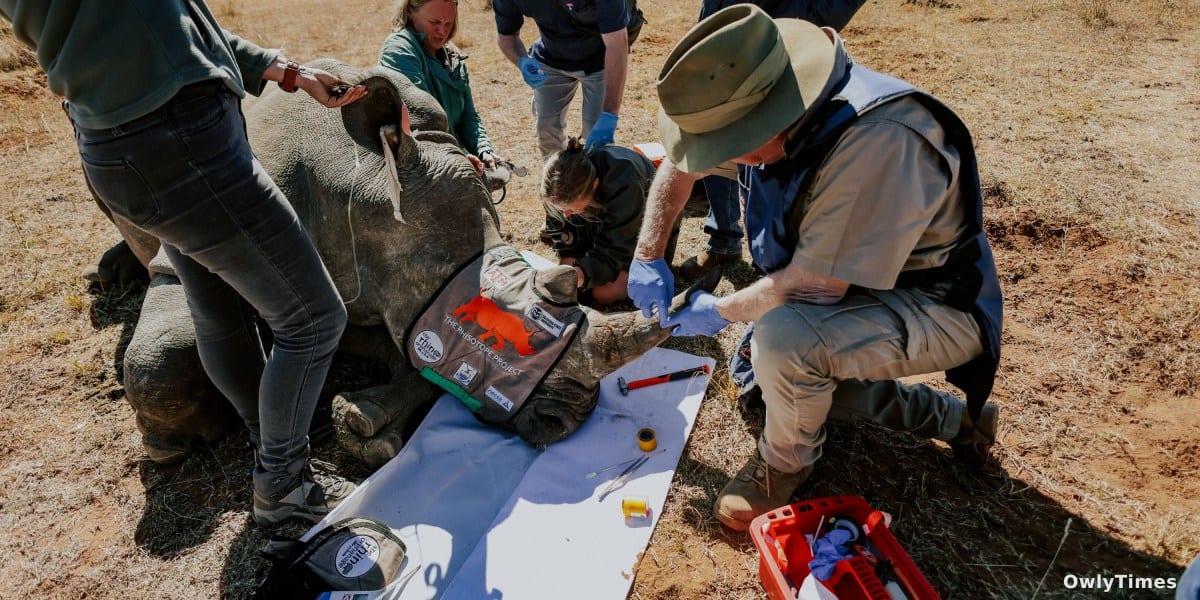
Take the Rhisotope Project, a particularly audacious attempt to deter rhino poaching. Researchers are drilling low-level radioactive isotopes into rhino horns, rendering them detectable by existing radiation portal monitors at airports and shipping terminals. The project, backed by the International Atomic Energy Agency, has shown promising results in test scenarios, even detecting a horn hidden within a 40-foot shipping container in New York. James Larkin, director of the radiation and health physics unit at the University of the Witwatersrand in South Africa, initially approached the idea with skepticism, fearing unintended consequences. But he realized a carefully calibrated dose could harmlessly deter poachers by making horns both worthless and traceable. This isn’t simply about detection; it’s about disrupting the economic incentive. A kilogram of rhino horn can fetch $60,000, but a radioactive one? Unsellable. Yet, even this innovative approach feels reactive. It addresses the symptom – poaching – rather than the root cause: demand for rhino horn in traditional medicine.
Beyond rhinos, the fight is expanding to other vulnerable species. In Australia, conservationists are using x-ray fluorescence (XRF) guns to analyze the elemental signatures in keratin – the material composing quills, feathers, and hair – to determine the origin of exotic pets. This is crucial because legal and illegal trades often run parallel. A team at Taronga Conservation Society, led by Kate Brandis, discovered over 100 illegally trafficked lizards using this technology, leading to a distributor receiving a three-year jail sentence. The XRF gun can distinguish between animals raised on diverse wild diets and those fed commercial feed, revealing whether a creature was poached from the wild or bred in captivity. This isn’t just about lizards; the technology is being adapted for cockatoos, pangolins, and turtles. But the success hinges on consistent enforcement and the willingness of authorities to act on the data. A clever tool is useless without the political will to prosecute offenders.
The ocean, a vast and largely unregulated space, presents an even greater challenge. Ted Schmitt, senior director of conservation at the Allen Institute for AI (AI2), points out that monitoring thousands of square kilometers requires more than just satellite imagery. That’s where Skylight AI comes in. Developed initially by Paul Allen and now managed by AI2, Skylight uses AI to analyze satellite and ship-tracking data, identifying suspicious behavior. In January 2025, Skylight detected 16 fishing vessels operating illegally within the Coiba Ridge marine reserve in Panama, leading to the seizure of six vessels and thousands of kilograms of illegally caught fish. The system now monitors around 300,000 vessels per week. But even with AI-powered surveillance, enforcement relies on coast guards and local authorities responding to the alerts. The technology provides the intelligence, but it’s human action that delivers results.
Finally, the ability to rapidly identify species in the field is becoming increasingly crucial. Natalie Schmitt founded WildTechDNA to develop a DNA test that’s as easy to use as a home pregnancy test. This allows enforcement officers to quickly determine whether a shipment contains illegally trafficked species, like European eels, which are often mislabeled. A “nationwide European eel blitz” in Canada, utilizing WildTechDNA’s tests, significantly reduced the detection rate of illegal eels. The speed and simplicity of the test are game-changers, particularly in countries lacking sophisticated laboratory infrastructure. But the test’s effectiveness depends on widespread adoption and ongoing refinement to detect emerging threats.
These technological advancements are undeniably promising, but they’re not a silver bullet. They’re tools, and like any tool, their effectiveness depends on how they’re used. The underlying issues – poverty, corruption, and insatiable demand – remain largely unaddressed. We’re building a better alarm system while the house is still on fire.
Here’s what to watch for: in the next two years, will we see a significant shift in funding away from simply deploying more technology and towards addressing the socioeconomic factors driving wildlife crime? Specifically, will governments and NGOs prioritize supporting local communities in protecting their natural resources and providing alternative livelihoods to those involved in poaching and trafficking? If the answer is no, then all the AI, rapid DNA tests, and radioactive isotopes in the world won’t be enough to save endangered species from extinction.