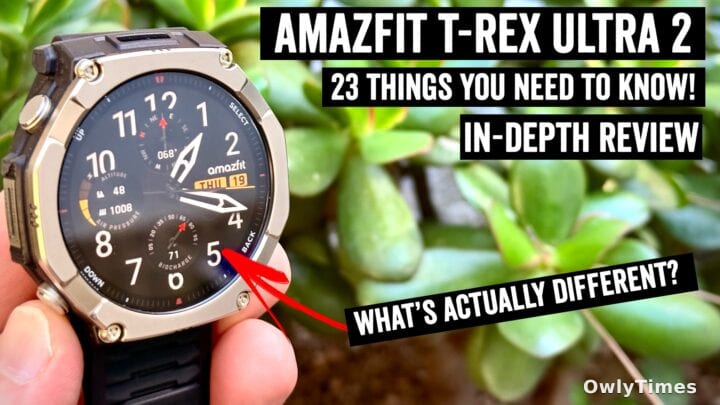

Is anyone actually surprised anymore? Another day, another incremental upgrade in the wearable tech space, and another round of promises that fall just short of delivery. Amazfit just dropped the T-Rex Ultra 2, and the headline isn’t groundbreaking innovation – it’s “bigger battery.” The real story here isn’t a leap forward in fitness tracking, it’s the increasingly desperate scramble to justify another purchase in a market already saturated with perfectly functional devices. We’re not solving problems, we’re just adding features, and hoping someone, somewhere, will feel compelled to upgrade.
The Pursuit of Battery Life: A Familiar Obsession
Let’s be clear: the T-Rex Ultra 2 is, as DC Rainmaker points out in his video review, largely a beefed-up version of last fall’s T-Rex 3 Pro. The core appeal is a larger battery, and the marketing leans hard into that. We’re talking about a watch that aims to stretch its runtime to ridiculous lengths – a claim that, predictably, requires a lot of asterisks. Real-world testing, as detailed in the review, reveals the usual caveats: GPS usage, screen brightness, and feature activation all take a hefty toll. This isn’t a revelation; it’s the fundamental trade-off of wearable tech. More features, more power draw. The question isn’t if the battery will last, but how your usage patterns will impact that longevity. For the average user – someone who isn’t embarking on multi-day expeditions – the difference between the Ultra 2 and its predecessor is likely to be measured in hours, not days.
This article draws on reporting from dcrainmaker.com.
Software Promises and the Usual Caveats
Beyond the battery boost, Amazfit has sprinkled in a handful of new software features. A “ClimbPro-like” mode, improved map details, checkpoint/waypoint functionality, and even workout voice notes are all on the table. But here’s where the pattern emerges. As Rainmaker consistently demonstrates, Amazfit’s software ambitions often outstrip its execution. The ClimbPro clone, for example, doesn’t quite stick the landing. And, unsurprisingly, navigation issues persist. Offline map distance has increased, and off-course warnings have been tweaked, but the underlying reliability remains a question mark. This isn’t malicious; it’s a reflection of the complexity of building robust software for a relatively inexpensive device. But it is frustrating for consumers who are promised a seamless experience and instead encounter glitches and inconsistencies.
Hardware That Impresses, Pricing That Confounds
Where Amazfit consistently shines is in hardware. The titanium case of the T-Rex Ultra 2 is undeniably well-built, and the increased storage capacity is a welcome addition. The flashlight, now sporting a green LED option alongside the standard white, is a genuinely useful feature for outdoor enthusiasts. GPS and heart rate accuracy, according to the review, are solid – on par with competitors in this price range. However, the “pricing mess,” as Rainmaker calls it, is a significant sticking point. The initial pricing structure was convoluted and confusing, and the value proposition isn’t immediately clear when compared to established players like Garmin or Suunto. This isn’t just about the price tag; it’s about the perceived value. Are the incremental improvements worth the cost of upgrading, or are you simply paying a premium for a bigger battery and a handful of half-baked software features?
Beyond the Specs: The Wearable Fatigue Factor
The Amazfit T-Rex Ultra 2 isn’t a bad watch. It’s a competent, rugged device with a long battery life and a reasonable price point. But it’s also a symptom of a larger problem: wearable fatigue. Consumers are increasingly bombarded with new devices, each promising to be the ultimate fitness companion. The reality is that most people don’t need the latest and greatest features. They need a reliable device that accurately tracks their activity and provides actionable insights. The constant push for innovation, without a corresponding focus on usability and reliability, is eroding consumer trust. We’re reaching a point where the marginal benefits of upgrading are diminishing, and the cost of entry is becoming increasingly prohibitive.
Here’s what I predict: within the next 18 months, we’ll see a consolidation in the wearable market. Smaller players like Amazfit will face increasing pressure to differentiate themselves, not through incremental upgrades, but through genuinely innovative features or a radical shift in pricing strategy. The question isn’t whether Amazfit can build a bigger, better battery – it’s whether they can convince consumers that they actually need it. Watch for a move towards subscription-based services offering advanced analytics and personalized coaching, as hardware alone becomes increasingly commoditized.