
¥922 Million Revenue Gap Fuels Ruixin Technology’s Strategic Acquisition
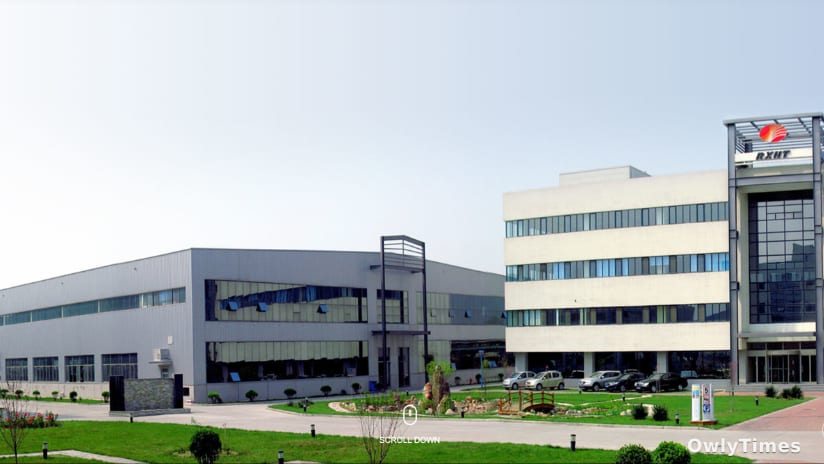
The automotive supply chain is undergoing a fundamental shift, and a single deal in late February – Tianjin Ruixin Chang Technology Co.’s planned acquisition of a 51% stake in Wuhu Deheng Automotive Equipment Co. – encapsulates this transformation. While the initial announcement from Gasgoo on February 27th detailed the transaction, the underlying story isn’t simply about one company buying another; it’s about a calculated response to a shrinking profit margin environment and a desperate need for diversification within China’s rapidly evolving electric vehicle (EV) component sector. The fact that Deheng Equipment generated ¥922 million in revenue in 2025, compared to Ruixin Technology’s undisclosed but demonstrably lower figure, underscores the urgency driving this move.
Drawn from autonews.gasgoo.com.
This acquisition, valued at an as-yet-undetermined price pending asset valuation, isn’t a growth play; it’s a stabilization strategy. Ruixin Technology, a specialist in high-end precision aluminum components supplying industry leaders like BYD and Vitesco Technologies, has faced “sustained performance pressure” in recent years. The company’s reliance on a single product line – lightweight and thermal management parts – created a bottleneck, limiting growth potential. Follow the money: Ruixin’s decision to pursue this deal, even while simultaneously seeking to raise capital from up to 35 investors including Huangshan Kaitou Lingsdun Venture Capital Investment Co., reveals a willingness to leverage both assets and equity to secure its future. The share issuance price of ¥18.08 per share is a critical benchmark, signaling investor confidence, but also a commitment to dilution to achieve strategic goals.
A Precision Fit: Synergies Beyond Aluminum
The logic behind the pairing of Ruixin and Deheng isn’t simply about size, but about complementary capabilities. Deheng Equipment specializes in automotive stamping, welding components, and smart equipment, producing body structural assemblies for major OEMs like Chery, Leapmotor, and JAC. This directly addresses a critical gap in Ruixin’s portfolio. The combination creates a “one-stop supply capability” – lightweight materials plus structural components – precisely what automakers are demanding to streamline their supply chains. This isn’t about chasing volume, as previous M&A waves have demonstrated; it’s about offering a more complete, integrated solution. Consider the industry trend: the average OEM now prefers to work with fewer, larger suppliers capable of delivering entire sub-assemblies, not just individual parts.
The deal’s structure – a mix of stock and cash, with the asset acquisition proceeding regardless of full fundraising – highlights Ruixin’s commitment. This isn’t a conditional offer; it’s a strategic imperative. The fact that the final valuation is still pending audit and assessment introduces a degree of uncertainty, but the underlying rationale remains sound. This contrasts sharply with the broader market trend of companies pursuing “scale expansion” for its own sake. Recent deals, like Bethel Automotive Safety Systems’ acquisition of Yubei Steering System, demonstrate a similar shift towards “lean synergy” and focusing on core technologies related to the “new four modernizations” – electrification, intelligence, connectivity, and shared mobility.
Consolidation as Survival in a Price War
The Ruixin-Deheng merger is symptomatic of a larger trend: a wave of consolidation sweeping through the Chinese automotive components sector. Domestic new energy vehicle penetration exceeding 50% has fundamentally altered the competitive landscape. The ongoing price war among EV manufacturers is squeezing margins throughout the supply chain, creating a “triple threat” for smaller parts makers – fluctuating orders, compressed profits, and the urgent need for technological upgrades. Active breakout, through mergers and acquisitions, is no longer optional; it’s a matter of survival.
This consolidation isn’t just about survival, it’s about power dynamics. Larger component groups with system-level delivery capabilities are gaining leverage with automakers, while smaller, single-product suppliers are facing increasing pressure to transform or be absorbed. This shift is reshaping the relationship between OEMs and suppliers, favoring those who can offer comprehensive solutions. The industry is moving from fragmentation to consolidation, improving supply quality and reducing homogeneous competition. Ruixin Technology’s acquisition of Deheng Equipment is a prime example of this dynamic, offering a pathway to improved profitability and access to direct OEM channels.
Integration Risks and the OEM Imperative
Despite the strategic logic, post-merger integration presents significant challenges. Cultural clashes, management instability, and the alignment of technology systems and supply chains are all potential pitfalls. The success of this deal hinges on Deheng Equipment maintaining its operational efficiency and Ruixin Technology providing effective empowerment and control. “Synergy on paper” must translate into tangible performance improvements. Furthermore, external factors – intensifying competition, high customer concentration, and the relentless pace of technological innovation – will continue to test the integrated platform.
What this means for your wallet: Watch for increased pricing pressure on EV components as consolidated suppliers gain bargaining power. While this could lead to slightly higher vehicle costs in the short term, it also promises improved quality and reliability. The key question for investors and consumers alike is whether Ruixin Technology can successfully integrate Deheng Equipment and capitalize on the synergies, or if this acquisition will become another example of good intentions failing to deliver on their promise. Specifically, monitor Ruixin’s revenue growth and profitability in the next two quarterly reports – will the Deheng acquisition demonstrably improve their financial performance, or will the integration challenges outweigh the benefits?





