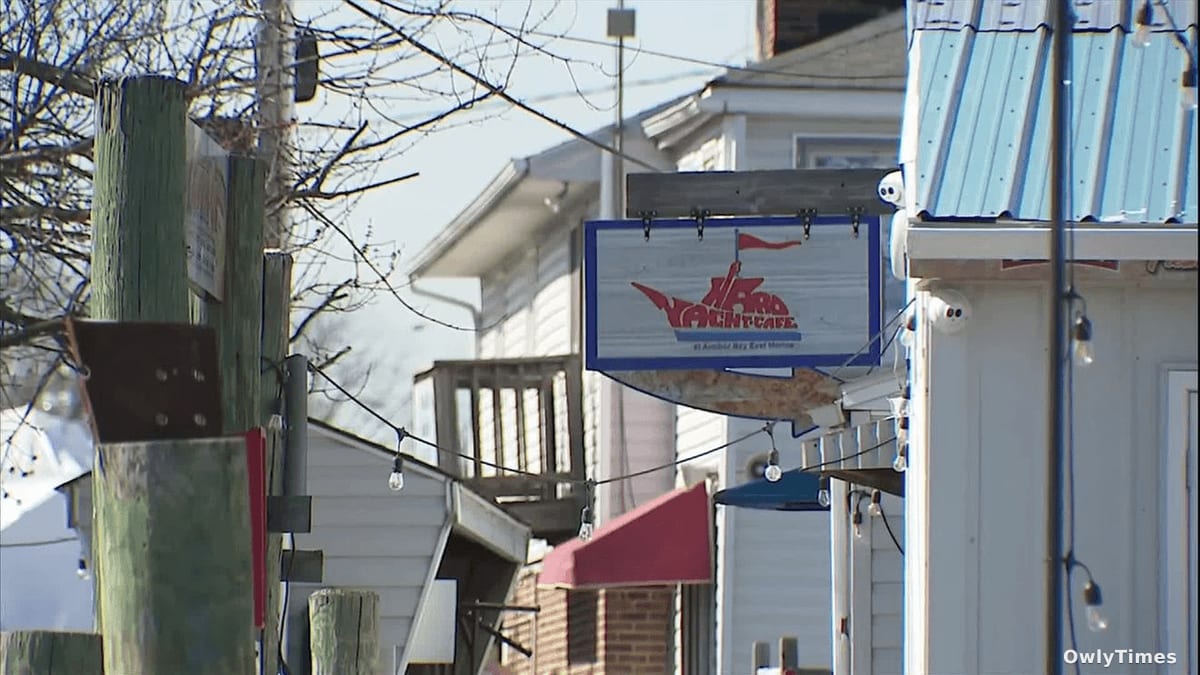

A 23% cumulative revenue decline—that’s the stark reality facing businesses directly adjacent to the site of the collapsed Key Bridge two years after the Dali cargo ship collision. The figure, revealed by Alex DelSordo, owner of Anchor Bay East Marina and Hard Yacht Cafe, isn’t simply a business setback; it’s a quantifiable measure of economic disruption radiating from a single, catastrophic event. While the immediate aftermath garnered national attention, the sustained financial bleed for local enterprises, and the uncertainty surrounding the rebuild, demands a closer look at the cascading economic consequences.
DelSordo’s story is particularly revealing. Having acquired the boatyard just eleven days before the March 2022 collapse, he entered the business ownership landscape under uniquely challenging circumstances. His experience isn’t isolated. The 13% year-over-year decline in 2024, building on a 10% drop in 2023, demonstrates a deepening wound, not a temporary shock. This isn’t a case of businesses simply adjusting to a new normal; it’s a consistent erosion of revenue, suggesting the initial disruption has morphed into a prolonged period of suppressed economic activity. Follow the money, and it leads directly to altered commuting patterns and stalled infrastructure projects.
The initial surge in activity—first responders and channel clearing crews—provided a temporary buffer, but that quickly dissipated. DelSordo anticipated a ramp-up in March 2025 with the arrival of contractors and accelerated government action. Instead, he found a stalled process and unmet expectations. This disconnect between projected recovery and actual progress highlights a critical tension: the speed of bureaucratic processes versus the urgency of economic survival for businesses like his. The expectation of federal and state collaboration moving swiftly proved inaccurate, contributing directly to the continued downturn.
Based on the original foxbaltimore.com report.
The core issue isn’t just the physical absence of the bridge, but the lack of clarity surrounding its replacement. DelSordo’s frustration – “I can’t believe we haven’t come to a conclusion yet. We don’t even know how much it’s gonna cost and quite frankly we don’t even know how long it’s gonna take” – encapsulates the broader anxiety. This uncertainty isn’t merely inconvenient; it’s financially crippling. Businesses can’t plan, invest, or even accurately forecast revenue when the timeline for a critical piece of infrastructure remains undefined. The lack of a firm cost estimate further complicates matters, raising questions about funding mechanisms and potential delays.
Despite the mounting losses, DelSordo is doubling down, stating his willingness to absorb “unbelievable amounts of money” to keep his business afloat, betting on a future where Hard Yacht Cafe becomes the sole convenient destination once the bridge reopens. This is a high-stakes gamble predicated on a monopolistic position. However, it also reveals a critical dynamic: the potential for significant economic upside for businesses strategically positioned to capitalize on the bridge’s reconstruction. This isn’t simply about restoring the status quo; it’s about a potential reshuffling of the local economic landscape.
What this means for your wallet: Watch for increased pressure on Maryland state and federal budgets as the cost of the Key Bridge rebuild inevitably rises. More importantly, consider the ripple effect on supply chains and transportation costs. Even if you don’t live in Baltimore, delays and increased expenses associated with this infrastructure failure will likely translate into higher prices for goods and services. The key question now isn’t if the bridge will be rebuilt, but how—and whether the rebuilding process will prioritize speed and cost-effectiveness, or become another example of protracted infrastructure delays.





