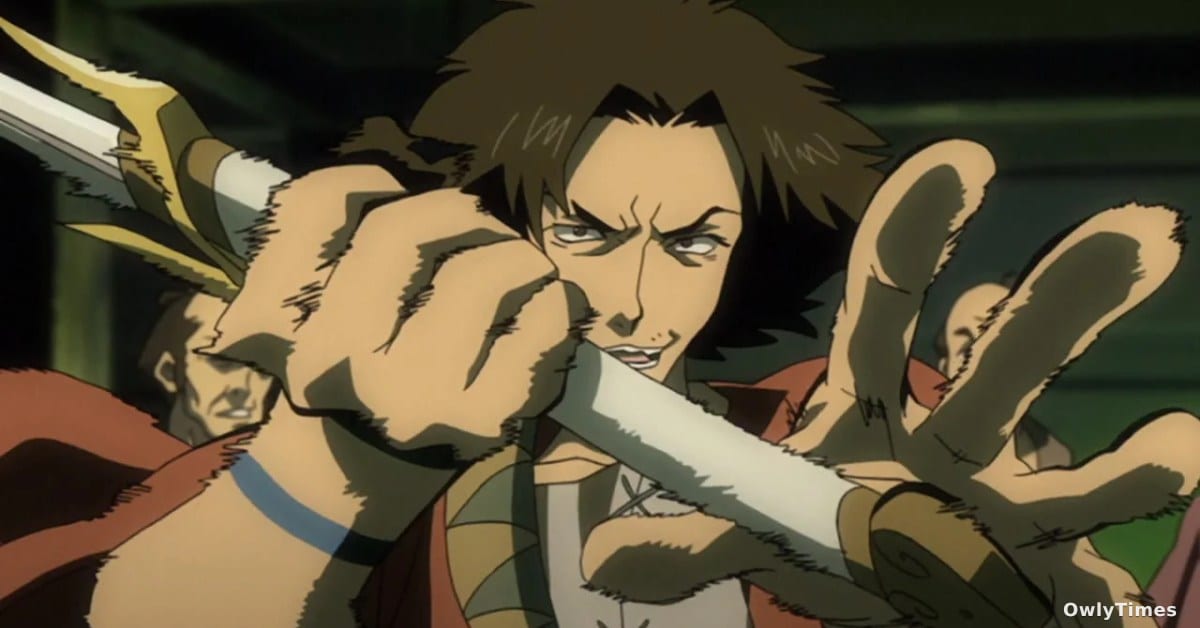

Is Hollywood actively trying to test the limits of our nostalgia? The announcement of a live-action Samurai Champloo adaptation, blessed by creator Shinichirō Watanabe, feels less like a creative triumph and more like a calculated gamble. It’s not about bringing a beloved anime to a new audience; it’s about exploiting brand recognition while conveniently ignoring the recent, very public failure of a similar endeavor. The real story here isn't a renewed faith in live-action anime adaptations – it's a desperate attempt to recoup investment after Cowboy Bebop crash-landed, and a revealing look at how much creative control auteurs are willing to cede for a paycheck.
The news, reported by Variety on March 10, 2026, details that Watanabe has signed off on the project, spearheaded by Tomorrow Studios – the same company responsible for both the ill-fated Cowboy Bebop and the surprisingly well-received One Piece adaptation on Netflix. This is crucial. One Piece, despite initial skepticism, has garnered praise for its faithfulness to the source material and its understanding of what makes the original series tick. Cowboy Bebop, on the other hand, was widely criticized for its deviations from the anime’s tone, characterizations, and overall aesthetic. It was canceled after just one season, a stinging rebuke from both fans and critics. The financial implications of that cancellation are significant; Netflix reportedly spent upwards of $40 million on the first season alone, a sum now written off as a loss.
Becky Clements, head of Tomorrow Studios, acknowledged the limited creative input Watanabe had on the Cowboy Bebop adaptation. “We’ve learned,” she stated, with a candor that’s almost unsettling. Marty Adelstein, also of Tomorrow Studios, echoed this sentiment, emphasizing the importance of having the creator “bless the creative.” This isn’t a statement about artistic collaboration; it’s a statement about risk mitigation. They’re not seeking Watanabe’s vision, they’re seeking his stamp of approval – a shield against the inevitable backlash should the adaptation fall short. It’s a cynical move, but a logical one given the stakes. The average cost of producing one hour of scripted television rose 12% in 2025, according to a report by the Directors Guild of America, making high-profile failures even more devastating.
Source material: The Verge.
But why Samurai Champloo? The series, a genre-bending blend of samurai action and hip-hop culture, is arguably more nuanced and culturally specific than Cowboy Bebop. Its strength lies in its atmosphere, its characters’ internal conflicts, and its subtle commentary on Japanese history and identity. Translating that to live-action without flattening its complexities will be a monumental challenge. The success of One Piece is often attributed to its inherent bombast and relatively straightforward narrative. Samurai Champloo operates on a different level, demanding a level of sensitivity and understanding that Cowboy Bebop demonstrably lacked. The fact that the project isn’t currently attached to a distributor suggests Tomorrow Studios is proceeding cautiously, likely shopping around for a partner willing to accept a higher degree of creative oversight.
This isn’t just a story about anime adaptations; it’s a microcosm of the broader trends in streaming. Studios are increasingly reliant on established IP to attract subscribers, and they’re willing to take risks – but only calculated ones. The willingness to involve creators like Watanabe is less about respecting artistic integrity and more about managing public perception. The average Netflix subscriber spends 23.3 hours per month on the platform (Statista, Q4 2025), meaning content needs to be consistently engaging to retain viewership. A failed adaptation doesn’t just lose money; it loses subscribers.
Here’s what to watch for: over the next six months, pay attention to which streaming service ultimately picks up Samurai Champloo. The level of creative control granted to Watanabe – and, crucially, whether he actually exercises it – will be the clearest indicator of whether Tomorrow Studios has truly learned from its past mistakes. If the adaptation prioritizes spectacle over substance, prepare for another disappointment. If, however, it embraces the series’ unique spirit and cultural depth, it might just prove that Hollywood can, occasionally, get it right.