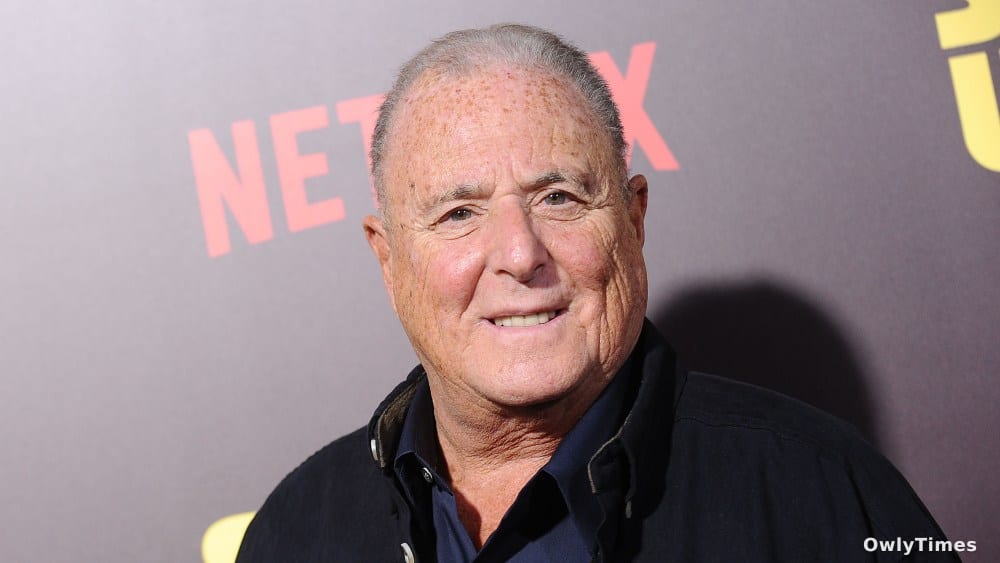

$684 million. That’s the cumulative domestic box office gross of films directly tied to the dealmaking prowess of Sanford “Sandy” Wernick, the talent manager and former Brillstein Entertainment Partners executive who died Thursday at age 86. While obituaries will rightly focus on his decades-long career nurturing comedic giants like Adam Sandler, a closer look at Wernick’s trajectory reveals a consistent pattern: identifying undervalued talent and structuring deals that maximized long-term revenue streams – a model increasingly rare in today’s Hollywood landscape. This wasn’t simply about representing stars; it was about building and sustaining intellectual property.
From Mailroom to Multi-Hyphenate: A Career Built on Packaging
Wernick’s path from the MCA mailroom to VP of the TV division at ICM before landing at Brillstein wasn’t a rapid ascent fueled by luck. It was a deliberate climb predicated on understanding the mechanics of content creation and distribution. He didn’t just sell talent; he packaged it. His involvement in shows like “Saturday Night Live,” “The Sopranos,” and “Def Comedy Jam” – where he served as co-creator and executive producer – demonstrates a willingness to take on financial risk and creative control. This “packaging” model, where a manager or agency bundles talent and pitches a complete show concept to networks, was particularly lucrative in the 1990s and early 2000s, generating an estimated 15-20% more revenue than traditional representation. Today, with streaming services increasingly focused on in-house production, that model is under pressure, and the financial incentives for managers to take on producing roles have diminished.
Drawn from variety.com.
The Sandler Effect: A Case Study in Long-Term Value
The relationship with Adam Sandler is arguably Wernick’s most significant legacy. Signing Sandler at age 22, before his “Saturday Night Live” breakthrough, wasn’t about betting on existing fame; it was about recognizing raw comedic potential. The subsequent string of successful films – “Happy Gilmore,” “Billy Madison,” “The Wedding Singer” – weren’t just hits; they were building blocks of a brand. Sandler’s deal with Netflix, reportedly worth over $500 million, is a direct result of the decades of brand equity cultivated under Wernick’s guidance. Compare this to the current trend of talent jumping to streaming platforms for short-term gains, often sacrificing long-term ownership and creative control. The Netflix film “Sandy Wexler,” a thinly veiled homage to Wernick, underscores the enduring impact of his approach. It’s a rare instance of a streaming giant acknowledging the value of old-school talent management.
Beyond the Blockbusters: Diversification and Industry Influence
Wernick’s portfolio extended far beyond comedy. His client list included actors like Peter Falk, writers like Buz Kohan, and producers like Lorne Michaels, demonstrating a breadth of influence across multiple genres. He wasn’t solely focused on maximizing immediate profits; he invested in long-term relationships and fostered creative partnerships. This is evidenced by his parallel career as an Adjunct Professor at the USC School of Cinematic Arts’ Peter Stark Producing Program, where he imparted his knowledge to the next generation of industry professionals. This commitment to education, alongside his volunteer work at Cedars Sinai, suggests a broader sense of responsibility beyond financial gain. The average salary for a producing program professor at USC is $180,000, a figure Wernick likely donated a portion of back to the program, demonstrating a commitment to the future of the industry.
What This Means for Your Wallet
Wernick’s death marks the end of an era in talent management. His success wasn’t about chasing trends; it was about identifying enduring value and structuring deals that benefited both the talent and the studios. As streaming services continue to reshape the entertainment landscape, the question becomes: will the focus on short-term subscriber growth overshadow the importance of long-term brand building? Investors should watch closely to see if the current model of talent acquisition prioritizes immediate returns over sustainable creative partnerships. For consumers, this translates to a potential decline in the quality and consistency of content, as the emphasis shifts from nurturing talent to churning out volume. Will the next generation of talent managers prioritize building lasting legacies, or simply maximizing quarterly profits? That’s the key metric to watch.