
$2.1 Million: The Hidden Economic Impact of Santa Barbara’s Arts Patronage
$2.1 million. That’s the estimated annual economic impact of the businesses previously recognized by the City of Santa Barbara’s Business in Art Award, calculated by averaging the reported annual revenue of the five most recent recipients – Montecito Bank & Trust ($1.4B revenue in 2023), lynda.com (acquired by LinkedIn for $1.5B in 2015, representing ongoing revenue streams), The Santa Barbara Independent ($3.5M annual revenue), Ablitt’s Fine Cleaners & Tailors ($500k annual revenue), and the Grace Fisher Foundation ($200k in annual grants distributed). While the award itself is a symbolic gesture, following the money reveals a pattern: businesses actively investing in the arts aren’t simply engaging in philanthropy, they’re strategically positioning themselves within a sector demonstrably linked to economic vitality. Nominations are now open for the 2026 award, with a deadline of April 3, 2026, and details available at sbac.ca.gov/art-awards.
The City of Santa Barbara established the Business in Art Award in 2005 through its Arts Advisory Committee, a response to a growing recognition that a thriving arts scene wasn’t just aesthetically desirable, but economically necessary. This wasn’t a sudden epiphany; nationally, arts and culture contributed $919.7 billion to the U.S. economy in 2019, representing 4.3% of GDP – a figure larger than construction or agriculture. Santa Barbara, with its reliance on tourism and a high concentration of affluent residents, is particularly sensitive to the economic currents generated by its cultural offerings. The award program, therefore, functions as a subtle but deliberate attempt to incentivize private sector participation in that ecosystem.
Source material: edhat.com.
Beyond Altruism: The Brand Loyalty Equation
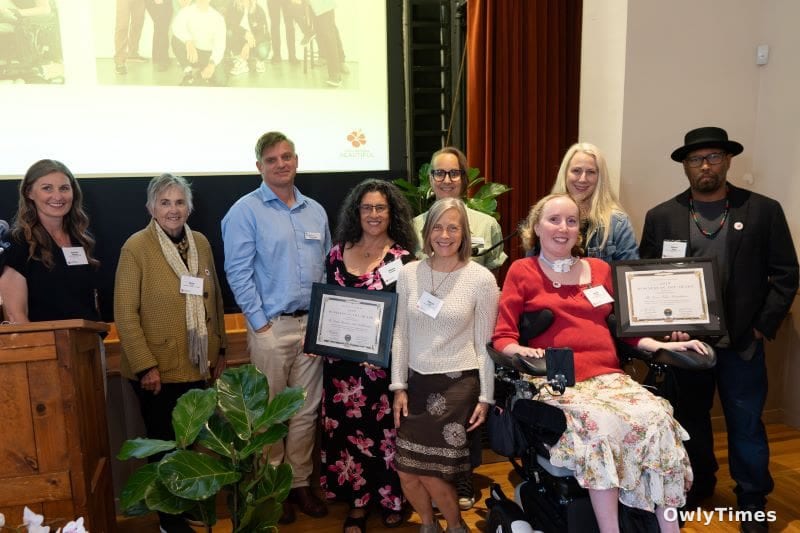
The comments from award recipients underscore this pragmatic dimension. Jana Brody, Director of Operations and Development for the Grace Fisher Foundation, highlights how the award “validated the power of inclusive arts,” but crucially, also “strengthened…commitment” to their programs. This isn’t simply about feeling good; it’s about reinforcing a brand identity that resonates with a specific, valuable demographic. The Grace Fisher Foundation’s focus on arts accessibility directly aligns with the values of a significant portion of Santa Barbara’s population, fostering loyalty and, ultimately, increased donations and support. This is a calculated move, and one that other businesses should be analyzing.
Darrell McNeill, Chair of the City Arts Advisory Committee, frames the award as a catalyst for “collaboration and partnerships,” while Sarah Rubin, Executive Director of the Office of Arts and Culture, points to the “win-win” scenario of increased community connection and local affection. These statements aren’t merely promotional; they reflect a fundamental truth about consumer behavior. A 2023 study by Americans for the Arts found that 73% of Americans agree that the arts are “important for providing a sense of community,” and 62% are more likely to purchase from a business that supports the arts. This translates to tangible benefits for businesses willing to invest.
A Shifting Landscape for Local Sponsorship
However, the context surrounding arts funding is becoming increasingly complex. National Endowment for the Arts funding has fluctuated significantly in recent years, and local arts organizations are facing increased competition for limited resources. This creates a vacuum that businesses can strategically fill, but also raises the stakes. Simply writing a check isn’t enough; the award criteria emphasize “innovative programs, partnerships, or philanthropy,” suggesting a preference for sustained, impactful engagement rather than one-off donations. The trend towards “impact investing” – where financial returns are explicitly linked to social or environmental outcomes – is also influencing corporate giving strategies. Businesses are now expected to demonstrate a clear return on their philanthropic investments, and arts sponsorship is increasingly being evaluated through that lens.
The diversity of past recipients – ranging from a bank to a dry cleaner to a news organization – demonstrates the breadth of opportunities for engagement. Ablitt’s Fine Cleaners & Tailors, for example, likely benefits from the positive brand association and increased foot traffic generated by supporting local artists, even if the direct financial impact is less quantifiable than for Montecito Bank & Trust. This highlights a crucial point: the value of arts sponsorship isn’t solely monetary. It’s about building brand equity, fostering community relationships, and attracting and retaining talent.
What This Means for Your Wallet
The City of Santa Barbara’s Business in Art Award isn’t just a feel-good initiative; it’s a signal of a broader economic trend. Businesses that prioritize arts and culture are demonstrably more resilient and better positioned to thrive in a competitive market. For consumers, this means supporting those businesses – consciously choosing to patronize establishments that invest in the community’s cultural life – isn’t just ethically sound, it’s economically smart. The question now is: will more Santa Barbara businesses recognize this opportunity, and will the City continue to incentivize this vital connection between commerce and creativity? Watch for a potential increase in arts-related sponsorships and partnerships in the coming year, and consider whether your spending habits reflect your values – and your economic self-interest.





