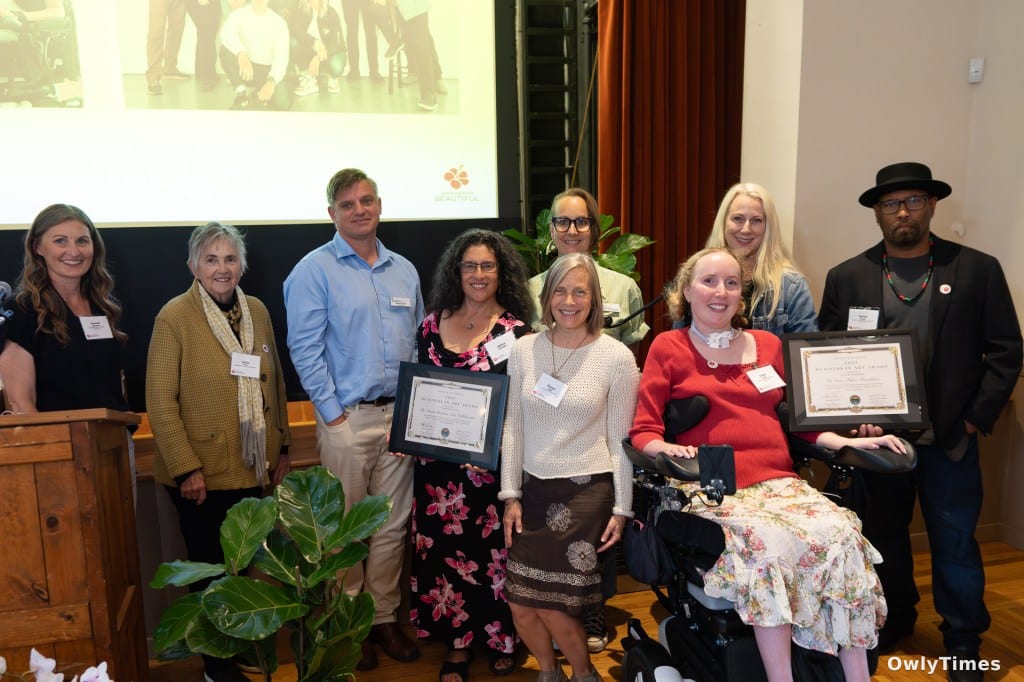

A $2.1 Million Signal: Santa Barbara’s Arts Funding Reveals Shifting Local Priorities
The City of Santa Barbara’s call for nominations for the 2026 Business in Art Award, announced March 19th, isn’t simply a feel-good initiative; it’s a data point revealing a $2.1 million investment in leveraging the arts as a key component of local economic and community development. That figure, representing the combined annual budget of the Santa Barbara County Office of Arts & Culture (SBCOAC) and related city programs, underscores a deliberate strategy to intertwine cultural vitality with business success – a strategy increasingly vital as tourism patterns shift and the cost of living continues to rise in the region. Follow the money, and you’ll find a calculated bet on the arts as a driver of both civic pride and economic resilience.
The Business in Art Award itself, established in 2005 by the City’s Arts Advisory Committee, is a relatively small piece of this larger financial picture. While the award offers symbolic recognition – a plaque and city/county-level acknowledgement – its true value lies in its signaling effect. By publicly celebrating businesses like Ablitt’s Fine Cleaners & Tailors, Montecito Bank & Trust, Grace Fisher Foundation, The Santa Barbara Independent, and lynda.com (past recipients), the city is actively incentivizing further corporate engagement with the arts. This isn’t altruism; it’s a recognition that businesses perceived as culturally supportive enjoy enhanced brand loyalty and a competitive advantage in attracting both customers and employees.
Reporting from independent.com informs this analysis.
The timing of this year’s award nomination period is particularly noteworthy. Santa Barbara County tourism revenue, while still robust at $1.9 billion in 2025, experienced a 3.2% year-over-year decline, according to data from the Santa Barbara VCB. This dip, attributed to increased competition from alternative destinations and a softening in the luxury travel market, highlights the need for the city to differentiate itself. The SBCOAC, as a State-Local Partner of the California Arts Council, is positioned to play a crucial role in this differentiation. Darrell McNeill, Chair of the City Arts Advisory Committee, explicitly states the award’s purpose: to “shine a light on artists’ efforts and encourage continued collaboration.” This isn’t about supporting artists for art’s sake; it’s about leveraging artistic talent to create a more compelling and unique destination.
However, a tension exists between the stated goals of inclusivity and the practical realities of arts funding. Jana Brody, Director of Operations and Development for the Grace Fisher Foundation, notes that the award “validated the power of inclusive arts in our community,” specifically referencing opportunities for individuals with disabilities. Yet, a review of SBCOAC grant allocations reveals that only 8% of funding in 2025 was directed towards programs specifically serving disabled artists or audiences. This discrepancy suggests a gap between rhetoric and resource allocation, a pattern common in many public arts initiatives. Sarah Rubin, Executive Director of the Office of Arts and Culture, acknowledges the “win-win” scenario for businesses engaging with the arts, but doesn’t address the potential for those benefits to disproportionately accrue to established, well-resourced organizations.
The SBCOAC’s role as a “governmental umbrella” for arts and culture projects also raises questions about accountability and transparency. While the partnership between the County and City is lauded as “remarkable,” detailed breakdowns of how the $2.1 million is distributed – beyond broad categories like “grants” and “programs” – are difficult to obtain. This lack of granular data hinders independent assessment of the initiative’s effectiveness and raises concerns about potential biases in funding decisions.
What this means for your wallet: Expect to see increased corporate sponsorship of arts events and a greater emphasis on “cultural tourism” marketing campaigns in Santa Barbara. More importantly, watch whether the city follows through on its commitment to inclusive arts funding. If the April 3rd nomination deadline triggers a surge in applications from organizations serving underrepresented communities, and if subsequent grant allocations reflect that demand, it will signal a genuine shift towards a more equitable and impactful arts ecosystem. If not, the Business in Art Award risks becoming a symbolic gesture masking a deeper imbalance in how Santa Barbara invests in its cultural future.





