
Is your smartphone about to become the most expensive paperweight in your pocket, or is it finally evolving into a truly global communicator? For years, we’ve been promised a world where the "no service" icon is a relic of the past, a myth relegated to the same history books as dial-up internet.
The real story here isn't the headline-grabbing 24.5% growth in space satellite connectivity reported by Ookla between July 2025 and March 2026; it is the friction between the promise of universal coverage and the reality of a technology still in its infancy. While industry watchers are breathless over Direct-to-Device (D2D) capabilities, the actual user experience remains tethered to the harsh physics of orbiting hardware.
The Geography of the Space Race
As of March 2026, the United States holds a commanding lead, maintaining 45.9% of the world’s D2D connections. Following behind are Australia at 18.1%, Chile at 10%, and Canada at 9.8%. It is no coincidence that these nations possess vast, sparsely populated rural landscapes where traditional cell towers are economically impossible to maintain.
However, the expansion isn't a smooth, linear climb. While Starlink Mobile has successfully pushed into markets like Ukraine, Peru, and the U.K., growth in North America has faced a different kind of gravity: price sensitivity. Ookla noted that connection numbers in the U.S. and Canada actually dipped as carriers like T-Mobile and Rogers began charging customers premiums for the service. When a feature moves from a "free safety net" to an "add-on line item," adoption curves predictably flatten.
Why Your Office Building is Still a Dead Zone
If you are expecting to browse the web in your basement using a satellite link, you are going to be disappointed for the foreseeable future. According to Mike Dano, lead industry analyst at Ookla, D2D technology is hitting a hard ceiling: physical infrastructure. Because satellite signals struggle to penetrate buildings and other structures, this tech is unlikely to impact indoor coverage, where an estimated 80% of mobile data is consumed.
Think of it like a high-powered flashlight in a dark forest; it can light up a clearing from a mile away, but it cannot see through the walls of your living room. For the average mobile user, this means D2D is currently a specialized tool for the great outdoors, not a replacement for your home Wi-Fi or local cellular network.
Testing the Limits of Orbit
The technical reality is even more sobering than the coverage gaps. A recent RootMetrics drive test conducted in rural New York using Starlink technology highlighted the fragility of these connections. In a moving vehicle—which places significant strain on a system designed for a clear, stationary view of the sky—the success rate for sending and receiving texts was just 60%. Across 143 successful tests, the average latency was a sluggish 1 minute and 17 seconds.
Currently, the technology can only handle a few bytes of data at a time, making it a "text-only" survival tool rather than a mobile broadband replacement. Even in the most enthusiastic markets, like Chile, utilization rates remain low, peaking at just 1.26%. While Starlink leads the charge with 59 partnerships, followed by AST SpaceMobile with 28, the industry is still in the "proof of concept" phase.
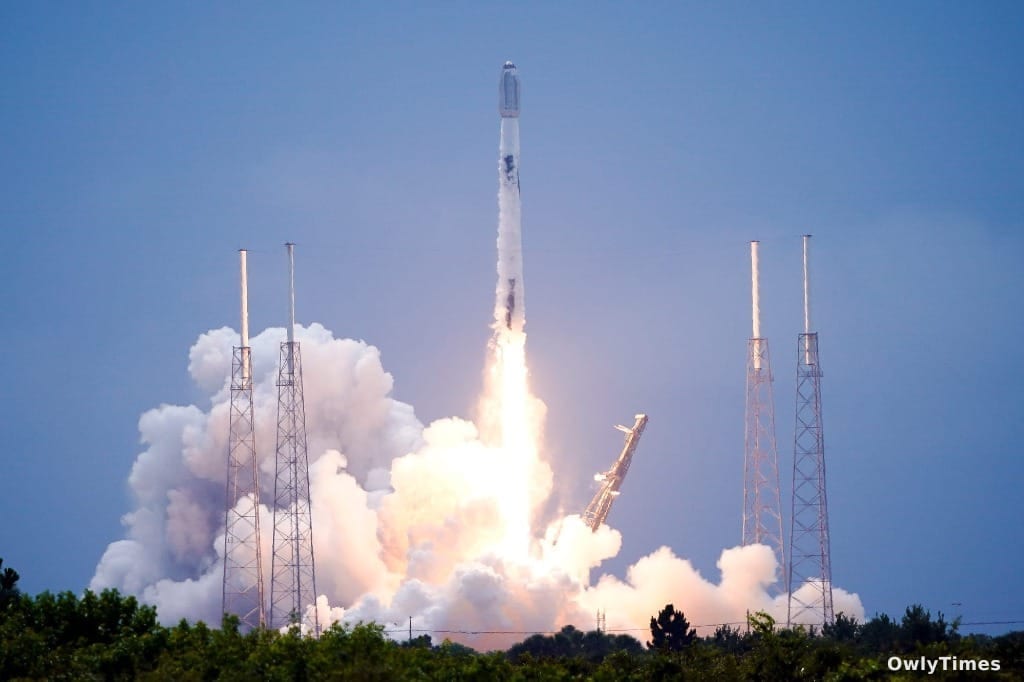
We are currently in a period of aggressive experimentation, with the Global mobile Suppliers Association (GSA) noting that 61 additional countries and territories are currently planning or testing satellite launches. The next reading of the global utilization rate for D2D services will indicate whether this technology remains a niche luxury for outdoor enthusiasts or if it can evolve into the reliable, high-speed utility that the marketing hype suggests.