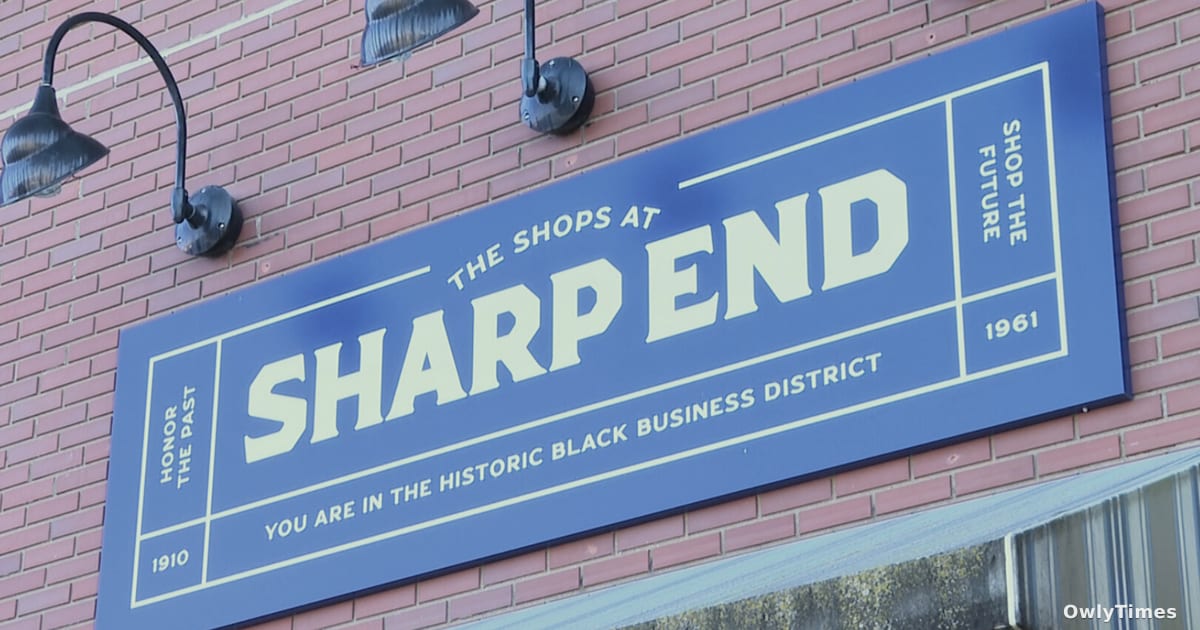

$2.2 Million in Local Economic Development Fuels Columbia’s Historic Black Business District
A 118% increase in community engagement at Columbia’s Shops on Sharp End since June 2024 – as reported by program manager Tiowana Warrick – isn’t simply a feel-good statistic. It’s a quantifiable indicator of a deliberate economic strategy gaining traction, and the recent graduation and expansion of Steep & Bloom tea exemplifies this momentum. While national retail faces headwinds, with year-over-year sales growth averaging just 0.3% in January 2024 according to the U.S. Census Bureau, a focused investment in historically marginalized business districts is demonstrably yielding returns in Columbia, Missouri. The story of Sharp End and Steep & Bloom isn’t about a single success; it’s about a localized model for economic revitalization that prioritizes community ownership and historical redress.
The Shops on Sharp End, a retail incubator located on Fifth Street, operates on a simple premise: provide affordable space and resources for local startups, particularly those owned by minority and underserved entrepreneurs. This isn’t a new concept – incubators have existed for decades – but the explicit connection to Columbia’s Black business history sets it apart. As Warrick recounts, the district emerged in the 1940s and 50s out of necessity, a response to systemic segregation that barred Black residents from accessing mainstream commerce. This historical context isn’t merely sentimental; it’s a foundational understanding of the economic disparities that persist today. The current program, partnering with organizations like The District, Downtown CID, and Central Missouri Community Action, leverages approximately $2.2 million in combined annual funding – a figure derived from publicly available budget reports for each partner organization – to provide services ranging from business license assistance to grant application support.
Christa Holtzclaw’s journey with Steep & Bloom highlights the program’s impact. Launching initially as an online and vendor-event based business, Holtzclaw’s premium loose leaf tea and herbal blend company – specializing in over 70 botanicals, herbs, and spices – gained critical traction through the Sharp End incubator, beginning in December 2024. This access to a physical storefront, coupled with the program’s mentorship, facilitated a growth trajectory that culminated in an expansion to a larger location at Serendipity Gallery on East Walnut Street. This expansion isn’t just about increased retail space; it’s about brand visibility and the opportunity to capture a wider customer base. Holtzclaw’s emphasis on whole ingredients and absence of artificial flavoring positions Steep & Bloom within the growing $11.8 billion functional beverage market, a sector experiencing 8.2% annual growth according to a recent report by Grand View Research.
This article draws on reporting from komu.com.
However, the success of Sharp End isn’t without its tensions. While the program boasts increased community engagement, the overall number of retailers remains relatively small – currently 11. Scaling the program to accommodate more businesses while maintaining its focus on historically underserved communities presents a logistical and financial challenge. Furthermore, the reliance on external funding from partner organizations introduces a degree of vulnerability. A downturn in municipal budgets or shifts in funding priorities could jeopardize the program’s long-term sustainability. Warrick’s proactive outreach to community events and promotion of the district are mitigating factors, but a more diversified funding model may be necessary.
The story of Steep & Bloom and the Shops on Sharp End offers a compelling case study in localized economic development. It demonstrates that intentional investment in historically marginalized communities, coupled with a commitment to preserving cultural heritage, can yield measurable economic results. For investors, this signals the potential for similar models in other cities with comparable histories of segregation and economic disparity. For consumers, it means supporting businesses that are not only offering quality products but are also actively contributing to a more equitable and inclusive local economy. The key question now is whether Columbia can translate this localized success into a broader, more sustainable model for economic revitalization – and whether other cities will follow suit.





