
The Fragility of Progress: South Korea’s Democratic Backsliding and Lessons for the US
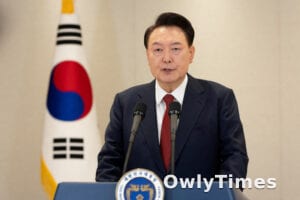
The recent turmoil in South Korea, culminating in the impeachment and conviction of former president Yoon Suk Yeol, isn’t simply a domestic political story. It’s a stark warning about the fragility of democratic institutions, even in nations with decades of progress, and a crucial case study for the United States as it navigates its own internal divisions and external pressures. The events surrounding Yoon’s attempted power grab – declaring martial law in December 2024, mobilizing the military against the National Assembly, and targeting political opponents – represent a dangerous inflection point, demanding a deeper understanding of the forces at play both within Korea and in the broader geopolitical landscape. This isn’t just about one country; it’s about the global trend towards authoritarianism and populism, and the urgent need to fortify democratic resilience.
Drawn from civilbeat.org.
Background & Context: Four Decades of Democratic Development – and a Sudden Reversal
South Korea’s journey from a military dictatorship to a vibrant democracy is a remarkable one. The protests of June 1987, which author recalls witnessing firsthand during a Fulbright scholarship, were pivotal, forcing democratic reforms and opening the door to greater citizen participation. Over the subsequent decades, Korea transformed into an economic powerhouse, leveraging its “soft power” – K-pop, film, cuisine, and culture – to project influence globally. This success story, however, masked underlying tensions. The rapid economic growth created inequalities, and the political landscape remained susceptible to polarization. Yoon Suk Yeol’s presidency, marked by conservative policies and a confrontational style, exacerbated these divisions. His declaration of martial law, justified on grounds of national security, was a direct challenge to the democratic norms painstakingly built over forty years. This represents a significant shift from the trajectory of democratic consolidation Korea had been on, and echoes similar attempts to undermine democratic processes seen elsewhere, including the January 6th insurrection in the United States.
The Echoes of “Yoonism” and the Rise of Geopolitical Tensions
The parallels between Yoonism and Trumpism, or the broader phenomenon of MAGA, are undeniable, yet simplistic comparisons risk obscuring crucial nuances. Both movements tapped into popular discontent, fueled nationalist sentiment, and questioned the legitimacy of established institutions. However, the specific historical and cultural contexts differ significantly. What’s often overlooked is the complex interplay between domestic political dynamics and escalating geopolitical tensions. South Korea finds itself at the epicenter of a strategic rivalry between the United States, Japan, and South Korea on one side, and China, Russia, and North Korea on the other. North Korea’s support for Russia in Ukraine, coupled with its continued development of nuclear and ballistic missile capabilities, adds another layer of complexity. The Indo-Pacific Command, headquartered in Hawaiʻi, is acutely aware of these threats, and the region is experiencing a dangerous increase in militarization and a decline in diplomatic engagement. China’s assertive foreign policy, including the Belt and Road Initiative, and its promotion of a distinct model of “Whole Process People’s Democracy” – a system integrated with the Chinese Communist Party – further complicate the picture.
What This Means: Implications for Stakeholders
The events in South Korea have far-reaching implications. For the public, it underscores the importance of vigilance in defending democratic principles and holding leaders accountable. The successful impeachment and conviction of Yoon Suk Yeol demonstrate that democratic institutions can withstand challenges, but only with active citizen engagement and a robust rule of law. For the industry, particularly in the tech and economic sectors, the instability creates uncertainty and potentially disrupts trade and investment. The geopolitical ramifications are perhaps the most significant. The crisis in Korea reinforces the need for a strong US-South Korea alliance, but also highlights the dangers of escalating tensions with China and North Korea. Policy makers must prioritize diplomacy and de-escalation, while simultaneously strengthening democratic institutions both at home and abroad. The conference hosted by the Center for Korean Studies at UH Mānoa, organized by Professor Myungji Yang and supported by Professor Young-a Park, is a vital example of the intellectual work needed to understand these complex dynamics and inform effective policy responses.
Looking Ahead: A Precarious Future and the Need for Resilience
The situation in South Korea remains precarious. While Yoon Suk Yeol’s removal from office is a positive step, the underlying forces that fueled his rise – economic inequality, political polarization, and geopolitical anxieties – persist. Readers should watch for the outcome of the further charges brought against Yoon in January 2025, specifically those related to mobilizing the military against the National Assembly. The upcoming elections will be crucial in determining the future direction of Korean democracy. More broadly, the world is entering a period of heightened geopolitical competition and democratic backsliding. The lessons from South Korea – the importance of a free press, an independent judiciary, and active citizen participation – are universally applicable. The need to investigate what works and what doesn’t in sustaining democracy, as emphasized by the scholars at the recent conference, is more urgent than ever. The future of democracy, both in Korea and the United States, depends on our collective ability to learn from the past and build a more resilient future.





