
The silence that descends upon a home stadium after a hard-fought victory is often filled with the roar of fans, but this week in South Africa, the atmosphere is heavy with a different kind of intensity. While the Springboks demonstrated their characteristic physical dominance in a 42-28 victory over Scotland in the Nations Championship—a match defined by the "breathless" pace and power play at the high altitude of Pretoria, as reported by The Guardian—the nation is simultaneously grappling with a profound sense of loss and a volatile socio-political climate.
A Nation in Mourning
The sports world was dealt a devastating blow on July 11, 2026, when the death of 25-year-old national footballer Jayden Adams was confirmed. According to Euronews, police have opened an investigation after his body was discovered at a residence in the Schotschekloof suburb of Cape Town. While the South African Sports Minister Gayton McKenzie acknowledged the tragedy with "profound shock," no official cause of death has been disclosed. Adams, a rising star who had recently transitioned to the Mamelodi Sundowns and represented his country at this year’s World Cup, leaves behind a legacy of resilience; he famously played through the grief of losing his grandmother just days before the tournament’s opening match against Czechia.
The Cost of Migration Policy
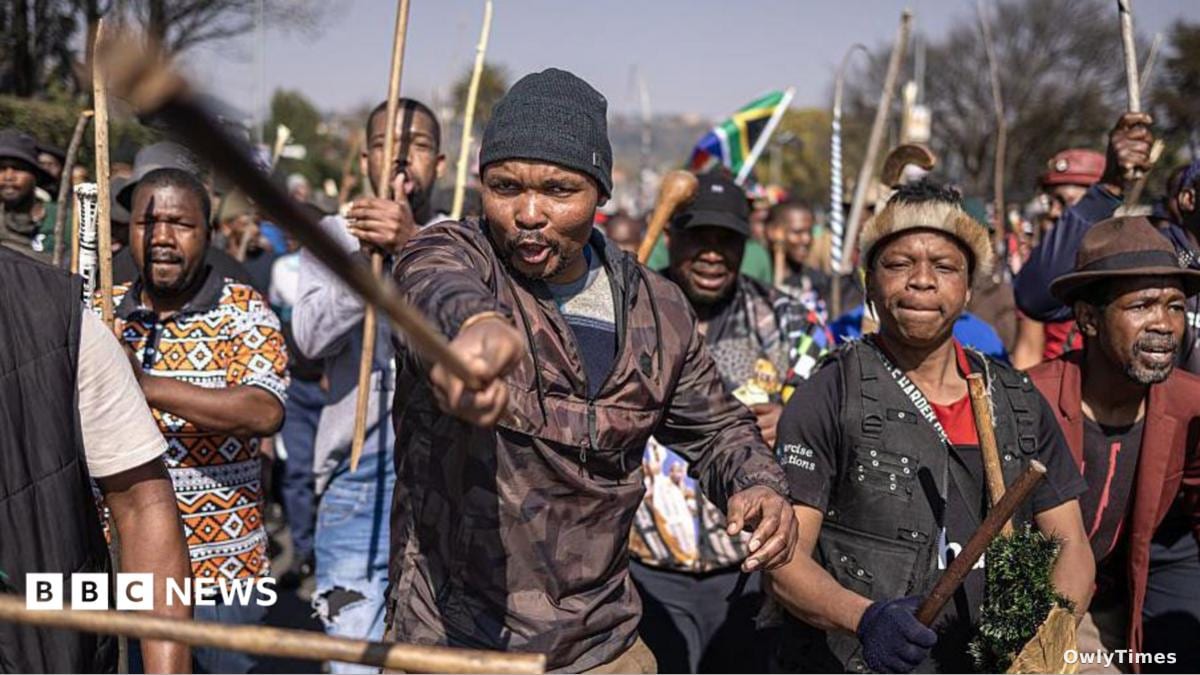
Beyond the pitch, South Africa is currently navigating a period of aggressive domestic policy shifts. The government is deep into a "migration management" campaign that has seen the deportation or repatriation of more than 53,000 foreign nationals over the last five weeks, according to the BBC. Justice Minister Mmamoloko Kubayi confirmed that the majority of those processed are from Malawi, Zimbabwe, and Mozambique. This surge in enforcement follows weeks of civil unrest, where anti-migrant protesters blamed foreign nationals for the country's rising unemployment and crime rates, leading to instances of looting and intimidation.
Balancing Power and Human Rights
The convergence of these events highlights the friction between South Africa’s status as a continental economic powerhouse and the internal pressures facing its citizens. The BBC reports that while President Cyril Ramaphosa has officially condemned anti-migrant violence, activists continue to demand stricter border controls. Meanwhile, on the field, the Springboks continue to be a unifying, if complex, symbol of national strength. The Guardian notes that even with a squad featuring significant rotation, the team’s ability to overwhelm opponents like Scotland underscores a level of depth that keeps them at the forefront of global rugby, regardless of the turbulent environment surrounding them.
A Legacy of Resilience
These disparate headlines—from the tragic, premature end of a promising athlete’s life to the systemic overhaul of immigration procedures—paint a picture of a nation at a crossroads. Whether through the lens of sport, where the Springboks look toward a future without key talents like Adams, or through the lens of policy, where the government attempts to balance international human rights obligations against domestic demands, South Africa is defined by a persistent, often painful, search for order. As the nation processes the loss of one of its "brightest young talents," as described by the South African Football Players Union, the industry and the public alike remain focused on the upcoming matches in Durban, where the Springboks are scheduled to face Wales next.