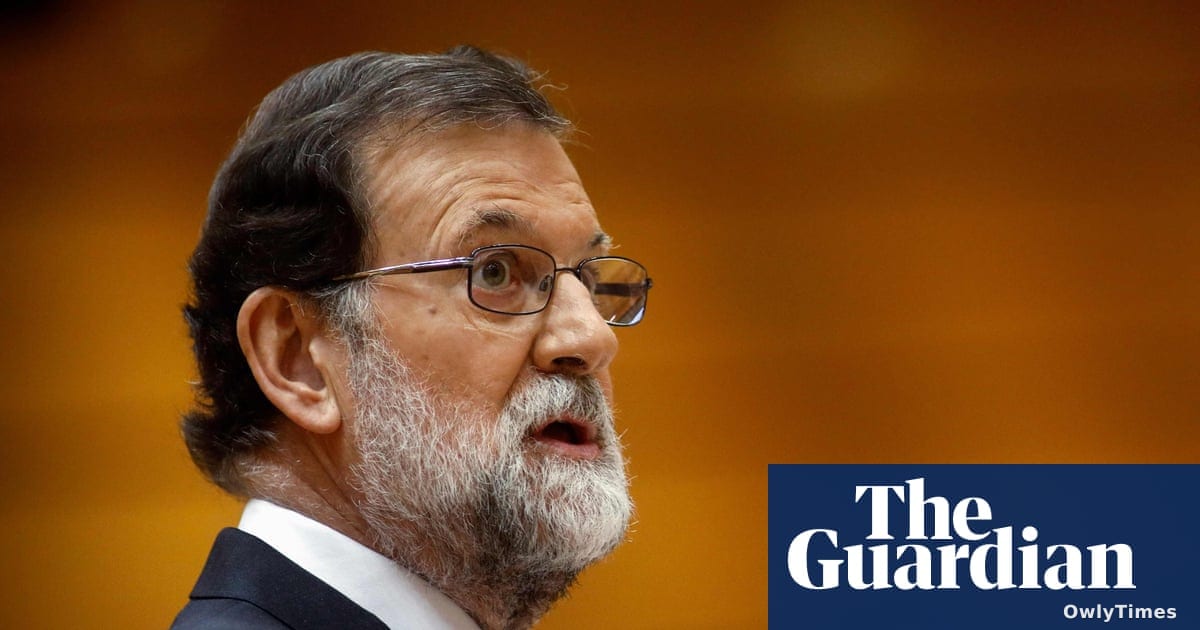

The buildup to Tuesday’s World Cup semifinal match between Spain and France—a fixture already laden with sporting tension—has descended into a fierce diplomatic and cultural row after Mariano Rajoy, the former conservative Prime Minister of Spain, claimed the French national team “does not have any French players.” Writing in his column for the online newspaper El Debate, the former leader, who served from 2011 to 2018, acknowledged France’s status as a top-tier squad, only to follow the compliment with the assertion that they were playing “without Frenchmen.”
The remark, published ahead of the Tuesday night showdown in Dallas, has ignited a firestorm across both nations. According to The Guardian, the backlash was immediate, with current Spanish Prime Minister Pedro Sánchez issuing a stinging rebuke on X. Sánchez stated that while some still measure national belonging by "surname, place of birth, or skin colour," others recognize that a nation is built on "roots" and the "will to contribute." In a show of solidarity, Sánchez concluded his post with a cordial nod toward the upcoming match: “France, we’ll see you in the semi-finals. May the best team win and may racism lose.”
Beyond the headlines, the incident has exposed deep-seated anxieties regarding national identity that seem to resurface whenever the French team, colloquially known as Les Bleus, achieves success. Euronews notes that the factual basis for Rajoy’s claim is demonstrably false: of the 26 players selected by coach Didier Deschamps, 23 were born in France. The remaining three—Michael Olise, Marcus Thuram, and Brice Samba—were born abroad but hold French citizenship. The French embassy in Madrid reinforced this reality in a social media statement, emphasizing that all squad members are French.
The political response in France has been uniform in its condemnation. French Interior Minister Laurent Nuñez told the channel BFMTV that the comments were “completely unacceptable,” a sentiment echoed by France’s anti-discrimination minister, Aurore Bergé, who denounced the “repeated racist outbursts” appearing in the sporting sphere, as reported by Al Jazeera. The Guardian also highlights that Fabien Roussel, leader of the French Communist party, drew a direct parallel between Rajoy’s words and a recent xenophobic attack by Paraguayan Senator Celeste Amarilla against star striker Kylian Mbappé. Amarilla’s comments were egregious enough to trigger an investigation by the Paris prosecutor’s office for “aggravated public insult.”
This is not a new conflict; it is a recurring echo of the rhetoric that emerged following France’s 1998 World Cup victory. As Euronews points out, the National Front—now the National Rally—similarly questioned the "authenticity" of that squad, which featured legends like Zinedine Zidane and Lilian Thuram. The persistence of these tropes suggests that for some, the football pitch remains a battleground for narrow definitions of citizenship that reject the reality of a modern, multicultural state.
The timing of this friction is particularly pointed. Prime Minister Sánchez is scheduled to travel to Paris on July 14 for Bastille Day, the very same day the two teams clash on the pitch. While politicians on both sides of the border attempt to contain the fallout, the incident serves as a stark reminder that international sports are rarely just about the game. For the industry, this moment underscores a painful reality: despite the global celebration of athletic talent, the field remains a volatile space where the politics of race and origin are continually leveraged to challenge the legitimacy of those who represent their country.