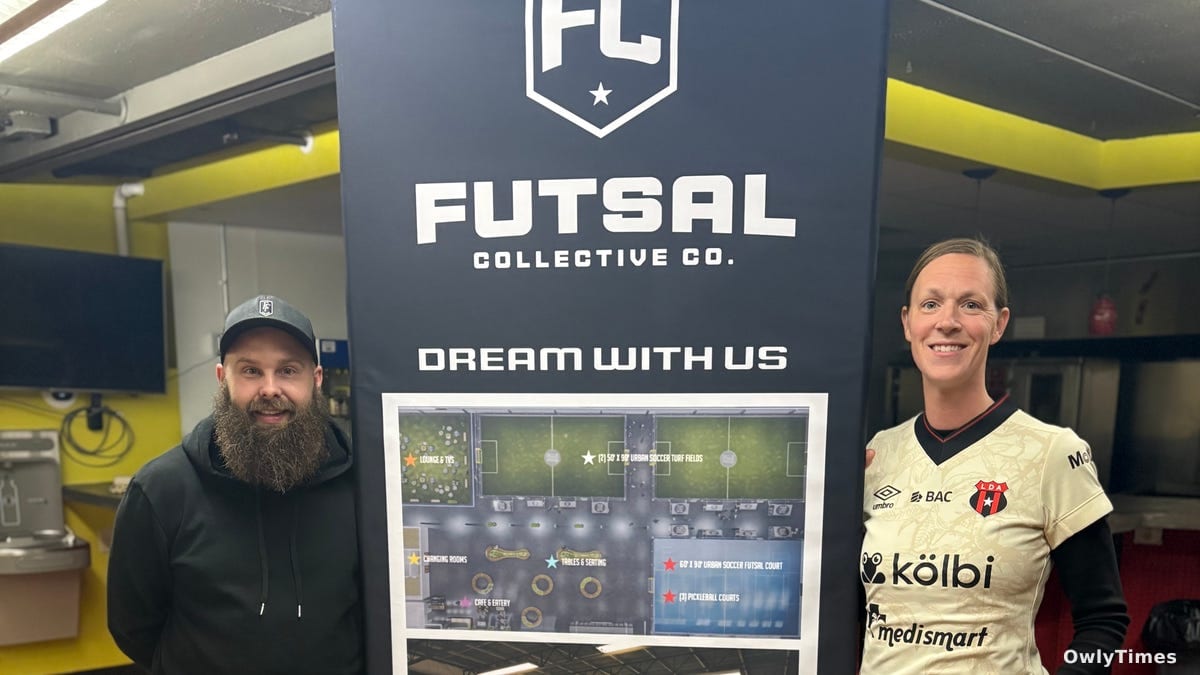

The chipped paint of the Central Minnesota Youth for Christ building doesn’t exactly scream “sports mecca,” but on a recent Saturday evening, the gymnasium throbbed with the rapid-fire percussion of futsal – a fast-paced, indoor version of soccer. Eighteen players, a mix of high schoolers and forty-somethings, zipped across the polished floor, the ball a blur of motion. It wasn’t the sprawling soccer fields many Central Minnesota families trek to the Twin Cities for, but something deliberately smaller, more accessible, and born from a frustration with the limitations of youth sports. Liz Meyer, owner of Backwards Bread Co., knows that frustration intimately, having spent countless hours driving her son to practices and games far from home.
This isn’t just about providing another athletic outlet; it’s a quiet rebellion against the increasingly exclusive world of competitive youth sports. The rise of travel teams and specialized training has priced many families out of the game, creating a two-tiered system where opportunity hinges on disposable income. Jake Hemmesch, of 320 Creative, points to the practical advantage of futsal: “It’s a lot easier to go and find eight, nine friends to play rather than to find 21 friends to go and play on a huge soccer field.” But the ease of logistics is a symptom of a larger issue – the need to democratize access to athletic development. Futsal Collective Co., launched this past November, is attempting to fill that gap, offering free play for $5 an hour and league play for around $10 a week. Consider that a roundtrip drive to Minneapolis for a comparable program can easily exceed $20 in gas alone, and the economic argument becomes stark.
The timing of this venture is particularly noteworthy. While youth sports participation rates nationally have largely rebounded after pandemic-era declines, the financial burden continues to escalate. A 2023 survey by the Aspen Institute found that the average annual cost of youth sports participation is $693 per child, a figure that skyrockets with travel and specialized coaching. This creates a significant barrier for low-income families and those in rural areas like Central Minnesota, where options are often limited. Meyer explicitly frames Futsal Collective Co. as a solution to this inequity, stating, “There’s a handful of kids that can’t even play on club soccer because their families can’t afford it.” It’s a direct challenge to the prevailing model, one that prioritizes elite development over broad participation.
Source material: sctimes.com.
Beyond the immediate financial accessibility, Hemmesch and Meyer are building something more subtle: a community. St. Cloud, like many mid-sized cities, has pockets of athletic activity, but they often operate in silos. Futsal Collective Co. aims to be a connective tissue, bringing together disparate groups of players – high schoolers, adults, experienced futsal enthusiasts, and complete beginners. “We have young high schoolers who come and play to (adults who are 40 years old),” Hemmesch notes, highlighting the intentionally inclusive atmosphere. This focus on community building is a growing trend in the fitness and recreation industry, recognizing that social connection is as important as physical activity. The duo’s long-term vision – renderings of a dedicated facility with two futsal fields, a gym, and a cafe – underscores this ambition.
For now, they’re focused on breaking even this winter, covering rent and equipment costs. But the bigger question isn’t just financial sustainability; it’s whether Futsal Collective Co. can demonstrate a viable alternative to the increasingly commercialized youth sports landscape. Will other communities follow suit, prioritizing accessibility and inclusivity over elite development? And, crucially, will larger organizations take notice and adapt, or will the gap between those who can afford to play and those who can’t continue to widen? The success of this small venture in St. Cloud could very well signal a shift in how we think about youth sports – and who gets to play the game.

