
The most compelling sports science stories aren’t about flashy new technologies, but about individuals who recognize limitations in existing systems and forge new paths. Karlie Young’s career exemplifies this—not as a rejection of athletic competition, but as a deeply informed evolution from elite athlete to a scientist dedicated to optimizing athletic potential. Her story, unfolding rapidly since a pivotal decision during her senior year at Duke University, isn’t simply about a successful career change; it’s a case study in how lived experience within a sport can uniquely qualify someone to advance its understanding. While headlines often tout former athletes “transitioning” into coaching or analysis, Young’s trajectory is distinct: she identified a gap in translating complex data into actionable insights for athletes and coaches, and proactively built the expertise to fill it.
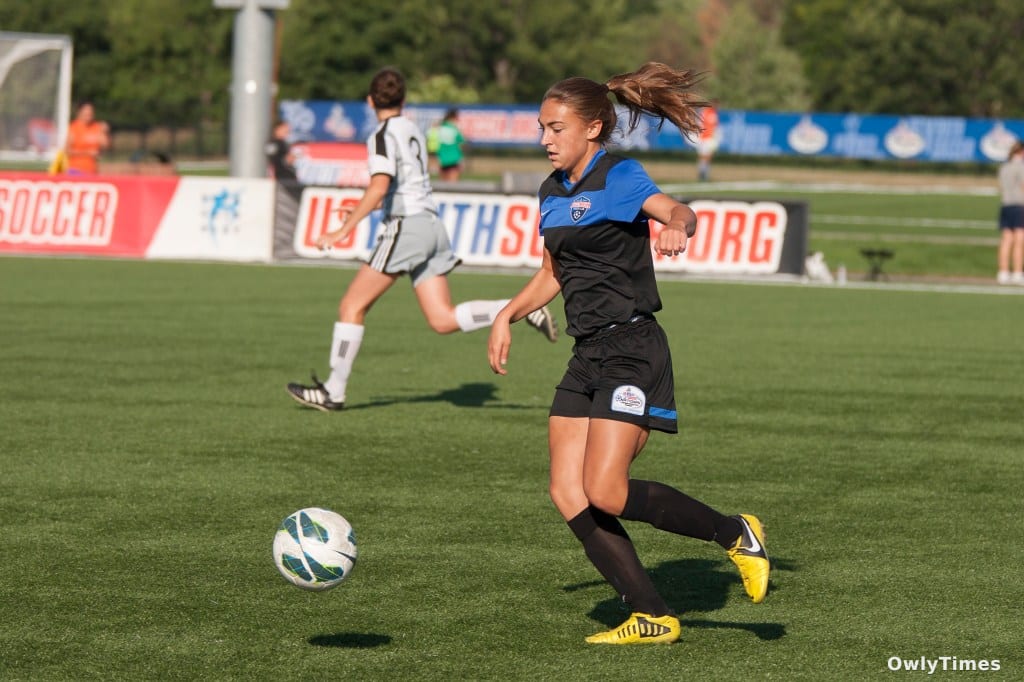
Young’s foundation was built on exceptional youth soccer. Playing for Tennessee SC 16, she accumulated an impressive collection of accolades, including eight State Cups, five Southern Regional titles, and back-to-back US Youth Soccer National Championships in 2016 and 2017. She earned five National Championship Best 11 honors and a National Championship Golden Ball award as MVP. Ronnie Woodard, a director at Tennessee SC who coached Young for four years, recalls a player who wasn’t just technically gifted, but possessed a rare intellectual curiosity. “She was a sponge,” Woodard said. “She loved learning. She was committed to her self-reflection and her self-training off the field. If you had conversations on the field, she would take that information, reflect on it, and update her individual plan for development.” This dedication to self-improvement, coupled with a selfless team-first attitude, set the stage for her later success. It’s crucial to note that this wasn’t simply a case of natural talent; Young actively cultivated her abilities through deliberate practice and a commitment to understanding the ‘why’ behind the training.
Her collegiate career at Duke University, where she made 74 appearances for the women’s soccer team, presented a turning point. The COVID-19 pandemic disrupted the 2020-21 season, extending it into the spring—a period when most seniors are focused on securing post-graduation employment. Recognizing her body wasn’t suited for a sustained professional playing career, Young approached then-Duke coach Robbie Church with an unconventional request: to transition into a sports science role for the team. Church’s willingness to support this shift was pivotal, allowing Young to essentially create an internship that bridged her athletic experience with her burgeoning scientific interests. This wasn’t a pre-defined career path; it was a proactive solution to a personal realization, and a testament to a coach willing to embrace innovation. The narrative often focuses on Young’s initiative, but Church’s openness is equally important.
The core of Young’s current work lies in translating data into practical application. After graduating in May 2021, she secured roles with Duke field hockey, Atlanta United, and now PlayerData, a sports technology company. Her current position as an account manager involves not only ensuring clients utilize GPS tracking technology effectively, but also educating coaches on interpreting the data and implementing informed training strategies. This is where her unique background proves invaluable. As Ciara Burgi, now Director of Health and Performance for the WNBA’s Las Vegas Aces, observed, “She likes solving problems. She likes putting pieces together. She’s a very curious person…She was attracted to psychology initially because she’s a relational person and cares about people a lot. That was a piece of the whole puzzle to what feeds and fuels her brain.” Burgi, who mentored Young during her time at Duke, highlights the critical link between scientific understanding and interpersonal skills—a combination often missing in the field of sports science. Young isn’t simply presenting numbers; she’s facilitating a dialogue between data and the individuals who can use it to improve performance.
See the original thenationalleague.com story for the full account.
However, it’s important to acknowledge the limitations of drawing broad conclusions from a single career path. Young’s success is undoubtedly influenced by her privilege—access to high-level coaching, elite athletic programs, and a supportive network. Not every athlete has the opportunity to pursue a parallel education in sports science, or the confidence to propose such a non-traditional career shift. Furthermore, the sports science field itself is still evolving, and the demand for professionals with Young’s specific skillset may not be universally available. The current emphasis on data analytics in sports is also relatively recent, meaning the long-term career trajectory for individuals in this role remains somewhat uncertain. While Young’s story is inspiring, it shouldn’t be presented as a guaranteed blueprint for all athletes seeking a post-playing career.
Looking ahead, the next crucial step in Young’s field—and one she’s actively contributing to—is bridging the communication gap between scientists and practitioners. She notes a frequent disconnect between those who understand the physiology and those who understand the sport itself. Her work with PlayerData, particularly her focus on educational content for coaches, directly addresses this issue. But beyond individual efforts, a systemic shift is needed within athletic programs to prioritize interdisciplinary collaboration and value the insights of both athletes and scientists. The question now isn’t just if data will be used to improve athletic performance, but how that data will be effectively integrated into the coaching process, and how we can ensure that the benefits of sports science are accessible to athletes at all levels—not just the elite few. Will we see a future where every coach possesses a foundational understanding of sports science principles, or will the role of the “data interpreter” remain a specialized, and potentially isolating, position? That’s the challenge Young, and others like her, are poised to address.

