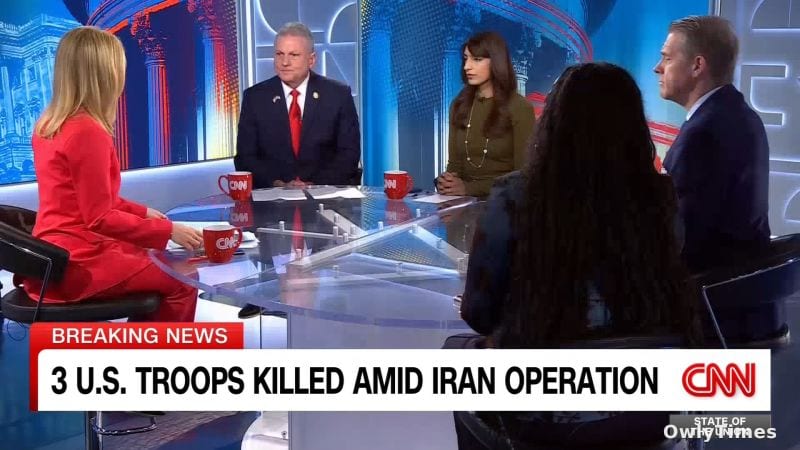

The immediate political calculation behind the recent strikes against Iran isn’t about achieving a lasting strategic realignment in the Middle East – it’s about demonstrating resolve, and managing the domestic political fallout from perceptions of weakness. While the Biden administration, and even some Democrats like Senator Fetterman, publicly support the strikes as “entirely appropriate,” the speed with which the response was calibrated suggests a priority on signaling to both allies and adversaries, and to a critical domestic audience, that the U.S. is not disengaged. The predicted oil market reaction, as highlighted by former Pentagon spokesperson Sabrina Singh – a $5 to $10 jump in the cost of a barrel – isn’t a bug in the system, it’s a feature. It’s a tangible consequence designed to register with American voters ahead of an election year.
The Price of Resolve: Who Benefits and Who Loses?
The most immediate losers are, predictably, American consumers. Singh’s prediction, if realized, translates to higher gasoline prices, a direct tax on everyday spending. This is a calculated risk. The administration is betting that the demonstration of strength will outweigh the short-term economic pain at the pump. Beneficiaries within the U.S. include the hawkish wing of both parties – Senator Tom Cotton’s message to the Iranian people, “Help is here,” exemplifies this – and defense contractors poised to benefit from increased regional instability and potential future military engagements. Internationally, Israel stands to gain from a U.S. willing to act in concert, reinforcing a long-standing strategic alliance. However, this comes at the cost of potentially alienating European allies who favored a more diplomatic approach, and further complicating already strained relations with Iran.
Echoes of 1980: Managing Perceptions of Power
The situation bears a striking, if imperfect, resemblance to the 1980 Eagle Claw operation. Then, as now, a perceived failure to act decisively – the botched rescue attempt of American hostages in Iran – threatened to undermine the presidency. While the current strikes are far more limited in scope, the underlying dynamic is similar: a need to project strength and demonstrate a willingness to use force, even if the strategic gains are marginal. President Carter faced intense criticism for the perceived weakness following the hostage crisis; President Biden is navigating a similar landscape of political vulnerability, compounded by concerns about his handling of foreign policy challenges in Ukraine and the broader Middle East. The difference is the speed of the response. Carter’s response was a failed military operation; Biden’s is a calibrated series of strikes intended to avoid escalation while satisfying domestic demands for action.
This article draws on reporting from CNN.
The Domestic Political Calculus: A Divided Response
The partisan split in Congress is revealing. While Republicans largely applaud the strikes, framing them as necessary to deter Iranian aggression – Senator Cruz called Trump’s previous decision to strike Iran “the most consequential decision of his presidency” – Democrats are more divided. Senator Gallego’s blunt assessment – “This was a BS reason for us to go to war” – underscores the skepticism within the party regarding the justification for military action. This division reflects a broader debate within the Democratic party about the appropriate role of the U.S. in the Middle East, and the potential costs of continued military involvement. The fact that Senator Reed doesn’t believe regime change in Iran is “remotely possible” suggests a recognition that the strikes are primarily symbolic, aimed at managing perceptions rather than achieving concrete strategic objectives.
The Next Move: Tehran’s Response and the Oil Market
The critical question now is not what the U.S. will do next, but how Iran will respond. A significant escalation – attacks on U.S. assets in the region, or further disruption of oil supplies – would dramatically alter the calculus. However, a more likely scenario is a measured response, designed to signal resolve without triggering a wider conflict. The oil market will be the first indicator. If the price of oil spikes beyond Singh’s prediction, it will signal that the market perceives a genuine threat of further disruption, and that the administration’s gamble on demonstrating strength may backfire. The political chess move to watch isn’t in Washington or Jerusalem, but in Tehran: will the response be calibrated to de-escalate, or to escalate, and what signal will that send to a volatile region and a wary electorate?