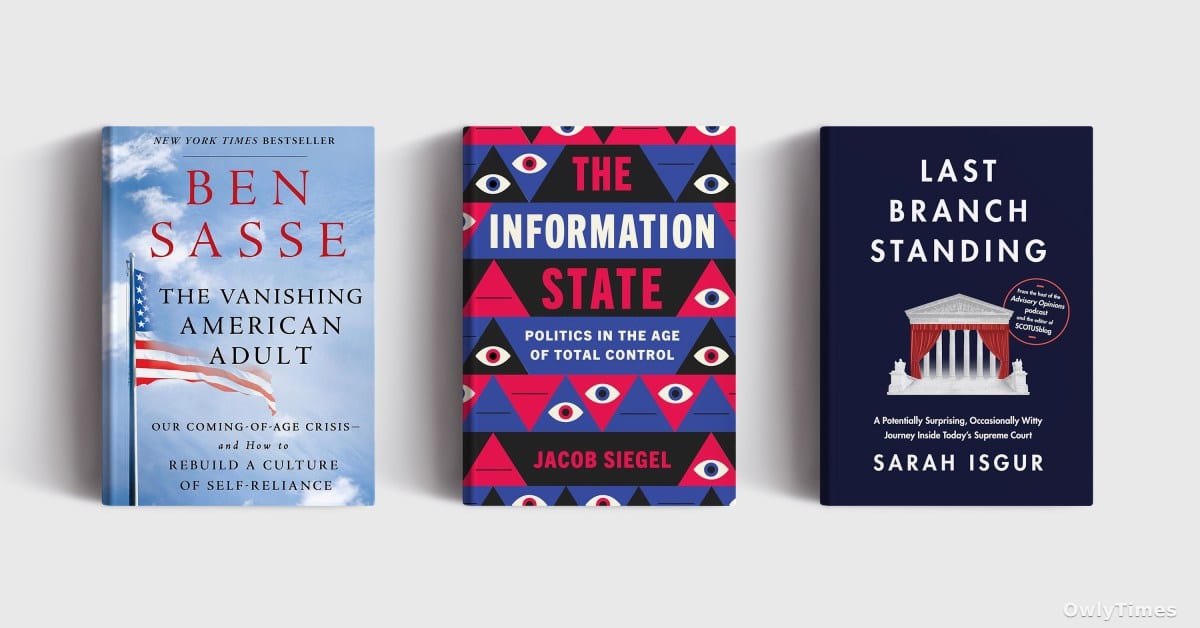

The current political obsession with neatly categorizing ideological alignment – particularly the Supreme Court’s supposed 6-3 conservative tilt – misses a far more crucial strategic dynamic: the preservation of institutional legitimacy. Sarah Isgur’s forthcoming Last Branch Standing doesn’t offer a defense of conservative jurisprudence, but a bracing assessment of the Court’s internal calculus. It’s not about what the justices believe, but how they believe about the institution itself. This isn’t a novel observation – the Court has always contained internal factions – but the timing is critical. As the other branches of government increasingly demonstrate a willingness to bend, and sometimes break, established norms, the Court is quietly positioning itself as the last bastion of procedural regularity, even if that means frustrating both the left and the right.
Isgur, a veteran of all three branches and host of the Advisory Opinions podcast, argues the Court’s ideological breakdown is closer to 3-3-3: three staunch conservatives focused on overturning precedent, three reliable liberals dedicated to upholding it, and three justices primarily concerned with the Court’s long-term standing. This last group, she contends, are the swing votes not because of their policy preferences, but because they prioritize the Court’s authority. The implications are significant. A Court focused on institutional preservation will be selective in its cases, avoiding broad rulings that could further erode public trust. This explains why, despite the conservative majority, the Court is taking on fewer cases and overturning fewer precedents than many anticipated. The Trump administration’s relatively poor record before the Court isn’t an anomaly, but a consequence of this dynamic – the Court isn’t simply a vehicle for enacting a political agenda. Who benefits? The Court itself, by maintaining a semblance of impartiality and avoiding a full-blown legitimacy crisis. Who loses? Partisans on both sides who expected a more aggressive ideological reshaping of the law.
This strategic positioning by the Court is particularly noteworthy when contrasted with the trends identified by Jacob Siegel in The Information State. Siegel’s work details the increasingly blurred lines between government, Big Tech, and the media, arguing that a “surveillance state” is actively shaping public discourse and suppressing dissenting viewpoints. He points to examples like shifting messaging during the COVID-19 pandemic and the handling of the Black Lives Matter movement, alleging a coordinated effort to promote “sanctioned messages.” While Siegel’s analysis is arguably unbalanced – focusing heavily on Democratic abuses while downplaying Republican ones – the core concern is valid. A political environment characterized by information control and partisan manipulation creates a vacuum where institutional trust erodes. The Court, by consciously resisting this trend, is attempting to occupy the high ground. The parallel is stark: while the executive and legislative branches are increasingly perceived as instruments of political power, the Court is attempting to present itself as an impartial arbiter.
Based on the original christianitytoday.com report.
The historical precedent for this dynamic is readily apparent. Consider the post-Watergate era, when public trust in government plummeted. The Supreme Court, under Chief Justice Warren Burger, played a crucial role in restoring faith in the rule of law, even while issuing rulings that were unpopular with both parties. The United States v. Nixon decision, forcing President Nixon to release the Watergate tapes, is a prime example. The Court didn’t act out of ideological alignment with Nixon, but out of a commitment to upholding the constitutional principles of checks and balances. Similarly, today’s Court, facing a crisis of legitimacy fueled by hyper-partisanship and accusations of political bias, is likely to prioritize preserving its institutional authority above all else. Ben Sasse’s observations on the decline of civic virtue, articulated in The Vanishing American Adult, further underscore the fragility of the system the Court is attempting to safeguard. A populace lacking a shared understanding of fundamental principles is more susceptible to manipulation and less likely to respect the institutions designed to protect their freedoms.
The political chess move to watch next isn’t a landmark ruling on abortion or gun control, but the Court’s continued adherence to a relatively restrained docket. Will the justices resist pressure to take on politically charged cases that could further damage the Court’s reputation? Or will they succumb to the demands of partisan actors and risk accelerating the erosion of public trust? The answer to that question will reveal whether the Court truly understands its strategic position as the last branch standing – and whether it’s willing to act accordingly.





