
The Tariff Backlash: A Power Play Over Constitutional Authority
The Supreme Court’s recent ruling striking down Donald Trump’s sweeping emergency tariffs isn’t simply a legal setback for the former president; it’s a calculated reassertion of Congressional authority over trade policy, a power that has been steadily eroded through decades of executive overreach. The immediate fallout – and Trump’s predictably hostile response, attacking the justices involved – obscures a deeper strategic realignment underway in Washington. This decision wasn’t about the merits of the tariffs themselves, but about who gets to impose them, and the implications for the balance of power between the executive and legislative branches. The question posed by Justice Gorsuch’s opinion – whether the executive branch can unilaterally impose tariffs without Congressional approval – cuts to the core of the constitutional framework.
Original reporting: CNN.
The core of the dispute centers on Section 301 of the Trade Act of 1974, which allows the President to take action against countries engaging in unfair trade practices. While ostensibly requiring Congressional consultation, successive administrations have interpreted this as largely discretionary, effectively bypassing the legislative branch. Trump aggressively utilized this authority, imposing tariffs on steel, aluminum, and hundreds of billions of dollars worth of goods from China, arguing national security concerns. This wasn’t an isolated instance; it was a continuation of a trend. The historical precedent here is instructive: the 1900 Tariff Act, while granting the President some negotiating power, still required Congressional approval for final tariff rates. The shift towards executive dominance began in earnest with the expansion of presidential power during the 20th century, particularly in the realm of foreign policy and national security. Who benefits from this shift? Primarily, the executive branch, gaining the ability to swiftly respond to perceived economic threats without the cumbersome process of legislative debate and compromise. Who loses? Congress, its constitutional authority diminished, and businesses reliant on predictable trade flows.
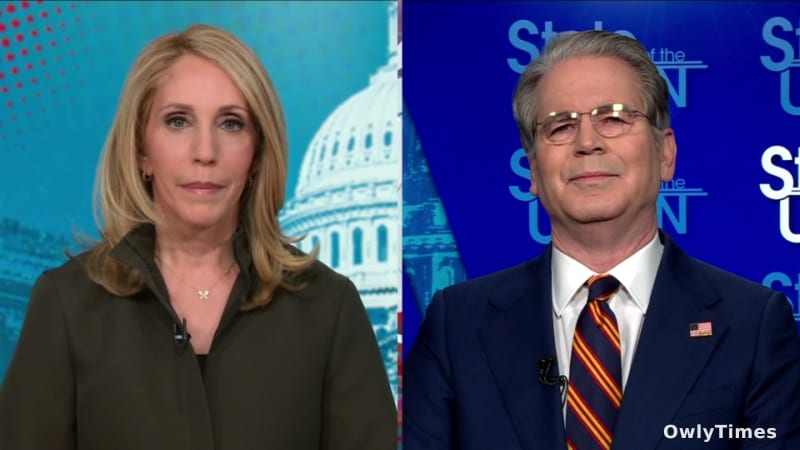
Treasury Secretary Bessent’s response to the ruling, as highlighted in the CNN interview with Dana Bash, was carefully calibrated. While acknowledging the Court’s decision, she emphasized the need for continued vigilance against unfair trade practices, subtly signaling the administration’s intent to work with Congress to address these issues. This is a crucial distinction. The administration isn’t abandoning its commitment to protecting American industries; it’s shifting the venue for those actions back to Capitol Hill. This benefits President Biden by allowing him to position himself as a defender of constitutional norms, contrasting himself with Trump’s unilateralist approach. However, it also introduces a significant political challenge: securing Congressional consensus on trade policy is notoriously difficult, given the diverse interests of different constituencies.
The reaction from the business community is equally telling. A business owner who challenged Trump’s tariffs, featured in a separate CNN segment, expressed relief at the Court’s decision, but also apprehension about the future. The uncertainty surrounding trade policy, even with Congressional oversight, remains a significant concern. This highlights a fundamental tension: while businesses generally prefer predictability, they are also wary of Congress’s susceptibility to lobbying and special interests. The economic impact of the tariffs themselves – estimated to have cost American consumers billions of dollars annually – is secondary to the question of how those costs are imposed. The ruling doesn’t eliminate the possibility of tariffs; it simply requires a more democratic process for their implementation.
Looking ahead, the political chess move to watch is how President Biden leverages this ruling to reshape the broader trade agenda. Will he attempt to forge a bipartisan coalition to address China’s trade practices, or will he prioritize domestic political considerations, potentially leading to a stalemate in Congress? The answer will reveal not only the administration’s trade strategy, but also its broader approach to governing – whether it intends to restore the traditional balance of power or continue to expand the executive branch’s authority. The next 60 days, as Congress reconvenes, will be critical in determining whether this Supreme Court decision truly marks a turning point in the ongoing struggle over control of American trade policy.





