
The Strategic Retreat: How the Supreme Court’s Tariff Ruling Reshapes Trump’s Economic Playbook
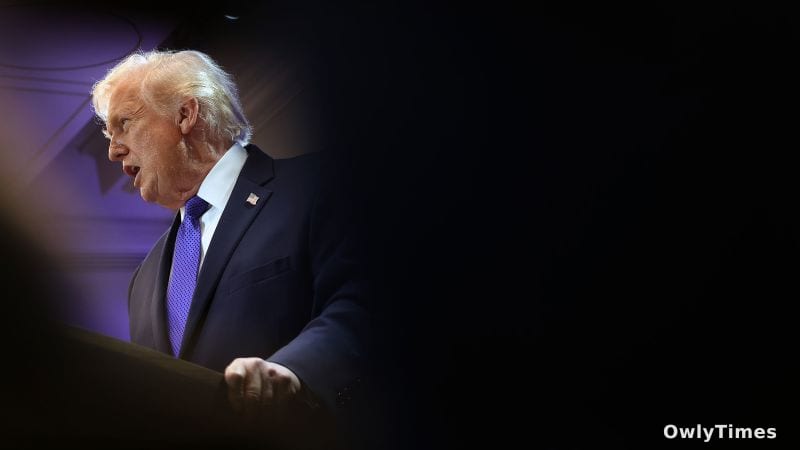
The Supreme Court’s Friday decision striking down Donald Trump’s signature global tariffs wasn’t simply a legal defeat; it was a calculated disruption of a strategy built on economic disruption. The ruling, delivered with the pointed timing of coinciding with a dismal 1.4% GDP growth report for the fourth quarter – the second-worst since 2016 – reveals a deeper political calculus at play. Trump attempted to project strength, claiming the decision somehow enhanced his tariff authority, but the reality is a significant constriction of his unilateral economic power. This isn’t about trade policy in isolation; it’s about the shifting balance of power within the Republican party and the looming question of whether to continue enabling a strategy demonstrably damaging to both the economy and the party’s political standing.
See the original CNN story for the full account.
The immediate fallout is clear: Trump has signaled a pivot to Section 122 of the Trade Act of 1974, initially announcing 10% tariffs (later increased to 15%) as a workaround. However, this move is demonstrably weaker than the authority overturned by the Court. While the initial tariff scheme offered expansive flexibility and minimal congressional oversight – requiring only a veto-proof majority to invalidate declared emergencies – Section 122 imposes a 15% cap, a 150-day limit requiring congressional extension, and questionable legal standing given the lack of an international payments problem. As Chief Justice John Roberts pointed out in a footnote, alternative tariff authorities are laden with “procedural prerequisites” and limitations. This isn’t a strengthening of position; it’s a forced retreat to less advantageous terrain. Who benefits and who loses? Trump loses the ability to swiftly and unilaterally impose significant economic pressure. American consumers and businesses lose the potential for further price increases. And, crucially, moderate Republicans gain an opening to distance themselves from a policy increasingly unpopular with voters.
The timing of the ruling is particularly revealing. The simultaneous release of the weak GDP figures – coupled with a lackluster jobs year and persistent inflation – underscores the economic headwinds facing Trump. While attributing economic stagnation solely to tariffs is an oversimplification, the uncertainty and added costs they create have undoubtedly exacerbated existing problems. Trump willingly embraced ownership of a struggling economy, a gamble that has demonstrably backfired. His net economic approval rating has plummeted from plus-6 to minus-12 since announcing the global tariffs on April 2nd, and a CNN poll last month revealed 62% disapproval of his tariff policies, including a significant 25% among Republican-leaning voters. This isn’t merely a policy disagreement; it’s a growing perception that Trump’s economic approach is actively harming the country. The parallel to the Smoot-Hawley Tariff Act of 1930, widely blamed for deepening the Great Depression, is not lost on economic historians – a historical precedent that highlights the dangers of protectionist policies.
The Supreme Court’s decision also exposes a fracture within the conservative legal establishment. Justice Brett Kavanaugh’s dissenting opinion, suggesting alternative tariff authorities, was directly challenged by Chief Justice Roberts, highlighting a fundamental disagreement over the scope of presidential power. More subtly, Justice Neil Gorsuch’s concurring opinion can be read as a veiled plea for Congress to reclaim its constitutional authority over trade policy. This isn’t simply a legal dispute; it’s a signal that even within the conservative wing of the Court, there’s growing discomfort with Trump’s expansive interpretation of executive power. This internal division within the judiciary further weakens Trump’s position and emboldens congressional Republicans to question his approach.
The critical question now is whether congressional Republicans will seize this opportunity to de-escalate. Many have been quietly tolerating Trump’s trade gambits, despite their conflict with the party’s traditional commitment to free markets. However, the combination of a Supreme Court rebuke, a weakening economy, and growing voter dissatisfaction creates a compelling incentive for a course correction. The political chess move to watch next isn’t Trump’s next tariff announcement, but rather the response from key Republican lawmakers. Will they continue to enable his increasingly constrained trade policy, or will they finally assert their own authority and push for a more sustainable economic strategy? The answer will reveal not only the future of trade policy, but also the future of the Republican party itself.