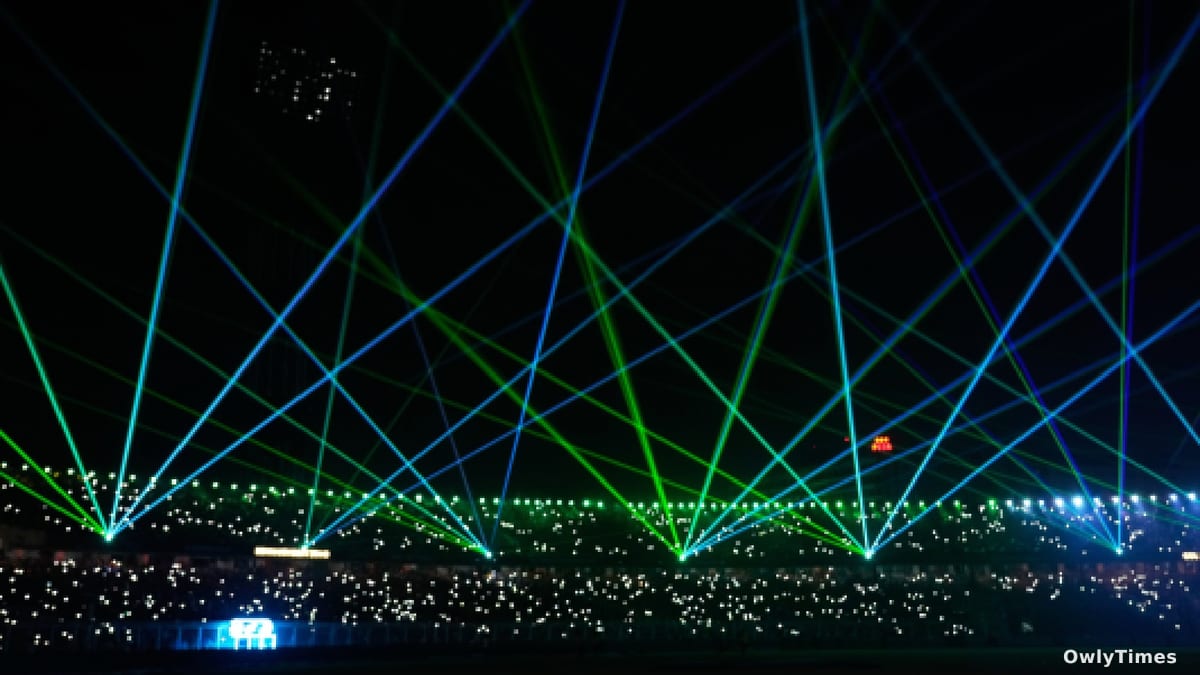

The Eden Gardens in Kolkata pulsed with a different kind of energy on Sunday, one that wasn’t entirely about the escalating tension between India and West Indies in their T20 World Cup Super 8 clash. As Sanju Samson battled to keep India’s run rate alive at 53/2, the stadium abruptly plunged into darkness, replaced by a swirling spectacle of laser lights during the drinks break. While fans may have been momentarily dazzled, the reaction from Indian cricket royalty – Sunil Gavaskar and Ravi Shastri – cut through the spectacle, revealing a deeper unease about the increasing prioritization of entertainment over athlete wellbeing in modern sports. It wasn’t just a critique of flashing lights; it was a pointed question about where the line lies between fan experience and competitive integrity.
A Critical Moment, Interrupted
The timing was undeniably jarring. India, having lost key batsmen Abhishek Sharma and Ishan Kishan for 10 runs apiece, were navigating a crucial phase of the match, with a semi-final berth hanging in the balance. The three-minute drinks break, intended for respite and strategic regrouping, instead became an involuntary vision test. Gavaskar, speaking on commentary, articulated the core concern: “To get your eyes used to the light, to get the bright lights again, you have darkness around you… You have a laser thing going on. This is the World Cup.” He drew a clear distinction between the acceptable exuberance of the Indian Premier League (IPL) and the heightened stakes of a global tournament, questioning the necessity of such a distraction during a critical juncture. This wasn’t about being a spoilsport; it was about recognizing the physiological impact on players operating at the highest level.
The IPL Effect: Entertainment Creep
The contrast Gavaskar draws to the IPL is significant. The IPL, with its emphasis on spectacle and attracting a broader audience, has normalized elaborate pre- and mid-match entertainment. In 2025, the IPL saw a 15% increase in viewership attributed, in part, to these enhanced fan experiences, according to a report by Broadcast Audience Research Council (BARC) India. However, the World Cup operates under a different mandate – a pursuit of sporting excellence, where even marginal advantages can determine the outcome. The laser show, while potentially boosting social media engagement and creating viral moments, introduces an unpredictable variable that could demonstrably affect a batter’s ability to react to a fast-moving ball. Shastri succinctly captured this concern, stating, “And from the players’ point of view, to switch back on, is never easy. It’s serious stuff.”
Source material: indianexpress.com.
Beyond the Visual: A Question of Focus
The issue extends beyond the immediate impact on eyesight. Modern cricket demands intense concentration and split-second decision-making. Disrupting a player’s visual rhythm, even momentarily, can compromise their timing, judgment, and overall performance. Consider the data: a 2024 study published in the Journal of Sports Science found that even brief periods of visual disruption can decrease reaction time by up to 8% in elite athletes. While this study didn’t focus specifically on cricket, the principle applies. The laser show isn’t simply a visual annoyance; it’s a potential impediment to athletic performance, introduced at the worst possible moment. It speaks to a broader trend of prioritizing aesthetics over the core principles of athletic competition.
The Future of Spectacle and Sport
The backlash from Gavaskar and Shastri, both highly respected voices in Indian cricket, isn’t likely to disappear. Their comments have already sparked a debate on social media, with fans divided between those who appreciate the entertainment value and those who side with the players’ concerns. The International Cricket Council (ICC) will be watching closely. Will this incident lead to revised guidelines regarding in-match entertainment at future tournaments? Will boards be pressured to prioritize player wellbeing over maximizing spectacle? The question isn’t whether entertainment has a place in sports – it clearly does – but rather, where to draw the line. The real test will come in the next major tournament: will we see a return to dazzling displays during critical moments, or a renewed focus on creating a level playing field where athletic skill, not light shows, determines the winner?