
Beyond Blood Pressure: Why Grocery Store Access Defines Tennessee’s Health Crisis
The latest rankings from America’s Health Rankings paint a stark picture: Tennessee consistently lags behind other states in key indicators of cardiovascular health, currently sitting at 43rd for high blood pressure and 45th for high cholesterol. While headlines focus on these numbers as a measure of individual failings, the data subtly points to a more systemic issue – one rooted not just in personal choices, but in the very infrastructure of food access. It’s not simply that Tennesseans have high blood pressure; it’s where they live and what options are available to them when they need to feed their families. This isn’t a story about willpower, it’s a story about geography and economic disparity shaping health outcomes.
Original reporting: newschannel9.com.
Dr. Matthew Hitchcock of Hitchcock Family Medicine isn’t surprised by the state’s poor performance. “We see it every day in clinic – patients with high blood pressure, with diabetes, with all of these kind of chronic conditions,” he told me. His observation, while clinically grounded, underscores a crucial point often lost in public health messaging: these aren’t isolated cases, but patterns reflecting broader environmental factors. Dr. Hitchcock emphasizes the “controllable factors” in health, specifically diet, and notes the strategic layout of grocery stores – fresh produce typically relegated to the perimeter while processed foods dominate the center aisles. This isn’t accidental; it’s a design intended to influence purchasing decisions. But what happens when the perimeter – the healthy options – are simply too far away to reach?
Food Deserts and the Distance to Wellness
The challenge isn’t just about making “good” choices; it’s about having good choices available. Rebecca Love, co-founder of the non-profit SEED in Chattanooga, directly addresses this issue. Her organization focuses on cultivating fresh produce within “food deserts” – areas where affordable, healthy food is difficult to obtain. Love describes the reality for residents of the Eastdale community: a 15-to-20-minute drive is required to reach the nearest grocery store offering fresh produce. This isn’t a minor inconvenience; it’s a significant barrier, particularly for individuals without reliable transportation, limited time, or financial constraints. The time cost alone – an hour round trip for groceries – disproportionately impacts low-income families and those working multiple jobs.
It’s important to understand the methodology behind identifying food deserts. The USDA defines them based on median income and distance to a supermarket, but this metric doesn’t fully capture the nuance of access. It doesn’t account for the quality of produce available, the affordability of healthy options within the supermarket, or the presence of corner stores offering only processed foods. Furthermore, the USDA’s definition uses a one-mile threshold in urban areas, a distance easily walkable for some, but a substantial burden for others, especially those with mobility issues or safety concerns. The current metrics, while useful, likely underestimate the true extent of food insecurity and its impact on health.
Cardiac Rehab as a Symptom, Not a Solution
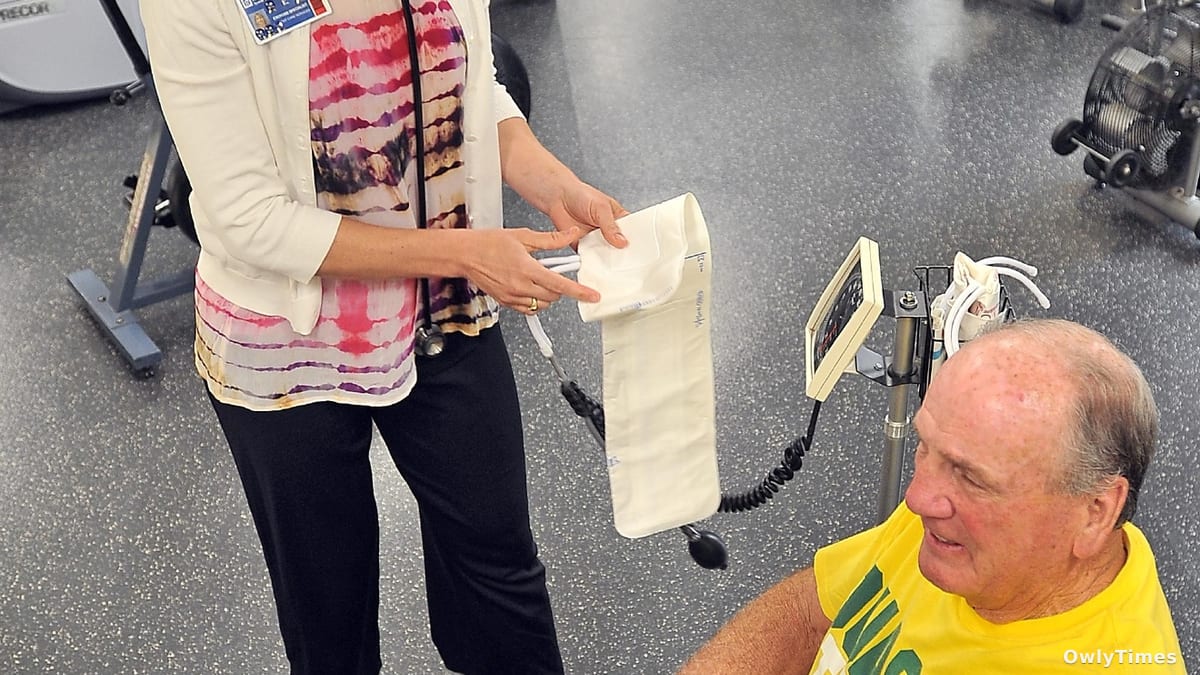
The opening image accompanying this report – an exercise specialist checking a patient’s blood pressure at Asante Rogue Regional Medical Center’s new cardiac rehabilitation center – is telling. While cardiac rehab is undoubtedly a valuable service, it represents a reactive approach to a preventable problem. We are investing in treating the consequences of poor diet and limited access, rather than addressing the root causes. Tennessee’s investment in healthcare infrastructure, while necessary, is being outpaced by the growing health disparities fueled by systemic inequities in food access. In 2025, the state allocated $12 million to expand cardiac care facilities, a figure dwarfed by the estimated $3.5 billion annual cost of treating cardiovascular disease in the state.
This isn’t to diminish the importance of cardiac rehabilitation. Amy Eaton, the exercise specialist pictured, is providing crucial support to patients like Tony Monteleone as they recover. However, the very existence of this new center highlights the scale of the problem. The demand for cardiac rehabilitation is a direct consequence of the widespread prevalence of heart disease, which, as Dr. Hitchcock points out, is heavily influenced by lifestyle choices – choices often constrained by environmental factors.
The Next Harvest: Mapping Solutions and Measuring Impact
The next crucial step in addressing Tennessee’s health crisis isn’t simply encouraging healthier eating; it’s actively dismantling the barriers to healthy eating. This requires a multi-pronged approach. We need more granular data on food access, moving beyond the USDA’s broad metrics to map “food swamps” – areas saturated with unhealthy options – and identify specific neighborhoods lacking access to affordable produce. Simultaneously, we need to incentivize grocery stores to locate in underserved areas, potentially through tax breaks or subsidies.
But perhaps the most promising avenue lies in supporting community-led initiatives like SEED. Their model – growing food locally, providing education on nutrition and cooking, and fostering community engagement – offers a sustainable solution that empowers residents to take control of their health. The critical question now is: can these localized efforts scale to meet the widespread need? Future research should focus on quantifying the impact of these interventions on health outcomes, specifically tracking changes in blood pressure, cholesterol levels, and rates of chronic disease in communities with increased access to fresh produce. We need to move beyond simply identifying the problem and begin rigorously evaluating the effectiveness of potential solutions. Will Tennessee prioritize preventative measures, or continue to invest primarily in treating the symptoms of a preventable crisis? The answer will determine the state’s health trajectory for years to come.