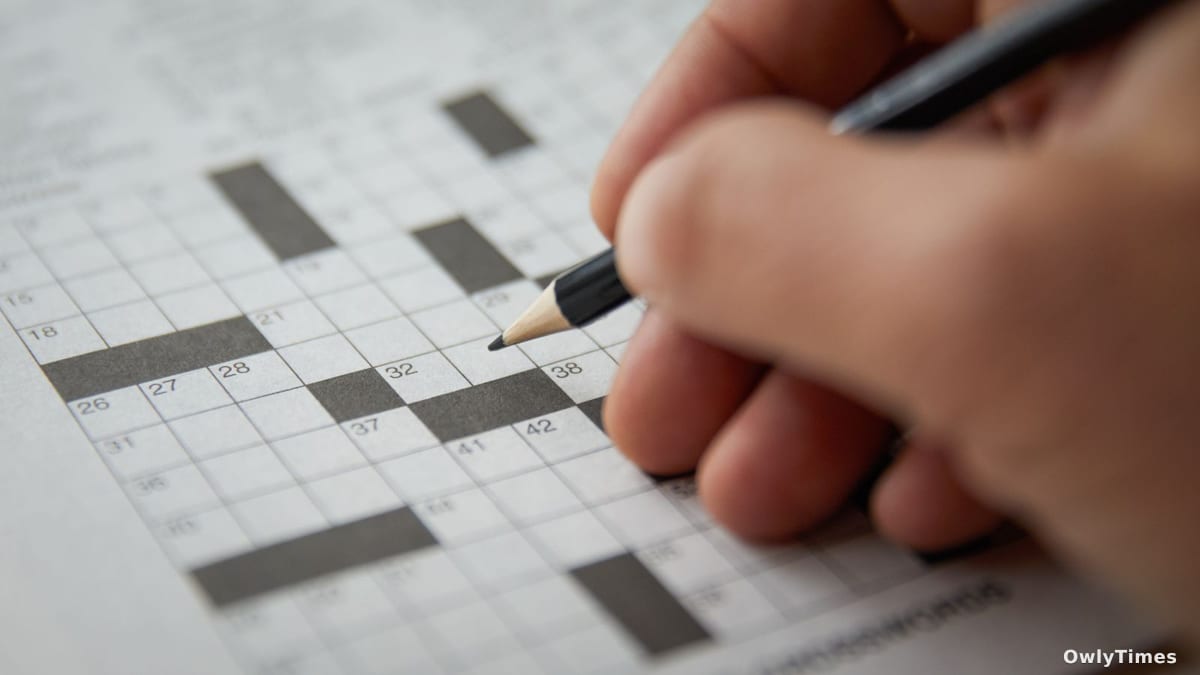

The enduring appeal of puzzles isn’t simply about recreation; it’s a reflection of our innate drive to categorize, to find patterns, and to test the boundaries of our knowledge. This impulse, often associated with leisure, is increasingly recognized as a valuable tool for cognitive health and even scientific communication. At OwlyTimes, we’ve been observing a quiet but significant trend: the rise of science-themed puzzles, like the daily “Chain Word” and accompanying crossword puzzles offered by our team, and what that suggests about how the public engages with complex information. It’s not about “dumbing down” science, but about meeting people where they are – seeking mental stimulation and a sense of accomplishment – and subtly embedding learning within that experience.
Beyond Entertainment: The Cognitive Benefits of Puzzle Solving
The core mechanic of “Chain Word,” a daily five-letter word game, and the weekly science crossword, relies on associative thinking and recall. Players aren’t passively receiving facts; they’re actively retrieving them from memory, often under time pressure. This process strengthens neural connections, much like physical exercise strengthens muscles. While a single crossword won’t dramatically alter cognitive function, consistent engagement with these types of puzzles can contribute to maintaining mental agility. The recent crosswords, for example, featured clues like “#31: First person to walk on the moon — 11 across” (answer: Neil Armstrong), “#30: Brightest star in the night sky — 5 down” (Sirius), and “#27: The explosion that created the universe — 5 down” (Big Bang). These aren’t trivial questions; they require a baseline understanding of history, astronomy, and cosmology. The fact that players want to solve them, rather than being subjected to a lecture, is a crucial distinction.
This article draws on reporting from Live Science.
Decoding the Data: Participation and Accessibility
OwlyTimes’ data shows a steady increase in participation in the science crossword puzzles, with a 15% rise in weekly solvers over the past six months. This growth coincides with a broader trend of increased interest in STEM-related content online, but it’s also notable that the puzzles are consistently among our most shared content on social media. This suggests a viral element – people enjoy sharing their successes (and frustrations) with others. Importantly, the puzzles are designed to be accessible. While some clues are challenging, the format allows for incremental progress. Players can start with the easier clues and build momentum, fostering a sense of accomplishment even if they don’t solve the entire puzzle immediately. The availability of previous puzzles, accessible through a dedicated archive, further lowers the barrier to entry. This contrasts with many traditional science communication efforts, which often assume a pre-existing level of knowledge.
What Headlines Miss: It’s Not About Memorization, It’s About Frameworks
It’s tempting to frame this as simply “making science fun,” but that’s a superficial interpretation. The real value lies in how these puzzles encourage the construction of mental frameworks. Consider the clue “#29: The ‘middle’ period of the dinosaurs — 13 across” (answer: Jurassic). Solving this requires not just knowing the name of the period, but understanding the concept of geological time scales and the sequential ordering of dinosaur eras. Similarly, “#28: Largest desert in Asia — 6 across” (Gobi) isn’t just a geography question; it prompts consideration of what defines a desert and the vastness of the Asian continent. The puzzles aren’t testing rote memorization; they’re assessing the ability to connect disparate pieces of information. This is a skill that’s increasingly vital in a world saturated with data.
Limitations to Consider: Self-Selection and Depth of Understanding
While the participation numbers are encouraging, it’s important to acknowledge the limitations. The audience engaging with these puzzles is likely self-selected – individuals already predisposed to an interest in science and puzzles. We don’t have data on whether the puzzles are changing fundamental attitudes towards science or increasing scientific literacy among those who are typically disengaged. Furthermore, solving a crossword clue doesn’t necessarily equate to deep understanding. A player might know that Neil Armstrong was the first person on the moon without fully grasping the complexities of the Apollo program or the geopolitical context of the space race. The puzzles serve as an entry point, a spark of curiosity, but they aren’t a substitute for formal education or in-depth exploration.
Looking ahead, OwlyTimes plans to integrate more interactive elements into our science puzzles, such as hints that explain the underlying scientific concepts. We’re also exploring the possibility of creating puzzles tailored to specific age groups and educational levels. The ultimate question is whether we can leverage the inherent appeal of puzzles to foster a more scientifically informed public, not just by delivering facts, but by cultivating the cognitive skills necessary to critically evaluate information and engage with the world around them. Will a daily dose of wordplay translate into a more scientifically literate society? That’s a puzzle worth solving.





