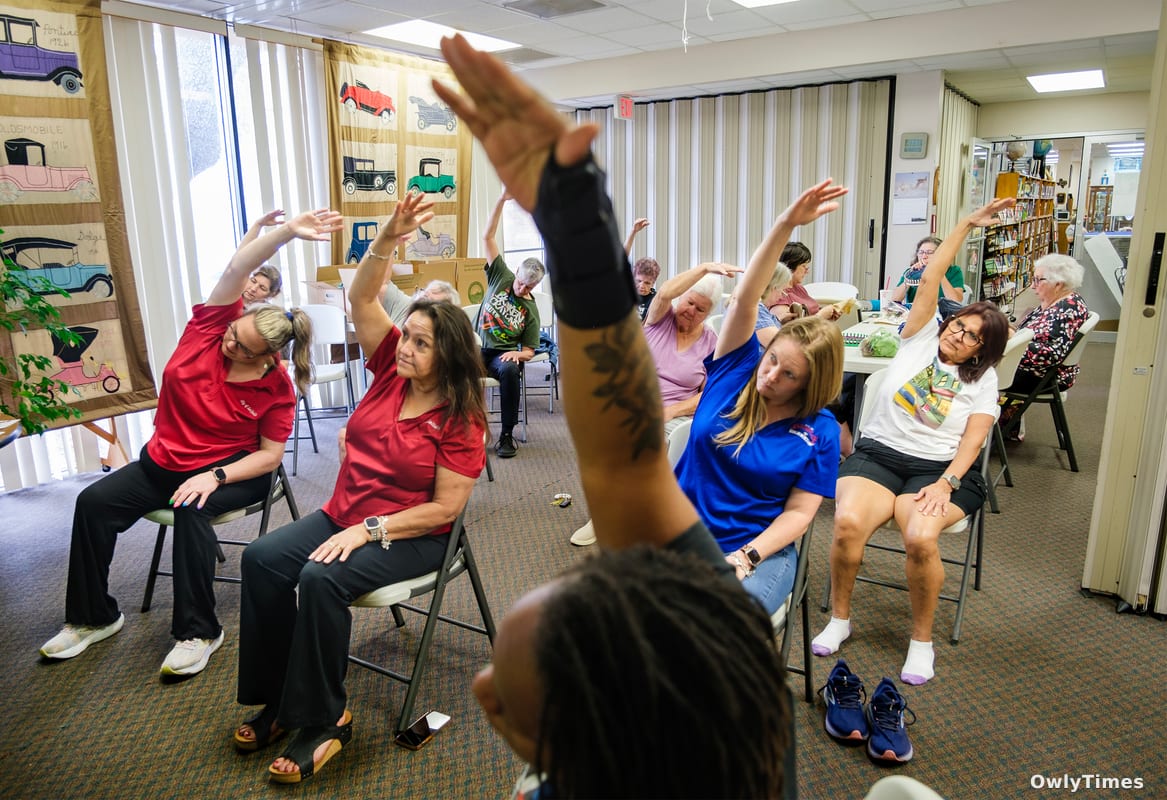

The quiet revolution happening in Central Texas libraries isn’t about shushing patrons or expanding book collections—it’s about addressing a critical gap in mental healthcare access. While headlines might focus on yoga classes and knitting circles, the “Libraries for Health” initiative, funded by the St. David’s Foundation, represents a strategic rethinking of where and how mental health support is delivered, particularly in rural communities. The program isn’t simply adding services to libraries; it’s leveraging existing community trust and infrastructure to overcome barriers that traditionally prevent people from seeking help. This isn’t a replacement for clinical care, but a crucial first step – a low-friction entry point for individuals who might otherwise fall through the cracks.
The impetus for Libraries for Health stemmed from a 2021 community health needs assessment revealing a significant shortage of mental health providers across the five Central Texas counties served by St. David’s Foundation. Abena Asante, a senior program officer at the foundation, explained the core problem: “Looking at the behavioral health workforce, we know that there's a shortage of mental health providers, not only here in urban communities, but also more so in rural [communities].” This shortage is compounded in rural areas by practical obstacles like transportation and a general lack of awareness about available resources. Rather than attempting to build entirely new systems, the foundation identified libraries as uniquely positioned assets. Most communities already have them, and residents rely on them for far more than just books – access to computers, assistance with vital paperwork, and a safe, familiar space.
Reporting from kut.org informs this analysis.
In Smithville, a town 35 miles southeast of Austin, this translates to free chair yoga classes deliberately scheduled alongside the decades-long meetings of “The Knitwits,” a local knitting group. Judy Bergeron, the Smithville Library Director, observed that even those initially hesitant to join the yoga class are subtly benefiting from the increased movement and social interaction. Cheryl McNeil, a Smithville resident, described the chair yoga classes as “a game changer,” allowing her to maintain physical activity without the need to travel to a neighboring town. But the program’s impact extends beyond physical wellbeing. The foundation also funded a peer support specialist, Britany Khan Flores, whose lived experience with addiction and mental health challenges allows her to connect with patrons on a deeply personal level.
Flores’ role is particularly noteworthy. Unlike traditional clinical settings, peer support emphasizes shared experience and reduces the power dynamic often present in therapeutic relationships. As TaKisha Moore, an expert on the peer support model who oversaw the program, explained, “They feel more comfortable when they are just speaking to a regular person — someone that they feel is not like that therapist or that psychiatrist who has the power and ability to write on a piece of paper and maybe change their life in some kind of way.” This approach is designed to lower the “friction” and “pushback” associated with seeking help, making it more accessible to those who might be hesitant to engage with traditional mental healthcare systems. The program initially partnered with Via Hope, transitioning to Austin Mental Health Community after Via Hope’s closure in 2023, ensuring continuity of care.
The success in Smithville is mirrored in other communities like Jarrell, where the library has expanded its offerings to include support for young families, seniors, veterans, and individuals dealing with grief and anxiety. Susan Gregurek, the Jarrell Community Library and Resource Center director, highlights how the program has fostered partnerships with organizations like Foundation Communities and AGE of Central Texas, transforming the library into a central hub for health and social services. This shift in mindset – from a repository of books to a comprehensive resource center – is perhaps the most significant outcome of the initiative.
However, the long-term sustainability of Libraries for Health remains a key concern. The initial pilot program concluded in 2025, and while St. David’s Foundation has provided extended funding, participating libraries will need to secure alternative funding sources by the end of 2026, either through grants or inclusion in city and county budgets. This reliance on continued funding presents a vulnerability. Furthermore, the program’s impact is currently limited to eight Central Texas libraries. While the foundation has made a public toolkit available online – downloaded over 1,000 times – scaling the model requires significant investment and a commitment from local governments and community organizations. The data collected so far focuses on program participation and anecdotal evidence of positive impact; rigorous, longitudinal studies are needed to quantify the program’s effect on mental health outcomes and cost-effectiveness.
Looking ahead, the crucial question isn’t simply whether other communities will adopt the Libraries for Health model, but how they will integrate it into existing healthcare infrastructure. Will libraries become formally recognized as essential components of the mental health safety net, with dedicated funding streams and trained staff? Or will these innovative programs remain reliant on philanthropic support and the dedication of individual library directors? The coming years will reveal whether this promising initiative can evolve from a pilot project into a sustainable, scalable solution for addressing the pervasive mental health challenges facing rural communities.





