
The Calculus of Succession: How Troy Nehls Engineered a Dynasty
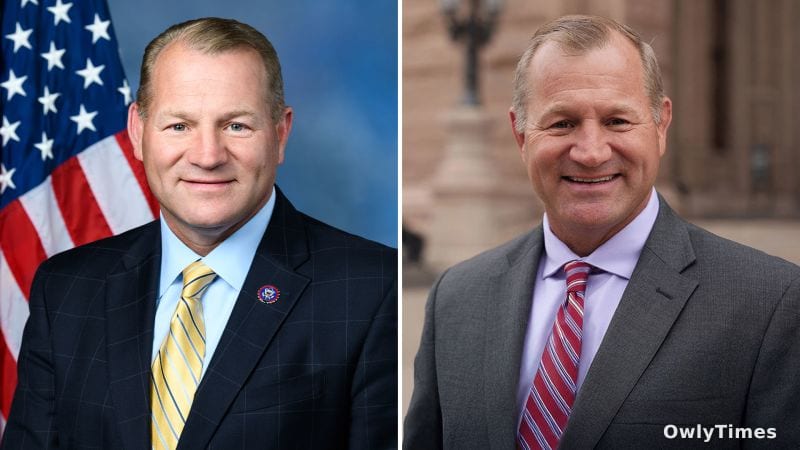
The decision of Troy Nehls to forgo a fourth term in Congress wasn’t a spontaneous act of familial affection, but a calculated maneuver to maintain control of Texas’ 22nd District – and to demonstrate the enduring power of personal loyalty within the modern Republican party. While framed as a brotherly handover, the speed with which Trever Nehls entered the race, secured a presidential endorsement, and is now favored to win reveals a strategic succession plan designed to minimize disruption and maximize continuity. This isn’t simply about one brother replacing another; it’s about a carefully orchestrated transfer of political capital, leveraging name recognition and a shared ideological alignment to ensure a seamless transition in a district increasingly vital to the state’s Republican base.
Based on the original CNN report.
The timeline is particularly revealing. Nehls’s decision came after spending time at home during last year’s government shutdown, a period that likely underscored the demands of the office and perhaps prompted a reassessment of his long-term goals. Crucially, the conversation with Trever wasn’t a hesitant inquiry, but a direct proposition. Within fifteen minutes of Trever’s agreement, Troy Nehls had secured a full endorsement from Donald Trump. This isn’t the organic emergence of a candidate; it’s a pre-approved replacement, signaling a level of coordination rarely seen in open primaries. Who benefits and who loses here is clear: the Nehls family and their network benefit, while any potential challengers are effectively sidelined before they can gain traction. The speed of the endorsement also serves as a potent message to other ambitious Republicans – loyalty to Trump is rewarded, and challenging a pre-selected candidate is a risky proposition.
The historical parallel here isn’t to other sibling politicians, but to dynastic politics of earlier eras. While the United States doesn’t have a formal aristocracy, the ability to transfer political power within a family – particularly when bolstered by name recognition and a loyal base – echoes patterns seen in political families like the Adamses or the Kennedys. However, the modern twist is the explicit reliance on a single, powerful endorser. In the past, a family’s influence stemmed from established wealth and social networks. Today, it’s increasingly dependent on aligning with a dominant figure like Trump, who can bestow legitimacy and mobilize support with a single tweet. Roll Call’s analysis confirming this would be the first instance of a twin succeeding a twin in Congress underscores the unusual nature of this transfer, but the underlying principle – consolidating power within a trusted circle – is a long-standing political tactic.
The brothers’ shared political profile is central to the strategy’s success. Both are Army veterans, former constables, and, crucially, staunch Trump loyalists. Trever Nehls actively campaigned for Trump in Wisconsin during 2024, possessing the requisite credentials for a smooth transition. The brothers themselves downplay any ideological differences, with Trever stating he sees “no high degree variation between he and I.” This isn’t a case of a moderate replacing a firebrand, or vice versa. It’s a replication of the existing political brand, minimizing the risk of alienating voters. The frequent confusion among Capitol Hill colleagues regarding the twins’ identities, while amusing, also highlights the power of their shared image and the potential for seamless continuity. The fact that over 50% of Fort Bend County already recognizes them as identical twins provides a significant advantage in a district where name recognition is paramount.
However, the arrangement isn’t without its tensions. The emphasis on identical alignment, while politically expedient, raises questions about independent thought and representation. The brothers’ insistence on their similarities, coupled with Trever’s possession of a “20-foot inflatable Trump,” suggests a willingness to embrace a highly partisan approach. While this may resonate with the base, it could further polarize the district and limit opportunities for cross-party collaboration. The subtle competition – Troy’s playful jab about Trever being “a very handsome, good-looking fellow” – hints at underlying dynamics that could surface once Trever is in office. The question now isn’t whether Trever Nehls will win the primary, but whether he will actively cultivate his own political identity, or remain a near-perfect replica of his brother. That’s the political chess move to watch next: will Trever Nehls attempt to differentiate himself, or will he double down on the strategy of seamless succession?





