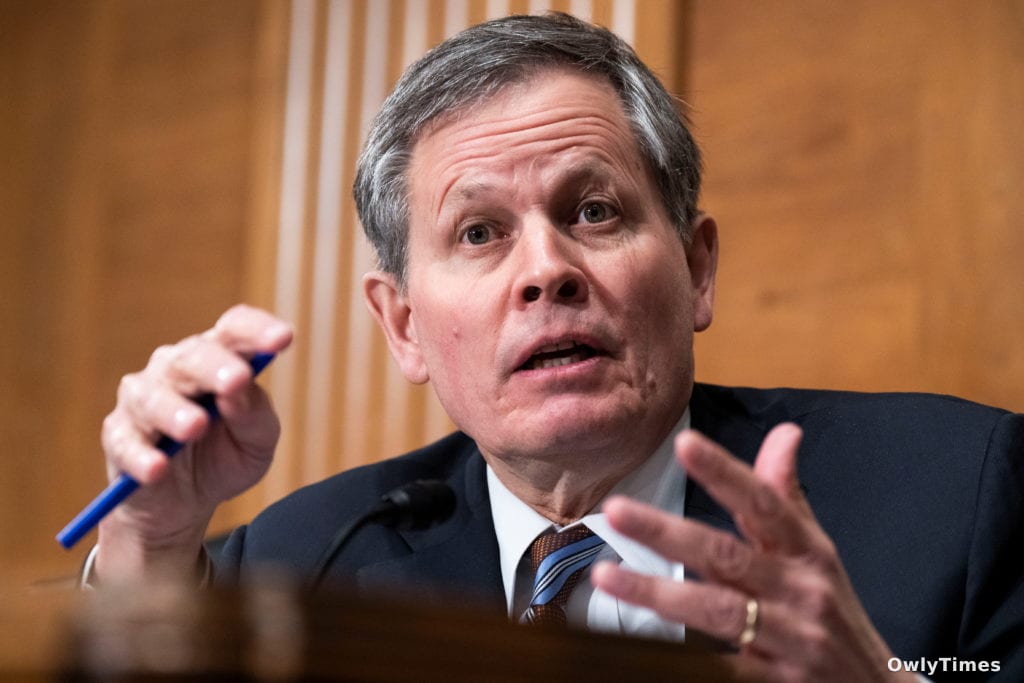

The abrupt retirement of Steve Daines isn’t a case of a senator simply wanting more time with his grandchildren; it’s a textbook example of power transfer, meticulously planned and executed to maintain control of a Senate seat. The timing – minutes before Montana’s filing deadline – wasn’t happenstance, but a strategic lock designed to prevent a competitive primary and ensure a pre-approved candidate, Kurt Alme, inherits the position. This isn’t about stepping aside; it’s about succession, and the implications extend far beyond Montana’s borders, revealing a growing trend of incumbent power brokers actively selecting their replacements.
A Calculated Exit: Daines’s Long Game
Daines’s statement citing family reasons feels perfunctory, a necessary cover for a decision likely made months ago. The 63-year-old senator, while not facing immediate electoral threats, operates in a political landscape increasingly defined by unpredictable primaries fueled by populist sentiment. A contested primary would have risked fracturing the Montana Republican base, potentially opening the door for a more unpredictable candidate – a risk Daines clearly sought to avoid. The $1.8 million Daines had already raised for his reelection campaign, as reported by OpenSecrets, now becomes a resource for Alme, effectively transferring a war chest alongside the endorsement. This isn’t organic political evolution; it’s engineered continuity.
Original reporting: PBS.
Trump’s Role: Cementing the Deal
The speed of Donald Trump’s endorsement of Kurt Alme is the most telling detail. Within minutes of Daines’s announcement, Trump issued a statement not just endorsing Alme, but explicitly acknowledging Daines’s role in the transition. “Sadly for our Country, Steve’s Term is up,” Trump stated, “and he has decided to leave the Senate and, ‘pass the torch’ to Kurt Alme, my TRUMP 45 and TRUMP 47 U.S. Attorney.” This isn’t a casual observation; it’s a public ratification of a pre-arranged agreement. Trump’s involvement isn’t surprising – he’s demonstrated a willingness to reward loyalty and maintain control over the Republican party apparatus. But the openness of the acknowledgement is a new level of transparency regarding these types of political maneuvers. It signals a shift towards a more overt system of candidate pre-selection, particularly within the Trump-aligned wing of the party.
The Garcia Precedent: A Growing Trend of Succession Politics
Montana’s situation isn’t isolated. The House censure of Chuy Garcia last fall for engineering his retirement to benefit his chief of staff highlights a similar pattern. While the circumstances differ – Garcia faced ethics concerns alongside the succession plan – the underlying principle is the same: an incumbent leveraging their position to handpick a successor. The censure, however, didn’t deter the practice, suggesting a limited deterrent effect. What’s evolving is the sophistication of the strategy. Daines appears to have learned from Garcia’s experience, opting for a more seamless transition with a pre-vetted candidate already positioned and rapidly endorsed by the most powerful figure in the Republican party. This suggests a growing playbook for incumbents seeking to maintain influence beyond their term limits.
Who Benefits and Who Loses in Montana?
The immediate beneficiaries are Kurt Alme and Donald Trump. Alme gains a clear path to the Senate, bypassing a potentially bruising primary and inheriting a significant fundraising advantage. Trump solidifies his control over the Republican party, placing another loyalist in a key Senate seat. Daines also benefits, retaining influence through his chosen successor and avoiding the uncertainties of a competitive reelection campaign. The losers are Montana voters, whose choices have been effectively narrowed before the primary even begins. The Montana Republican primary process itself is diminished, becoming a formality rather than a genuine contest of ideas. And, potentially, any other ambitious Montana Republican who might have considered challenging Daines is sidelined.
The Next Chess Move: Senate Control and the 2024 Landscape
The political chess move to watch next isn’t in Montana, but in Washington. With the Senate delicately balanced, every seat is critical. The question now is whether this model of engineered succession will become more prevalent, particularly in states with vulnerable incumbents. Will other senators, facing similar pressures, attempt to replicate Daines’s strategy? More specifically, will other Trump-aligned senators begin actively grooming and endorsing successors? The success of Alme’s campaign – and the lack of significant backlash against Daines – will serve as a test case. The next six months will reveal whether this is an isolated incident or the beginning of a new era of pre-selected Senate candidates, fundamentally altering the dynamics of American political representation.