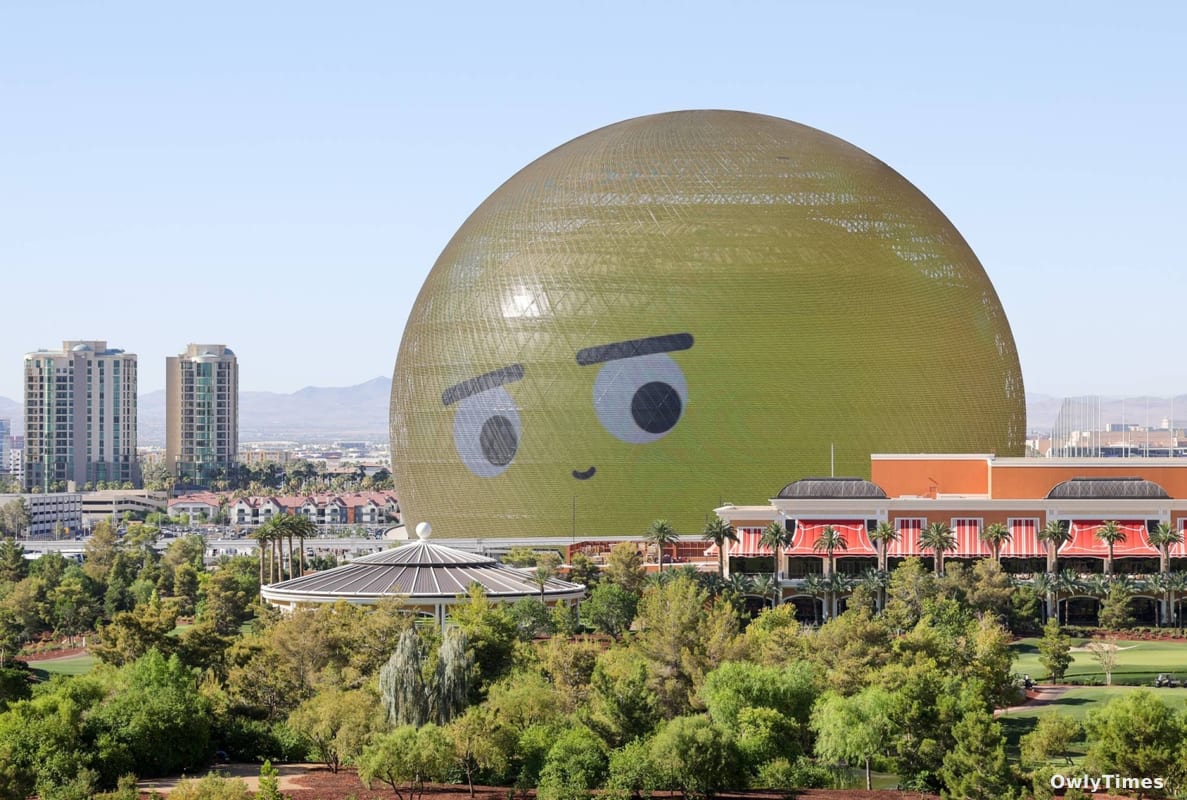

The first chords of a U2 concert reverberated not through a stadium, but around one. Last September, the Las Vegas Sphere didn’t just host a show; it became the show, its 366-foot LED screen enveloping the audience in a dizzying, immersive experience. Now, that same ambition is setting its sights on Tokyo, with SBI Holdings announcing plans to replicate the Sphere in the Odaiba waterfront district, a project that’s less about building an arena and more about betting on the future of how we experience entertainment. This isn’t simply a venue being duplicated; it’s a cultural statement about the escalating arms race for attention in a world saturated with content.
The Price of Presence: A Billion-Dollar Gamble
The initial estimate of ¥350 billion ($2.2 billion) to build the Tokyo Sphere is a staggering figure, even for a city known for its architectural marvels. But Yoshitaka Kitao, Chairman and President of SBI Holdings, admits that number could balloon to ¥500 billion ($3.2 billion) depending on fluctuating global conditions and construction costs. To put that in perspective, Tokyo’s Olympic Stadium, built for the 2020 games, cost roughly ¥150 billion ($1 billion). The difference isn’t just scale, it’s technology. The Sphere’s defining feature – its internal, wraparound LED screen – is a bespoke creation, pushing the boundaries of visual display. This isn’t about providing seats; it’s about creating a fully enclosed, digitally-augmented reality, and that comes at a premium. The question isn’t whether SBI can afford to build it, but whether the market will pay for the experience.
Source material: japantimes.co.jp.
Beyond Concerts: The Diversification of a Financial Giant
SBI Holdings isn’t a traditional entertainment company. It’s a financial group with interests spanning banking, insurance, and asset management. This move into media and entertainment, spearheaded by the partnership with Madison Square Garden (MSG) Entertainment, signals a significant diversification strategy. In a low-interest rate environment, and facing increasing competition in the financial sector, SBI is looking to future-proof its portfolio by investing in experiences – something money can’t easily replicate. Kitao’s vision extends beyond concerts and sporting events; he envisions the Sphere hosting everything from corporate presentations to virtual tourism experiences. This is a calculated risk, leveraging SBI’s financial muscle to establish a foothold in a rapidly evolving entertainment landscape. It’s a recognition that the lines between finance, technology, and culture are blurring, and that owning the infrastructure of immersive experiences could be a lucrative position to hold.
The Odaiba District: A Testbed for Tomorrow’s Tokyo
The choice of Odaiba as a potential location is particularly telling. Once envisioned as a futuristic entertainment hub, Odaiba has struggled to fully realize its potential, facing challenges from limited accessibility and competition from other districts. A Sphere-like arena could be the catalyst it needs, drawing visitors and revitalizing the area. However, Odaiba’s history also serves as a cautionary tale. Ambitious projects have faltered there before, hampered by logistical hurdles and shifting consumer preferences. The success of the Tokyo Sphere will depend not only on the technology itself, but also on its integration into the surrounding urban fabric and its ability to attract a consistent flow of visitors. The district is already home to TeamLab Borderless, a digital art museum that draws millions annually, demonstrating a clear appetite for immersive experiences. But the Sphere represents a different order of magnitude – a gamble on a scale Odaiba hasn’t seen before.
What Does This Mean for the Future of Live Entertainment?
The announcement of the Tokyo Sphere isn’t just a local story; it’s a bellwether for the global entertainment industry. The Las Vegas Sphere, despite initial skepticism about its price tag and potential for overstimulation, has proven to be a commercial success, with U2’s residency generating over $123 million in revenue during its first four months. This success has emboldened SBI and MSG to explore expansion, and Tokyo represents a particularly attractive market given its tech-savvy population and appetite for innovative experiences. But the real question is whether this model is scalable. Can the “wow” factor of a fully immersive arena be replicated in other cities? Will audiences continue to pay a premium for these experiences, or will they eventually seek out more intimate and authentic forms of entertainment? The Tokyo project will be a crucial test case, and its outcome will likely shape the future of live entertainment for years to come. Will we see a world where concerts are less about the artist and more about the environment around the artist? That’s the future SBI Holdings is betting on, and the industry will be watching closely to see if they’re right.