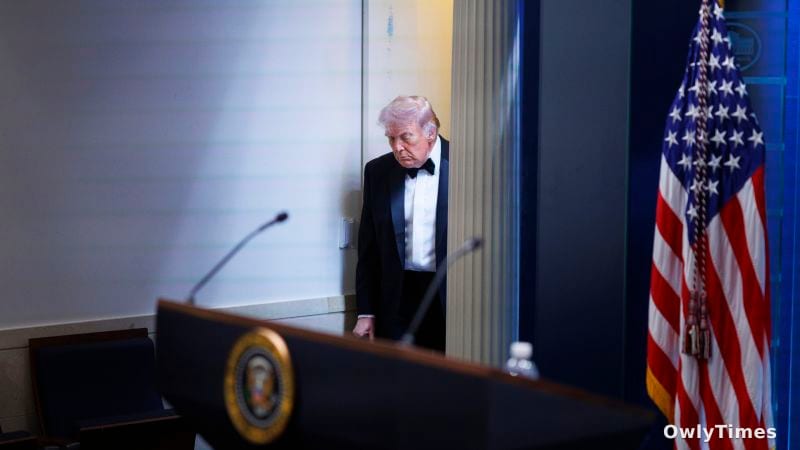

The strategic calculus behind the attempted infiltration of the White House Correspondents’ Association Dinner rests on a grim reality: in an era of heightened political friction, the softest targets for extremist violence are the very rituals that define American civic life. By allegedly targeting the Cabinet at a celebration of free speech, the suspect, identified by Deputy Attorney General Todd Blanche as Cole Tomas Allen, sought to transform a traditional gala into a tactical vulnerability for the U.S. government. For the assailant, the goal was not merely harm, but the total disruption of the institutional continuity that allows a free press and an executive branch to coexist in the same room.
Who benefits and who loses from such an event is a calculus of optics and security. The President, Donald Trump, gains a renewed opportunity to frame himself as a providential figure—a narrative he has leaned into since the 2024 campaign assassination attempt in Butler, Pennsylvania. By immediately pivoting to his proposal for a bulletproof, drone-proof White House ballroom, Trump is attempting to trade the vulnerability of public venues for a hardened, government-controlled environment. Conversely, the press loses the traditional distance that keeps them from being mere guests of the state. If the venue shifts to the White House, the dinner ceases to be a celebration of independent scrutiny and becomes a state-sanctioned event on government property.
The security failure exposes a critical contradiction in how Washington manages risk. While the Secret Service successfully prevented the gunman from reaching the ballroom, the fact that an individual could secure a hotel room and bypass perimeter metal detectors—which were not mandated until guests reached the subterranean ballroom levels—highlights a massive gap in protective intelligence. Texas Republican Rep. Michael McCaul pointed to the chilling reality of this failure on CNN’s State of the Union, noting that the simultaneous presence of the President, Vice President JD Vance, and the Speaker of the House at the head table created a single point of failure that could have paralyzed the entire line of presidential succession.
This atmosphere of pervasive dread is not entirely new, but it is becoming more institutionalized. History serves as a haunting backdrop here; the 2011 shooting of Rep. Gabby Giffords, the 2017 attack on Rep. Steve Scalise, and the 2021 Capitol breach represent a trajectory of political violence that has moved from the fringes of protest to the heart of government proceedings. As Trump noted to Norah O’Donnell on CBS’s 60 Minutes, violence has been a constant throughout the last 500 years of history, yet the current frequency of these threats is forcing public officials to consider the personal cost of their careers. Democratic Rep. Jared Moskowitz underscored this toll, noting that the constant threat of violence is causing families to pressure lawmakers to abandon public service entirely.
The political chess move to watch next will be the Department of Homeland Security’s determination on whether to designate the annual dinner as a National Security Special Event. Such a move would mirror the security protocols used for the Super Bowl or international summits, effectively ending the era of the dinner as a relatively accessible social event. While this would solve the tactical vulnerability of the current venue, it would also represent a symbolic surrender to the reality that in the 21st century, the essential rituals of democracy may no longer be sustainable in open, public spaces. The next reading of the security protocols for upcoming mass-attendance government functions will show whether the administration chooses to fortify these institutions or risk the optics of a bunker-style governance.





