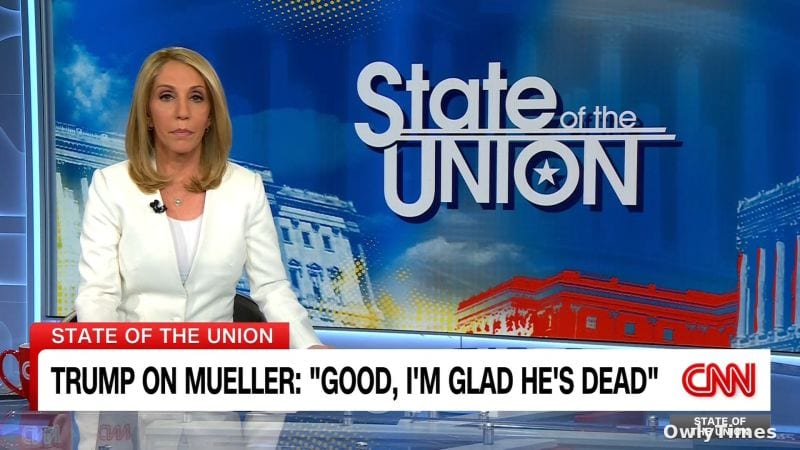

Is political civility officially dead? Because if Donald Trump celebrating the death of Robert Mueller isn’t a flashing red sign, I’m not sure what is. The immediate outrage cycle will predictably churn, but the real story here isn’t the shocking lack of decorum – it’s the normalization of spite as a core tenet of American political engagement. We’ve moved beyond disagreement to a place where schadenfreude is openly displayed by a former president, and that’s a far more dangerous precedent than any single investigation.
Dana Bash’s assessment on CNN – that this “refusal to show any grace to perceived foes, even after death, is a feature, not a bug” – cuts to the quick. It’s not an aberration; it’s intentional. This isn’t about Mueller specifically, it’s about signaling to a base that ruthlessness is rewarded, and that enemies deserve no quarter. Think about the implications beyond Washington. This kind of rhetoric bleeds into everyday life, fueling the escalating polarization that makes even grocery shopping a potential flashpoint. It’s easy to dismiss this as “just politics,” but the erosion of basic respect has real-world consequences for families, communities, and the very fabric of our democracy.
Original reporting: CNN.
The broader context here is the ongoing fracturing of shared reality. While the news cycle is currently dominated by the deployment of ICE agents to airports – a move sparking outrage from Democrats like Hakeem Jeffries, who called it “the last thing that the American people need” – and debates over funding for the Department of Homeland Security, these are symptoms of a deeper malaise. The ICE deployment, as highlighted by a former acting ICE director under Obama, isn’t about border security; it’s about sending a message. It’s about flexing power, about instilling fear, and about reinforcing a narrative of “us versus them.” The fact that Anthony Homan acknowledges “more conversations need to be had” doesn’t address the fundamental question of why this escalation is happening now.
Consider the parallel narratives unfolding simultaneously. We have an Israeli Ambassador stating a war in Iran will continue “until we bring this regime to its knees,” while a college student challenges a Trump-appointed UN Ambassador on the justification for funding conflicts abroad with taxpayer dollars. These aren’t isolated incidents; they represent a chasm in perspective. One side prioritizes geopolitical dominance, the other questions the human cost. The average American isn’t weighing in on the Strait of Hormuz; they’re worried about inflation, healthcare, and whether their kids will have a secure future. Yet, these high-level decisions directly impact their lives, and the disconnect is widening. The “fake news” accusations surrounding the Mark Twain Prize offered to Bill Maher are just another layer of this distrust, a deliberate attempt to undermine any source of information that doesn’t align with a pre-determined narrative.
Even seemingly unrelated stories, like a Maine Senate candidate responding to attacks on his online past, contribute to this atmosphere of relentless scrutiny and personal destruction. The internet doesn’t forget, and political opponents are increasingly weaponizing past indiscretions – or even perceived slights – to discredit their rivals. This creates a chilling effect, discouraging qualified individuals from entering public service and further exacerbating the cycle of negativity. The quip about going “from Khamenei to Khamenei in less than one Scaramucci” – a darkly humorous observation on the revolving door of political advisors – underscores the absurdity of the current situation. It’s a system designed for spectacle, not substance.
The video ad feedback flashing across CNN – a constant reminder of the commercial interests driving the news cycle – is a fitting metaphor for the state of our political discourse. We’re being sold a product, a narrative, and the truth is often lost in the noise. The question isn’t whether Donald Trump will continue to defy norms; he will. The question is whether the rest of us will continue to accept this as the new normal. My prediction? Within the next 18 months, we’ll see a significant third-party candidate emerge, capitalizing on the widespread disillusionment with both major parties – and that candidate will explicitly run on a platform of restoring civility and demanding accountability, not just from opponents, but from everyone in power.





