
The Calculus of Celebration: Khamenei’s Death and the Shifting Geopolitics of Iranian Exile
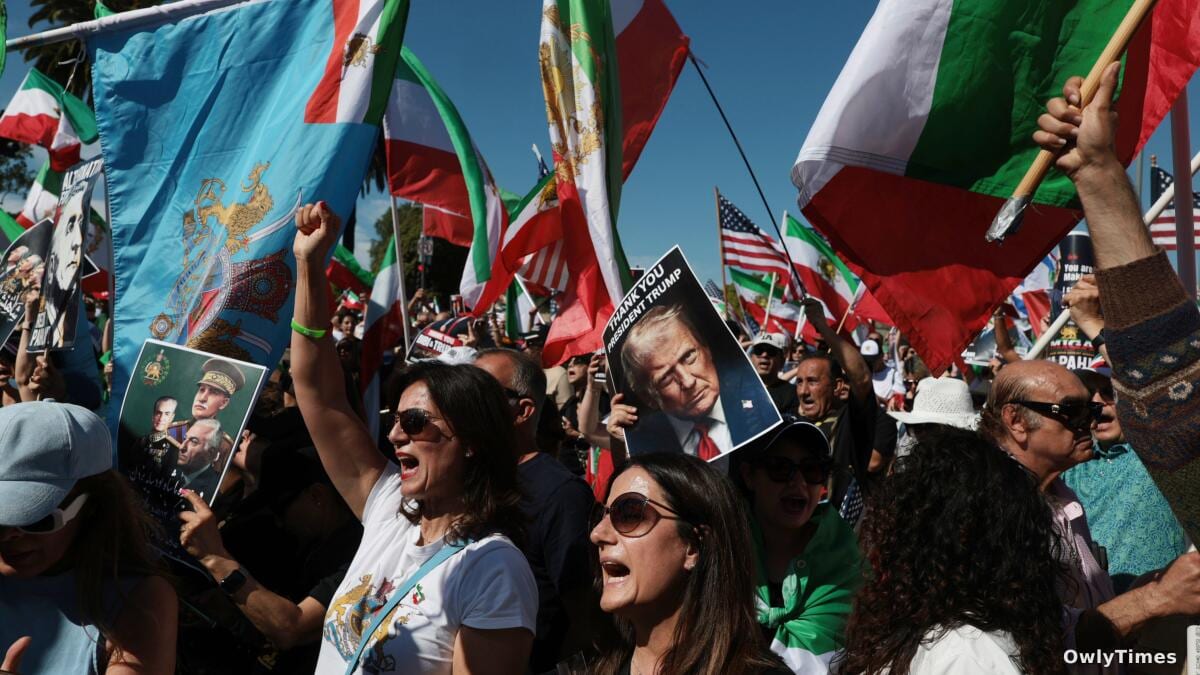
The jubilant scenes unfolding outside the Westwood Federal Building on Sunday weren’t simply expressions of joy; they were a calculated display of political capital by the Iranian diaspora, signaling a strategic realignment in the escalating conflict between Iran and the U.S.-Israel alliance. The rallies, celebrating the death of Ayatollah Ali Khamenei following coordinated attacks, represent a decades-long investment in lobbying and positioning for regime change, now potentially yielding a moment of leverage. This isn’t spontaneous celebration, but a carefully timed assertion of influence as the U.S. and Israel attempt to navigate the aftermath of a direct intervention in Iranian affairs.
Based on the original [the Los Angeles Times](https://www.latimes.com/california/story/2026-03-01/thousands-rally-in-westwood-as-u-s-iran-war-escalates-calling-for-free-iran) report.
The demographic weight of Los Angeles’ “Tehrangeles” – home to the largest Iranian diaspora globally – is the key to understanding this dynamic. With an estimated population exceeding 500,000, this community represents a significant voting bloc in a crucial swing state, and more importantly, a well-funded network capable of shaping public opinion and influencing policy. The swiftness with which celebrations erupted, and the prominent display of pre-Islamic Iranian flags featuring the golden lion, demonstrates a pre-existing organizational structure ready to capitalize on a perceived opportunity. Shawn Araghi, who left Iran in 1979, articulated a sentiment common among many: a clear distinction between the Iranian people and the ruling regime. This narrative is crucial, as it allows diaspora groups to advocate for intervention without appearing to support oppression.
Who benefits and who loses from this moment? The immediate beneficiaries are, ostensibly, the diaspora communities who have long campaigned for regime change. The U.S. and Israel also gain a powerful, vocal constituency within their borders actively supporting their actions. However, the losses are equally significant. The death of Khamenei and the ensuing conflict risk destabilizing the entire region, potentially triggering a wider war with unpredictable consequences. Furthermore, the explicit calls for the restoration of the Pahlavi dynasty – voiced by figures like Nilgoon Askari and Araghi – raise questions about the long-term vision for Iran and the potential for a return to authoritarian rule, albeit one aligned with Western interests. The narrative of a “free Iran” glosses over the complexities of Iranian society and the diverse political aspirations within the country.
This situation echoes historical precedents of exiled communities actively shaping foreign policy. The Cuban exile lobby in the United States, for example, exerted considerable influence on U.S. policy towards Cuba for decades following the 1959 revolution. Similarly, the Polish government-in-exile during World War II played a critical role in maintaining the legitimacy of Polish sovereignty despite the country’s occupation. However, a key difference lies in the direct military intervention occurring concurrently with the diaspora’s mobilization. The U.S. and Israel aren’t simply responding to pressure from the diaspora; they are actively creating a situation where the diaspora’s preferred outcome – regime change – becomes more plausible. This raises the specter of a self-fulfilling prophecy, where military action justifies and reinforces the political agenda of a powerful exile community.
The confirmation of three U.S. service member deaths and the reported civilian casualties in Iran, including the tragic incident at a school, introduce a stark moral and political tension. While the diaspora celebrates, the human cost of the conflict is escalating. This dissonance highlights the inherent contradictions in advocating for regime change through military force. The narrative of liberation rings hollow when weighed against the immediate suffering of the Iranian people. The fact that demonstrations in Los Angeles were “tearful affairs” in February, following crackdowns on Iranian protestors, underscores the shift in tone – a shift driven not by a change in underlying grievances, but by a perceived shift in the balance of power.
The political chess move to watch next isn’t whether the Islamic Republic will fall, but whether the U.S. and Israel will actively support a transition to a Pahlavi-led government, or attempt to establish a more broadly representative regime. The diaspora’s explicit endorsement of Reza Pahlavi presents a challenge: will Washington and Tel Aviv prioritize the preferences of a powerful exile lobby, or risk alienating them by pursuing a different path? The answer to that question will determine not only the future of Iran, but also the long-term stability of the Middle East.