
The strategic calculus behind contemporary political friction with the papacy is rarely about theology; it is a calculated effort to delineate the boundaries of institutional authority in the public square. When modern political figures clash with the Vatican over matters of "just war" or economic regulation, they are effectively testing the strength of religious moral authority against the imperatives of state power. This dynamic, while seemingly a product of the current polarized climate, is a recurring feature of American political life, tracing back to a time when the conservative movement was still defining its relationship with the Catholic Church.
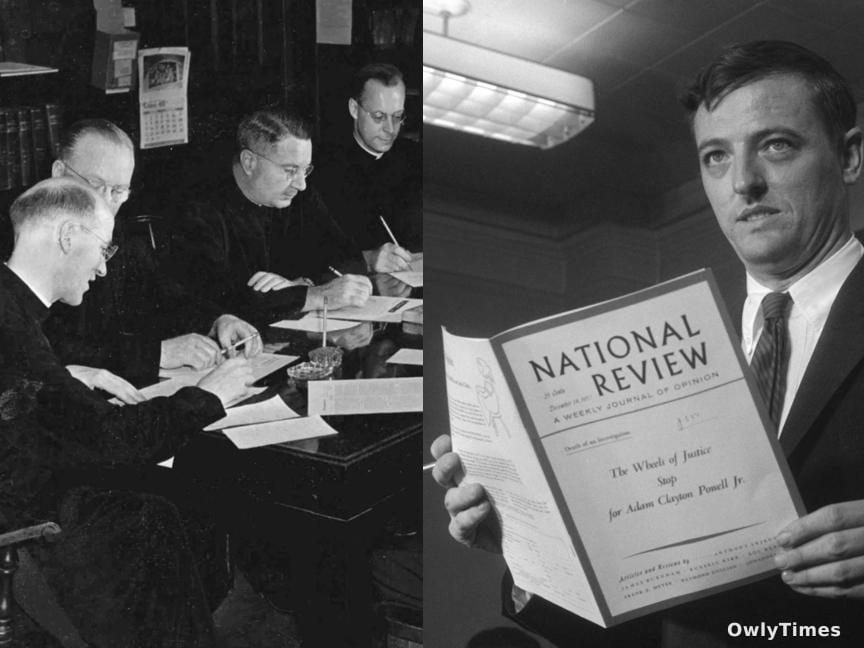
The "who benefits and who loses" framework remains the most effective lens for viewing these disputes. The political actor gains by signaling to their base that their secular ideology takes precedence over ecclesiastical mandates, thereby asserting a form of intellectual independence. Conversely, the institution—in this case, the Church—risks a dilution of its moral voice if it fails to respond, yet risks political marginalization if it engages too directly. This tension was famously laid bare in 1961, when William F. Buckley, then 36 and a rising icon of the American right, locked horns with the editors of America magazine over Pope John XXIII’s encyclical, Mater et Magistra.
Buckley’s rejection of the encyclical—captured in the flippant quip "Mater si, Magistra no!"—was not merely a policy disagreement. It was a tactical attempt to insulate his version of conservatism from the Church’s push for greater governmental market regulation. The editors of America, led by Thurston N. Davis, S.J., recognized the threat this posture posed to the coherence of Catholic political identity. Their sharp rebuke, noting that "lines spoken to the Pope just shouldn’t sound like lines pitched at the editors of The New York Post," highlighted the fundamental contradiction in Buckley’s stance: he demanded reverence for papal authority in matters of faith while simultaneously carving out a loophole for his own economic dogma.
History offers a clear precedent for this struggle. As Napoleon understood while negotiating a concordat at the turn of the 19th century, political leaders must decide whether to treat the papacy as a geopolitical force with "one hundred thousand bayonets" or as a nuisance to be managed. Buckley’s attempt to bypass the teaching authority of the Church, which he had previously claimed to hold in high regard, suggests that the strategic goal was never to reconcile his politics with his faith, but to ensure his politics remained untethered from institutional oversight. The fact that the "Magistra no!" quip was actually authored by Garry Wills—who later pivoted away from the conservative movement—reveals how fluid these ideological alliances were even at the movement's inception.
The lasting lesson from the 1961 exchange is captured in the 15th-century French adage cited by Davis: "He who tries to eat the pope chokes on him." Buckley’s own career reflected this, as he spent decades attempting to justify his defiance while maintaining his status as a "fervent Catholic." Even as late as 1987, when Pope John Paul II visited the United States, Buckley was still litigating the grievance, jokingly suggesting to the Pope that the editors of America had attempted to have him excommunicated a quarter-century earlier.
The political chess move to watch next is the continued divergence between populist political rhetoric and traditionalist institutional messaging. As the gap between secular legislative agendas and papal social teaching widens, the next reading of official Vatican statements on economic and military policy will show whether political leaders continue to embrace the "Mater si, Magistra no" strategy, or if they will seek a new, more integrated path to reconcile their public platforms with their stated moral allegiances.





