
The Price of Witnessing: Germany’s Berlinale Confronts a Political Reckoning
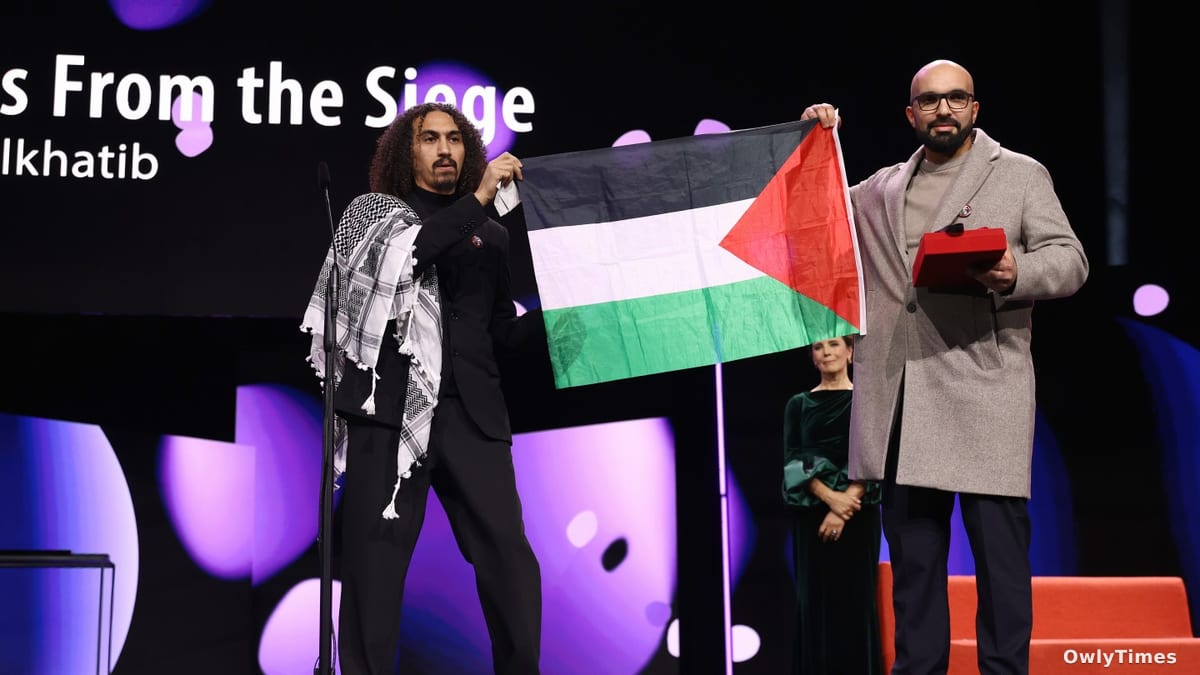
The uproar following political statements at the 74th Berlinale film festival isn’t about filmmakers “misusing” a platform – it’s a calculated risk assessment by the German political establishment, weighing its commitment to Israel against growing domestic and international pressure regarding the situation in Gaza. The swift condemnation of directors Abdallah Al-Khatib and Marie-Rose Osta wasn’t a spontaneous reaction to impassioned speeches, but a pre-emptive attempt to contain a narrative threatening to destabilize a carefully constructed political consensus. The core calculus is simple: maintaining unwavering support for Israel is paramount, even if it means silencing dissenting voices and potentially alienating segments of the population increasingly critical of Israeli policy.
Al-Khatib’s declaration that the German government was “partners in the genocide in Gaza by Israel,” and his pointed reminder that “Palestine remembers,” immediately triggered a defensive response. Carsten Schneider, Germany’s environment minister, walked out of the gala, a symbolic act signaling the boundaries of acceptable discourse. This wasn’t merely about hurt feelings; it was a demonstration of where the line is drawn. The speed with which conservative parliamentarian Alexander Hoffmann labeled the comments “antisemitic outbursts” and Berlin mayor Kai Wegner dismissed the directors as “pro-Palestinian activists” concerned only with “hatred of Israel” underscores the pre-existing framework for delegitimizing criticism of Israeli policy. The framing is crucial: dissent isn’t presented as legitimate political expression, but as an attack on Germany itself.
Original reporting: The Hollywood Reporter.
This sensitivity stems directly from Germany’s historical responsibility regarding the Holocaust. The concept of Staatsräson – reason of state – dictates that supporting Israel’s security is a non-negotiable pillar of German foreign policy. This commitment has manifested in continued arms sales to Israel, even as the death toll in Gaza, estimated at over 75,000 according to a study in The Lancet Global Health, mounts. While Chancellor Friedrich Merz briefly paused new arms export approvals last year, the resumption of sales demonstrates the prioritization of this political imperative. The contrast is stark: concern over potential misuse of German weaponry is outweighed by the perceived necessity of maintaining Israel’s military capabilities. This isn’t a new development; the 2022 backlash against the documentary No Other Land, which won both the audience and best documentary prizes, for its depiction of “apartheid” in the West Bank, followed the same pattern of outrage and accusations of antisemitism.
Who benefits and who loses in this dynamic? Israel benefits from Germany’s unwavering political and military support, bolstering its international standing and providing crucial resources. The German political establishment, particularly the conservative factions, benefit from maintaining a consistent foreign policy narrative that reinforces their commitment to historical responsibility and national security. Those who lose are Palestinian voices, advocates for human rights, and anyone challenging the dominant narrative surrounding the Israeli-Palestinian conflict. The Berlinale, as an institution, finds itself caught in the crossfire, attempting to balance artistic freedom with political realities. Jury president Wim Wenders’ attempt to mediate, suggesting a disconnect between the “empathetic” language of cinema and the “effective” language of social media activism, ultimately misses the point. The conflict isn’t about language; it’s about power and the suppression of dissenting viewpoints.
The current situation echoes historical precedents. The suppression of anti-war sentiment during the Vietnam War in the United States, and the McCarthyist era’s persecution of perceived communists, demonstrate how governments often prioritize national security narratives over freedom of expression. Similarly, Germany’s response to the Berlinale protests reflects a long-standing pattern of prioritizing its relationship with Israel above all else, even at the cost of alienating those who question its policies. The question now isn’t whether further protests will occur – they almost certainly will – but whether the Berlinale will be allowed to function as a space for open dialogue, or whether it will be increasingly constrained by political pressures. The next political chess move to watch is whether the German government will introduce legislation further restricting criticism of Israel under the guise of combating antisemitism, effectively codifying the boundaries of acceptable discourse and silencing dissenting voices within the cultural sphere.





