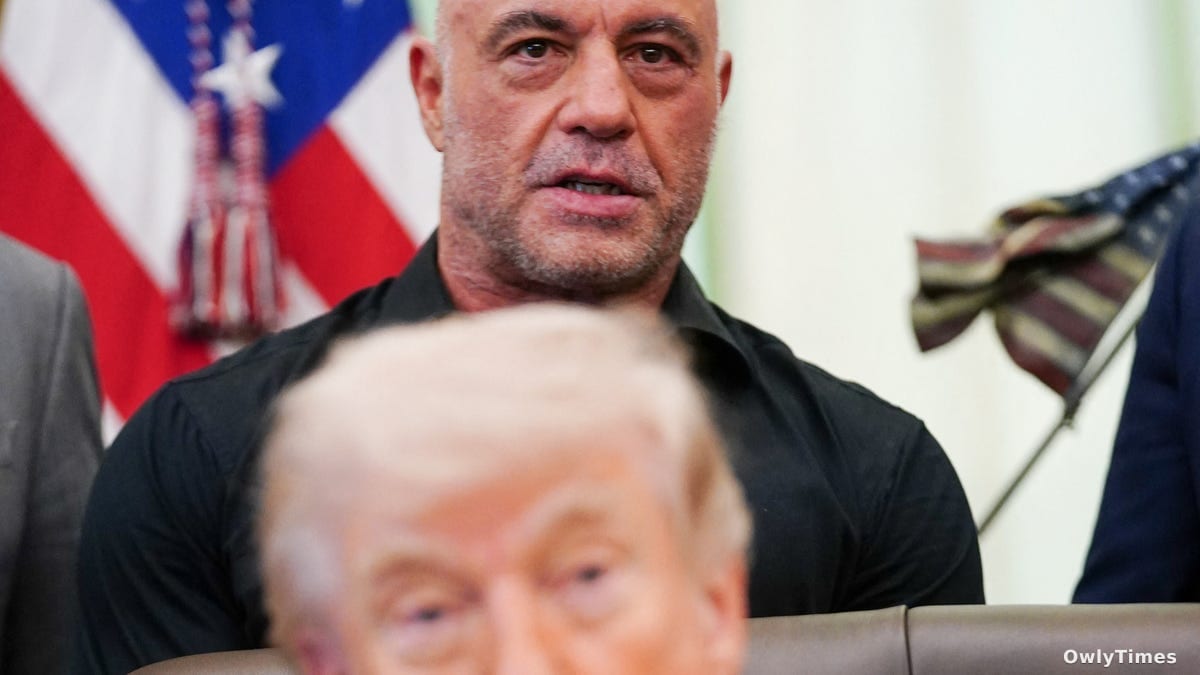

The tactical alliance between Donald Trump and Joe Rogan—codified in the Oval Office on April 18—serves as a classic exercise in political transactionalism. By aligning himself with the podcaster on the specific issue of psychedelic research for veterans, Trump successfully neutralized a vocal critic, while Rogan secured a tangible policy outcome that aligns with his long-term advocacy. For Trump, the calculus is clear: he leverages the cultural capital of the host of the top-ranked podcast on Spotify to soften the blow of deepening fractures within his base. For Rogan, the move demonstrates the utility of his platform in forcing executive action, even as he remains deeply skeptical of the administration’s broader agenda.
The Friction of the Epstein Files
The tension between the two men stems from a significant divergence in expectations versus political reality. During the October 2024 presidential campaign, Rogan provided the President with a critical stage, ultimately endorsing him shortly before the election. However, the honeymoon period was short-lived. By July 25, 2025, Rogan had publicly accused the administration of "gaslight[ing]" the public regarding the Epstein files, labeling the issue a "line in the sand."
The political contradiction is stark: while Trump initially framed the files as a "hoax," he later faced pressure to address them. By January 2026, the Justice Department had released over three million pages of documents, yet Rogan continued to highlight the inconsistencies in the President’s rhetoric. On the November 19, 2025 episode of his show, Rogan openly challenged the administration’s flip-flopping, publicly calling on congressional Republicans to support the Epstein Files Transparency Act. This dynamic reflects a broader pattern seen in historical populist movements, where the outsider-turned-insider must balance the radical promises of their platform against the institutional constraints of the presidency.
Shifting Coalitions and the Cost of Policy
The "who benefits, who loses" framework is nowhere more apparent than in the recent cooling of the President’s relationship with his right-wing base. Following the December 14, 2025, deaths of Rob Reiner and his wife, Michele, Trump’s social media response—which characterized the victims as being felled by "TRUMP DERANGEMENT SYNDROME"—provoked an immediate backlash from Rogan. By December 25, Rogan was framing the President’s behavior as "so disappointing," effectively alienating a segment of the coalition that prioritizes traditional political decorum over abrasive rhetoric.
This internal dissent has expanded into the realm of foreign policy. On his March 10, 2026 show, Rogan condemned the joint war between Israel and the United States on Iran, framing it as a betrayal of the President’s campaign promise to end "senseless wars." The political cost is measurable: the administration is now navigating a multi-front conflict where its most prominent media surrogates are openly questioning the rationale behind the military engagement.
The Psychedelic Pivot
The April 18 executive order represents a strategic attempt to reset this narrative. By appearing alongside figures like Robert O'Neill, the President sought to reclaim the mantle of the "veterans' advocate," effectively using the psychedelic research initiative to crowd out the noise of the Iran conflict. The move is a calculated attempt to compartmentalize: Trump grants a policy victory to a high-influence media figure to prevent further erosion of his support among the demographic that listens to The Joe Rogan Experience.
The next indicator of this relationship's stability will be found in the progress of the psychedelic research initiative. Whether this executive order leads to a sustained, measurable increase in federal funding for veteran-specific studies will determine if this partnership is a durable political alignment or merely a temporary tactical truce. As the administration continues to manage the fallout from the Epstein disclosures and the Iran conflict, the consistency of its support for these research programs will serve as a bellwether for how much sway Rogan maintains within the West Wing.