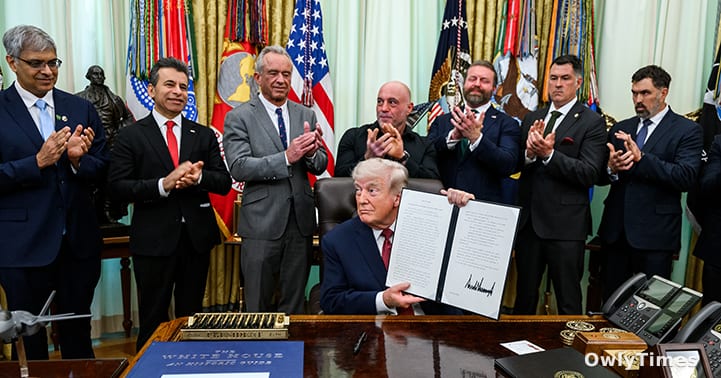

The recent executive action taken by President Donald J. Trump to accelerate research into psychedelic medicines raises a fundamental scientific question: how do we reconcile the urgent, life-saving potential of emerging therapies with the rigid, time-tested framework of clinical safety? By directing federal agencies to streamline the development of treatments like ibogaine for mental health, the administration is attempting to bridge the gap between anecdotal success stories—often shared by veterans who have sought care abroad—and the evidence-based requirements of the American medical system.
The executive order prioritizes a shift in federal strategy, moving away from a posture of prohibition toward one of clinical acceleration. W. Bryan Hubbard, CEO of Americans for Ibogaine, characterized this as the end of a "national movement that could not be ignored," framing the policy as a transition from fringe advocacy to mainstream healthcare policy. However, while the headlines focus on the immediate "fast-tracking" of these substances, the study of the executive order reveals a more nuanced reality. The directive does not bypass scientific rigor; rather, it mandates that the Department of Justice (DOJ), Department of Health and Human Services (HHS), Department of Veterans Affairs (VA), and the Food and Drug Administration (FDA) work in concert to facilitate "science-based innovations" and "rigorous clinical trials."
What the policy actually finds versus what many headlines suggest is a distinction between legalization and structured research. The order emphasizes the FDA’s established approval pathway, seeking to clear "regulatory red tape" while maintaining the necessity of clinical safety. Tom Feegel, CEO of Beond, highlighted that the directive includes a $50 million federal funding commitment to ibogaine research, a concrete figure that marks the transition from theoretical support to tangible investment. This financial backing is paired with an expectation that the VA will provide a pathway for veterans to access these treatments within "licensed, hospital-grade settings," provided they meet safety standards.
Limitations to consider remain significant, as many in the scientific and advocacy communities have noted. Marcus Capone, co-founder of Veterans Exploring Treatment Solutions, pointedly observed that the current momentum "isn’t that this is ready for broad use," but rather that there is a dire need for "careful screening" and "strong medical oversight." The challenge lies in scaling a treatment that has historically relied on specialized, often international settings into a standardized, domestic VA environment without compromising the patient outcomes that have generated such intense political support.
The legislative and medical landscape is currently fraught with the tension between the immediate crisis—noted by the Association for Prescription Psychedelics as a suicide rate of 17 veterans per day—and the deliberate pace of pharmacological research. Kabir Nath, CEO of Compass Pathways, noted that his firm is already engaged in a "rolling submission and review" with the FDA for synthetic psilocybin, illustrating that the private sector is already moving within the existing regulatory framework. The success of this executive order will ultimately be measured not by the signing ceremony, but by the ability of these agencies to synchronize their regulatory timelines.
The next steps in this process involve the ongoing clinical programs currently underway, such as the phase 3 trials for treatment-resistant depression mentioned by Compass Pathways. The next reading of progress will be found in the specific, collaborative labeling and scheduling considerations finalized by the DOJ and HHS. Whether this directive successfully reduces the time-to-market for these therapies while ensuring patient safety will depend entirely on how effectively these agencies navigate the interface between the demand for innovation and the mandate for proven clinical efficacy.





