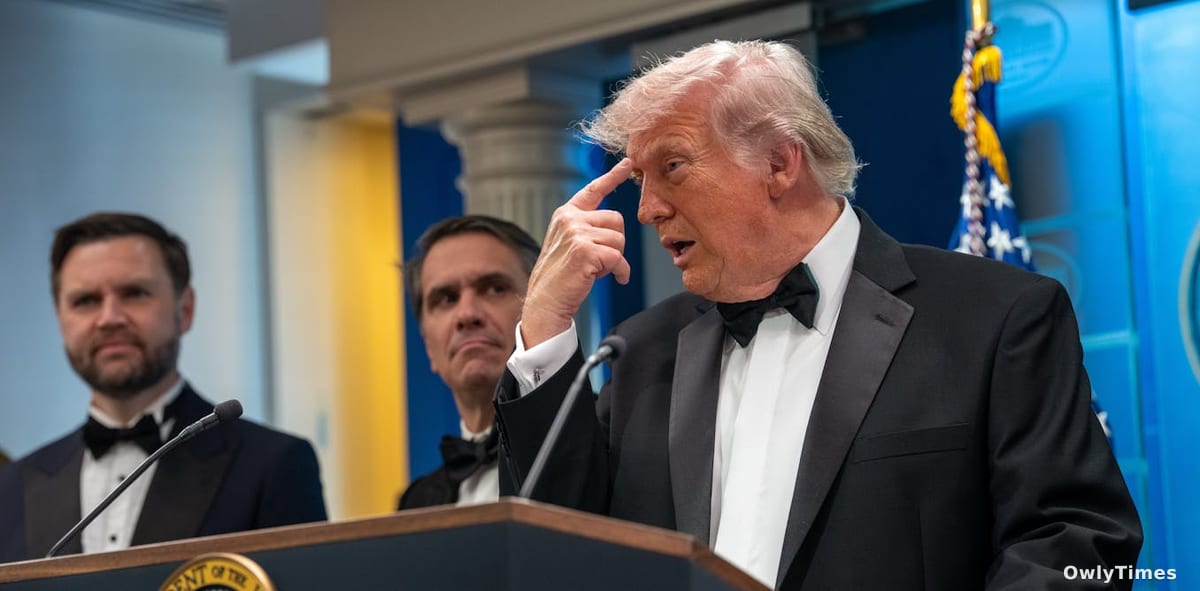

The strategic calculus behind the April 25, 2026, shooting at the Washington Hilton suggests a fracturing of the American political consensus, where violence is no longer a fringe phenomenon but an encroaching tool of political expression. When a gunman targets an event as symbolic as the White House Correspondents’ Association dinner, the objective transcends the physical harm of any single individual; it serves as a high-visibility signal designed to disrupt the stability of democratic institutions. This latest threat against Donald Trump—the third in three years—marks a transition from isolated incidents to a recurring feature of the national landscape.
The Calculus of Political Hostility
In analyzing who benefits and who loses in this volatile environment, the answer is increasingly clear: the institutions of democracy are the primary losers. James Piazza, a political violence scholar at Penn State, identifies a “zero-sum” environment where every election is framed as a “do or die” moment. By shifting the political discourse from a competition of ideas to an existential struggle, stakeholders on both sides of the partisan divide risk creating a feedback loop of radicalization.
The beneficiaries of this instability are those who profit from the degradation of public trust. When rhetoric becomes dehumanizing, the barrier to physical violence lowers significantly. As Piazza notes, when political elites label opponents as “subhuman,” they provide the moral justification for extremists to act. The normalization of this language serves as a catalyst, effectively insulating those who engage in violence from the standard level of public backlash that once acted as a social deterrent.
Documenting the Surge in Extremism
The data provided by the Polarization & Extremism Research & Innovation Lab confirms that this is not merely a subjective feeling of unease but a measurable trend. The frequency of high-profile attacks illustrates a systemic vulnerability. The list of recent events—ranging from the January 6, 2021, insurrection at the U.S. Capitol to the assassination of Charlie Kirk, the attempted murder of Paul Pelosi, and the deadly attacks on Minnesota lawmakers Melissa Hortman and John Hoffman—reveals a pattern of violence targeting the foundational pillars of government.
Even at the state level, the threat remains constant, as evidenced by the attack on the governor’s mansion targeting Josh Shapiro. These events demonstrate that the risk is not localized to national figures; it has permeated the entire political hierarchy. The contradiction here is stark: while these acts are often intended to achieve a specific political objective, they frequently result in a further erosion of the very democratic norms the perpetrators claim to be defending.
Historical Precedents and Modern Catalysts
While the current climate feels unprecedented, history provides a grim map of previous American fractures. Piazza draws parallels to the 1850s, a decade defined by the violent divisions between abolitionists and slavery advocates, which culminated in congressional assaults and armed conflict. Much like the 1960s, a period marked by intense civil unrest, the current era is defined by deep ideological entrenchment.
However, the modern era faces a unique accelerant: social media. Disinformation in these digital spaces functions as a hermetic seal, preventing individuals from encountering information that might challenge their extremist worldviews. This isolationist dynamic, absent in the mid-20th century, accelerates the radicalization process and makes the current period particularly susceptible to rapid, volatile shifts in public behavior.
The Next Signal to Watch
The trajectory of this violence will depend heavily on the response from political leaders. Research indicates that the rhetoric employed by elites in the immediate wake of such events dictates whether the public continues to normalize or begins to reject these tactics. The next reading of public sentiment—specifically whether Democratic and Republican leadership can craft a unified condemnation of the April 25 event—will determine if the current trend of political violence will continue to escalate or begin a period of de-escalation.





