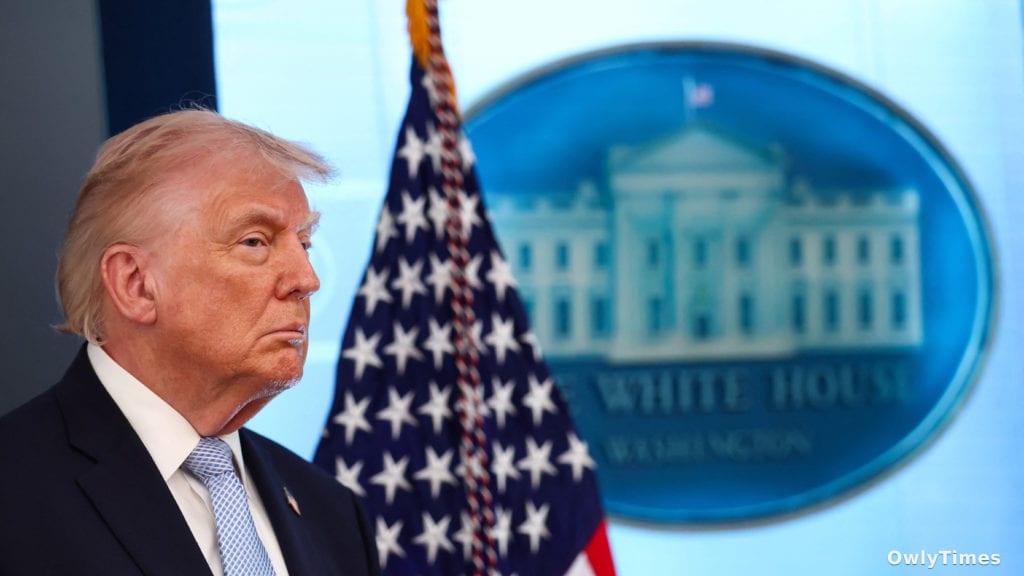

The strategic calculus of Donald Trump attending the White House Correspondents’ Dinner on April 25, 2026, rests on a calculated reclamation of the stage that famously signaled his entry into national politics. By appearing at the Washington Hilton—the site of the 2011 event where Barack Obama’s barbs against him are widely cited as the catalyst for his presidential ambitions—Trump is shifting the power dynamic from spectator to primary antagonist. He is not merely attending a dinner; he is attempting to domesticate the very institution that has defined his political identity through conflict.
A Collision of Accolades and Hostility
The night’s tension is anchored by the presentation of the Katharine Graham Award for Courage and Accountability to The Wall Street Journal. The award honors the newspaper's investigation into "bawdy" letters sent to Jeffrey Epstein on his 50th birthday, a collection that allegedly includes a missive from Trump. While the president has denied the report and initiated a lawsuit against the Journal, the optics of him sharing a room with the recipients of an award centered on his own alleged past creates a uniquely volatile environment.
In this scenario, the beneficiaries are the institutions and individuals who thrive on the spectacle of the event itself, while the losers are the traditional norms of decorum that once kept such deep-seated animosity at a distance. The presence of the Secret Service in a space already strained by thousands of attendees suggests a logistical reality: the footprint of the presidency now physically restricts the movement of the press corps it aims to oversee. This mirrors the broader erosion of the media-state relationship, particularly as the administration and Congress move to curtail federal funding for institutions like PBS News.
The Iran Narrative and Executive Control
Trump’s remarks on the war with Iran carry weight far beyond the ballroom. On Thursday, the president suggested to me in the Oval Office that the intervention could span four to six weeks, though he simultaneously floated the possibility of an immediate deal amidst the current indefinite ceasefire. By choosing this venue to address the conflict, he is attempting to bypass the standard press briefing format, using the dinner’s high-profile stage to consolidate a narrative that has remained fluid and often contradictory.
This maneuver echoes the political theater of the early 20th century, where leaders frequently used social gatherings to frame public policy away from legislative scrutiny. However, the modern stakes are amplified by the volatility of global markets and the sheer scale of the media apparatus reporting the speech. Whether the president adheres to a disciplined 30-minute address or drifts into the 90-minute rally-style cadence he favors will serve as a primary indicator of his intent to disrupt or dominate the evening.
Consolidation and Regulatory Clouds
The dinner also serves as an unlikely backdrop for the looming Warner Bros. Paramount merger, a deal that threatens to consolidate CBS News and CNN under a single corporate roof. If approved by federal regulators, the move could trigger substantial layoffs across both newsrooms, fundamentally altering the landscape of the White House press pool.
The next reading of the regulatory approval process for the Warner Bros. Paramount merger will signal whether this massive consolidation proceeds, potentially changing the composition of the very journalists tasked with covering the president. As the crowd reacts to the night's proceedings, keep a close watch on the camera feeds capturing the room's response to the president's remarks; those reactions will define the immediate political fallout long before the dessert plates are cleared.





