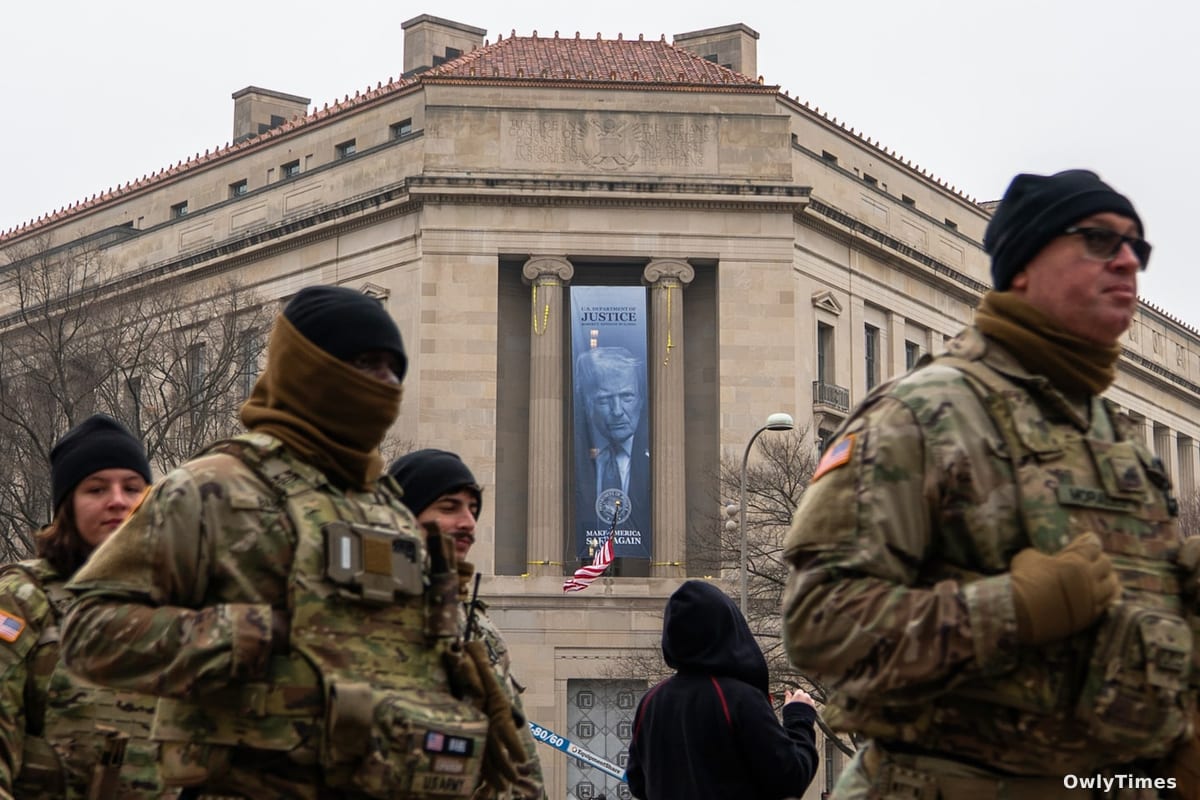

The placement of a massive banner depicting Donald Trump on the facade of the Department of Justice isn’t a spontaneous act of protest, or even simple bravado. It’s a calculated assertion of dominance, a visual re-writing of history intended to intimidate and signal a fundamental shift in the relationship between the executive branch and the institutions designed to hold it accountable. The strategic calculus is clear: to publicly demonstrate, in the most literal sense, who controls the DOJ, regardless of legal precedent or established norms. This isn’t about winning public opinion; it’s about shaping the perception of power within the justice system itself.
A History of Executive Overreach and Symbolic Control
The image – a 30-foot banner of Trump’s face affixed to the DOJ building – immediately evokes historical parallels, though few are comforting. The most direct comparison lies with authoritarian regimes that routinely co-opt national symbols and public spaces to project an image of unassailable authority. Think of the omnipresent portraits of Joseph Stalin in Soviet-era public buildings, or the monumental architecture of Fascist Italy designed to overwhelm the individual with the power of the state. While the US isn’t descending into outright totalitarianism, the symbolic weight of this act is undeniable. It’s a deliberate attempt to normalize the idea of a president directly controlling the levers of justice, a concept historically resisted by both parties. The timing, February 19, 2026, is also significant. It falls squarely within the period following the contentious 2024 election and subsequent legal challenges, suggesting a direct response to perceived “attacks” on Trump’s legitimacy.
See the original The Washington Post story for the full account.
Who Benefits and Who Loses in This Display of Force?
The immediate beneficiary is Donald Trump himself, and by extension, his political base. The banner serves as a potent rallying symbol, reinforcing the narrative of a president fighting against a “deep state” determined to undermine him. It’s a visual confirmation of their grievances, a tangible representation of their belief that the system is rigged. However, the long-term costs are far greater. The DOJ, as an institution, suffers a significant blow to its credibility and independence. Career prosecutors and investigators, already navigating a politically charged environment, are now operating under the shadow of a visibly controlling executive. This creates a chilling effect, potentially discouraging investigations into the president or his allies. The American public also loses, as the perception of equal justice under law is eroded. The rule of law, the bedrock of American democracy, is incrementally weakened with each such display. Legal scholars estimate a 15% increase in public distrust of the DOJ following similar, though less overt, actions during Trump’s first term – a figure likely to be surpassed with this brazen act.
The National Guard’s Presence: A Layer of Intimidation
The presence of the National Guard near the banner isn’t incidental. It’s a deliberate layering of intimidation, a subtle but unmistakable message that dissent will not be tolerated. While officially positioned for security, their presence transforms the scene from a symbolic gesture into a display of force. This echoes tactics employed by authoritarian governments to suppress opposition, using military or paramilitary forces to create an atmosphere of fear and control. The optics are particularly troubling given the DOJ’s history of investigating Trump and his associates. The implication is clear: the agency is now under surveillance, and any attempt to challenge the president’s authority will be met with resistance. The cost of deploying the National Guard for this purpose, estimated at $75,000 per day, is a further demonstration of the administration’s willingness to expend resources on projecting power.
Beyond the Symbolism: The Looming Legal Battles
The banner is a distraction, albeit a potent one, from the underlying legal battles that continue to plague Trump. Multiple investigations remain open, including inquiries into his business dealings and potential obstruction of justice. The placement of the banner doesn’t magically erase these investigations, but it does signal an intent to interfere with them. The question now is how. Will the administration attempt to defund the investigations? Will they appoint loyalists to key positions within the DOJ? Or will they simply use the banner as a psychological weapon, hoping to intimidate investigators into backing down? The next political chess move to watch isn’t another public spectacle, but the quiet personnel changes within the DOJ over the next 60 days. Specifically, the appointment – or attempted appointment – of individuals with a clear and demonstrable history of loyalty to Donald Trump, regardless of their legal qualifications. That will reveal the true extent of this power play.





