
The Calculated Ambiguity of Trump’s Kentucky Senate Signals
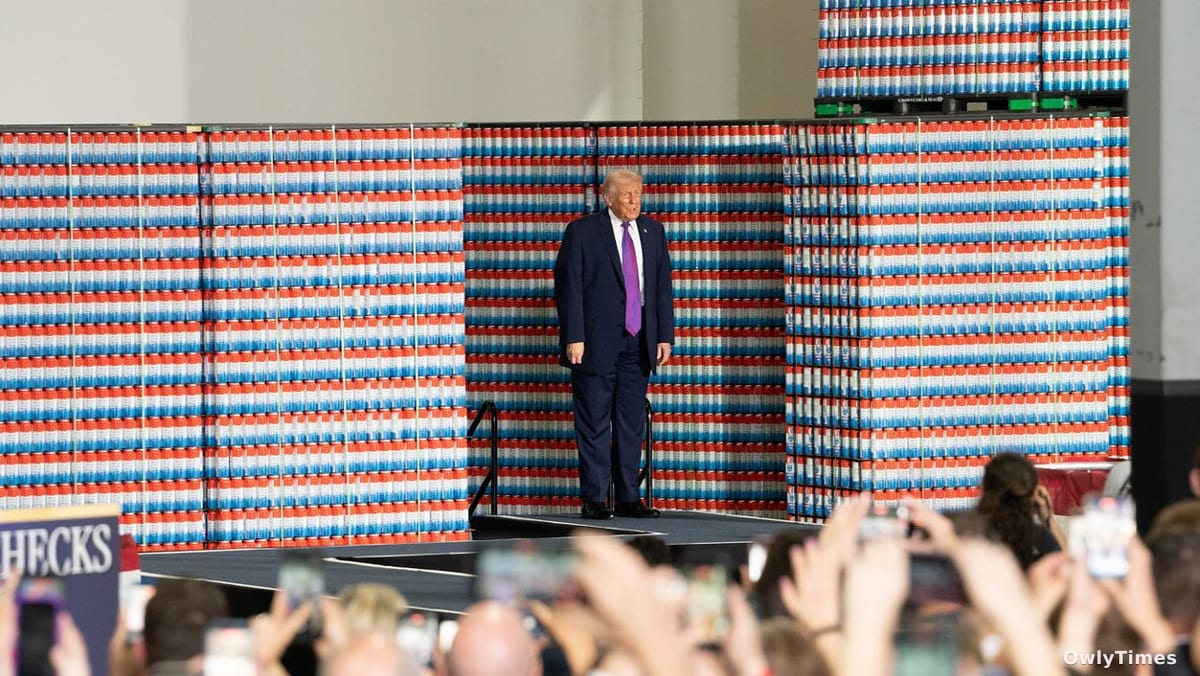
The strategic value of Donald Trump’s recent visit to Boone County, Kentucky wasn’t the rally itself, but the carefully calibrated acknowledgements he offered to three Republican Senate hopefuls – Andy Barr, Daniel Cameron, and Nate Morris. This wasn’t a spontaneous outpouring of support; it was a demonstration of power, a holding pattern designed to maximize leverage over a crucial Senate race and the Kentucky GOP. Trump isn’t playing kingmaker here, he’s playing chess, positioning himself to claim credit for a win regardless of which candidate emerges. The timing, with just over nine weeks until the May 19th primary, is deliberate. It allows him to assess the evolving dynamics of the race without committing to a potentially damaging endorsement.
Original reporting: spectrumnews1.com.
The overtures to Barr, Cameron, and Morris are all variations on a theme: a non-endorsement endorsement. Each candidate received a positive descriptor – “wonderful,” “thanked,” “good” – sufficient to signal a degree of favor without actually bestowing the coveted Trump imprimatur. This approach, as noted by political analyst Stephen Voss of the University of Kentucky, allows Trump to hedge his bets. Voss’s assessment – that the “smart thing is to stay out of it and no matter who gets the nomination, claim the person” – reveals the core calculus. Trump understands that in a competitive primary, an early endorsement can alienate factions within the party. By remaining neutral now, he preserves the option to align himself with the eventual nominee and absorb their success as his own. This is a tactic honed during his previous campaigns, a recognition that perceived association is often more valuable than direct involvement.
The contrast with Trump’s congressional endorsements is telling. He’s backed all Kentucky’s incumbent Republican congressmen except Thomas Massie. This isn’t accidental. Massie, a consistent critic of party leadership and a vocal proponent of limited government, represents a challenge to Trump’s authority within the state. Trump’s active support for Ed Gallrein, a farmer and former Navy SEAL challenging Massie, is a clear signal of intent to purge dissent and consolidate control over the Kentucky Republican delegation. The Senate race, however, demands a more nuanced approach. Unlike the relatively safe congressional districts, the open Senate seat presents a genuine opportunity for a Democratic pickup, making a unified Republican front essential.
The financial implications of this strategic ambiguity are significant. As of the latest FEC filings, Nate Morris has largely self-funded his campaign, loaning himself over $6 million. Daniel Cameron benefits from significant support from national Republican groups, signaling establishment backing. Andy Barr, the longest-serving of the three, has a more traditional fundraising profile, relying on a mix of individual donations and PAC contributions. Trump’s non-endorsement allows each candidate to continue cultivating their respective fundraising networks without fear of alienating potential donors who might favor a different candidate. The total spending in this primary is projected to exceed $20 million, making it one of the most closely watched Senate races of the cycle.
The historical parallel here is instructive. Consider Ronald Reagan’s approach to primary contests in the 1980s. Reagan often refrained from early endorsements, preferring to let candidates compete and then claim the mantle of party unity once a nominee emerged. This strategy allowed him to avoid divisive intra-party battles and project an image of strength and consensus. Trump is employing a similar tactic, albeit with a distinctly Trumpian flair for self-promotion. He’s signaling his importance to the candidates – a shoutout from the former president carries considerable weight – while simultaneously maintaining maximum flexibility. The question now isn’t if Trump will endorse, but when and under what conditions. Will he wait until after the primary to claim the victor, or will a late surge by one candidate force his hand? The political chess move to watch next is whether Trump schedules another Kentucky visit closer to the May 19th primary, and, crucially, who he chooses to highlight then.





