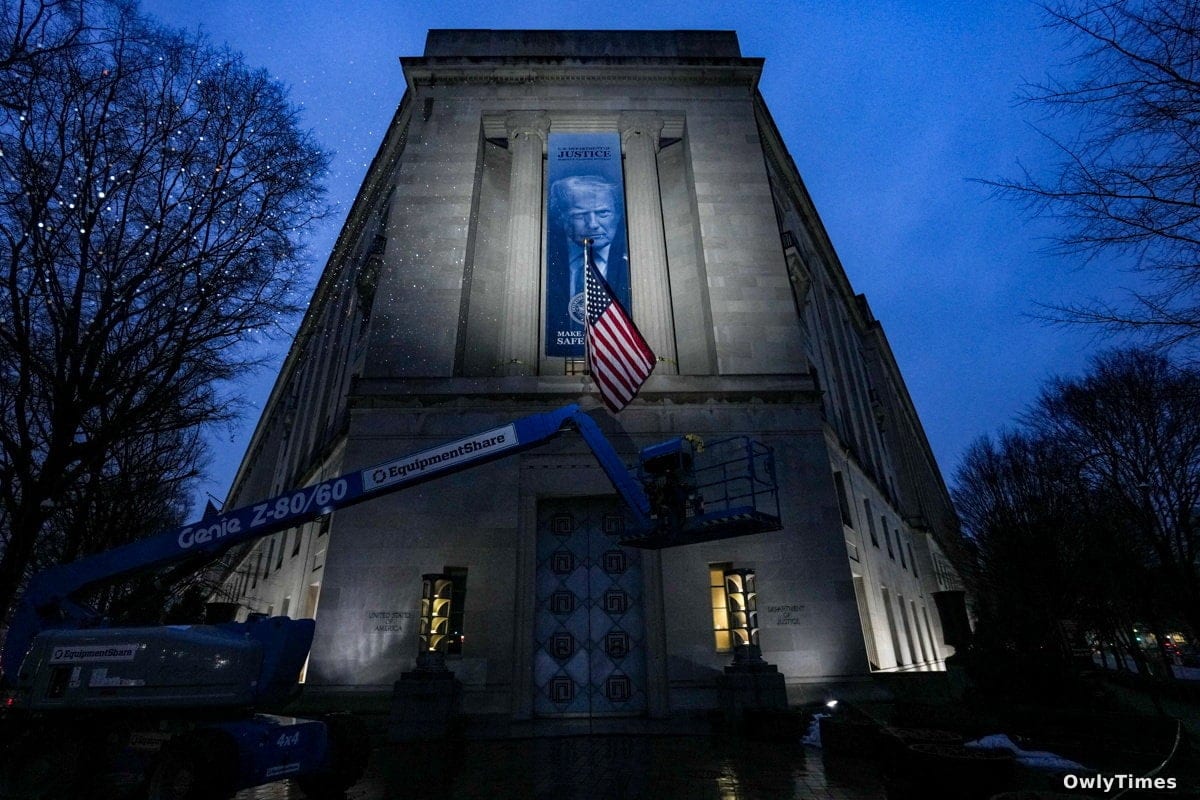

The placement of a presidential banner on the Justice Department’s headquarters isn’t a spontaneous aesthetic choice; it’s a calculated assertion of executive power over an institution deliberately designed to operate at arm’s length. The optics, deliberately provocative, signal President Trump’s intent to further blur the lines between political loyalty and impartial justice, a tactic with deep roots in American history but escalating in frequency and boldness. This isn’t simply about a banner; it’s about controlling the narrative of law enforcement and, crucially, influencing future legal challenges, particularly those likely to arise during a contentious election year.
A History of Executive Influence on Justice
The tension between the White House and the Justice Department is hardly new. Throughout American history, presidents have sought to leverage the DOJ for political ends. Richard Nixon’s attempts to weaponize the FBI against political opponents, culminating in the Watergate scandal, remain the most infamous example. However, even seemingly less dramatic instances – like Lyndon B. Johnson’s reported pressure on Attorney General Nicholas Katzenbach regarding civil rights enforcement in the South – demonstrate a consistent impulse to steer the DOJ’s priorities. What distinguishes Trump’s approach isn’t necessarily the attempt to influence, but the openness of it. The banner, prominently displayed along Pennsylvania Avenue, isn’t a clandestine directive; it’s a public declaration. This shift from shadow to sunlight is a key indicator of a broader strategy.
Reporting from The Washington Post informs this analysis.
Democrats and Former Officials Raise Alarm
The immediate outcry from Democrats is predictable, but the criticism from former FBI Director James Comey carries particular weight. Comey, who himself navigated a fraught relationship with Trump during the 2016 election and its aftermath, publicly stated the banner “undermines the foundational principle of DOJ independence.” While partisan critiques are expected, the concern extends beyond political maneuvering. The Justice Department’s credibility rests on public trust in its impartiality. A perception of political interference, even symbolic, erodes that trust, potentially impacting the legitimacy of investigations and prosecutions. This is especially critical given the ongoing investigations into Trump’s business dealings and the potential for future challenges to election results. The timing – February 20, 2026 – is also significant, falling squarely within the pre-election cycle, amplifying the perception of a politically motivated maneuver.
Who Benefits and Who Loses in This Power Play?
The primary beneficiary of this display is President Trump himself. By visually associating himself with the Justice Department, he aims to project an image of strength and control, signaling to potential adversaries – both domestic and international – that the full weight of the law is behind him. This also serves to rally his base, reinforcing the narrative of a president fighting against a “deep state” determined to undermine him. Conversely, the losers are numerous. The Justice Department’s reputation suffers, potentially hindering its ability to effectively prosecute cases. Democratic opponents face increased scrutiny and the risk of politically motivated investigations. And, perhaps most importantly, the American public loses faith in the integrity of the legal system. The long-term consequences of this erosion of trust are difficult to quantify, but they could be profound, contributing to further political polarization and instability. The financial implications are also worth noting: a perceived lack of impartiality could lead to increased legal challenges, driving up litigation costs for the government and potentially impacting investor confidence.
The Looming Shadow of Election Interference
The banner isn’t an isolated incident. It’s part of a pattern of behavior that includes Trump’s repeated attacks on the “witch hunt” investigations, his calls for investigations into his political rivals, and his appointments of loyalists to key positions within the Justice Department. This culminates in a clear strategy: to politicize the DOJ and use it as a tool to advance his political agenda. The parallel to Vladimir Putin’s systematic dismantling of independent institutions in Russia is unsettling, though the American system of checks and balances offers some degree of protection. However, those checks are being actively tested. The question now isn’t if Trump will attempt to influence the outcome of the 2026 elections through the Justice Department, but how. The next political chess move to watch is Trump’s potential appointment of a special counsel – ostensibly to investigate alleged wrongdoing by his opponents – in the months leading up to the election. This would allow him to bypass traditional DOJ protocols and exert even greater control over the investigation, further blurring the lines between justice and politics.