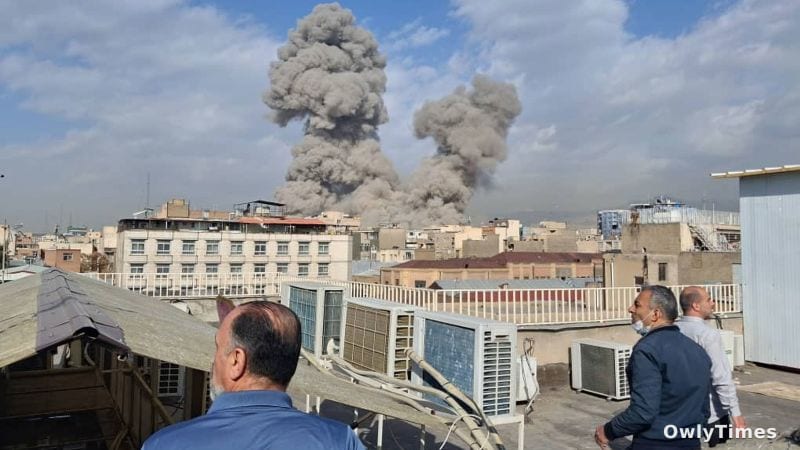

The escalation with Iran isn’t simply a continuation of Donald Trump’s increasingly militaristic foreign policy; it’s a strategic reversal so stark it undermines the core tenets upon which his political brand – and his recent electoral victory – were built. While strikes against seven nations in 2025 and interventions in Venezuela signaled a shift from Obama-era restraint, the current “massive and ongoing” campaign against Iran, openly framed as potentially leading to war, represents a deliberate abandonment of the non-interventionist platform Trump championed for nearly a decade. The calculus isn’t about national security in the traditional sense; it’s about a recalibration of power, both domestically and internationally, achieved through the calculated demolition of previously held positions.
Who benefits and who loses from this pivot? Domestically, Trump appears to be consolidating support amongst a hawkish base previously skeptical of his isolationist rhetoric. The narrative of a strong leader willing to confront adversaries, even at the risk of American lives, serves to solidify his control over the Republican Party and potentially inoculate him against challenges from the right. Conversely, he risks alienating the independent and anti-war voters who were instrumental in his initial election and re-election, voters who were explicitly promised an end to “reckless regime change.” Internationally, Israel stands to gain from a weakened Iran, a long-standing strategic objective. However, the potential for wider regional instability, and the inevitable backlash from Iran and its proxies, introduces significant risks for all parties involved, including key US allies.
Reporting from CNN informs this analysis.
This isn’t merely a policy shift; it’s a historical echo. The current situation bears a striking resemblance to the lead-up to the Iraq War, where publicly stated justifications – in that case, weapons of mass destruction – were ultimately secondary to a broader geopolitical agenda. Like George W. Bush, Trump is now pursuing a course of action that directly contradicts his earlier pronouncements, invoking a “noble mission” to justify a conflict that was, until recently, explicitly rejected. The invocation of potential American casualties, delivered “up-front” as Trump stated to the Washington Post, is a tactic reminiscent of wartime leaders seeking to prepare the public for sacrifice, a far cry from the “America First” rhetoric that defined his initial campaigns.
The contradictions are layered and deliberate. Trump repeatedly condemned Hillary Clinton in 2016 for her involvement in regime change operations in Iraq, Libya, Egypt, and Syria, promising to “break the cycle” and avoid creating “power vacuums” filled by terrorists. As recently as 2019, he declared an end to the era of “never-ending war, regime change, and nation-building.” Even his own Defense Secretary, Pete Hegseth, publicly assured the American people that the June strikes against Iran’s nuclear facilities were not about regime change. Now, Trump openly discusses the possibility of toppling the Iranian government, framing it as a pursuit of “freedom for the people.” This dissonance isn’t accidental; it’s a demonstration of power, a signal that Trump is willing to discard past promises and commitments to achieve his current objectives.
The 2024 election cycle further complicates the narrative. Trump’s campaign actively portrayed him as the “peace candidate,” contrasting him with Kamala Harris and accusing her of being a “war hawk” influenced by figures like Liz Cheney. Advisers like Stephen Miller and Tulsi Gabbard explicitly framed a vote for Trump as a vote against war. Now, with American lives potentially at stake in a regime-change operation, those promises ring hollow. The irony is particularly acute given Trump’s past criticisms of Barack Obama, accusing him of planning a war with Iran to boost his poll numbers. The resurfacing of those tweets by Iranian Foreign Minister Abbas Araghchi underscores the extent to which Trump has inverted his own historical positions.
The declining approval ratings during his first year in office, coupled with the looming midterm elections, provide a potential explanation for this dramatic shift. A manufactured crisis, and the projection of strength in response, could serve to rally his base and distract from domestic challenges. However, this strategy carries significant risks, not least the potential for escalating the conflict and triggering a wider regional war. The administration has offered little in the way of a coherent strategic plan, beyond the vague assertion of pursuing American interests. This lack of transparency, combined with the blatant contradictions in Trump’s rhetoric, raises serious questions about the true motivations behind this escalation.
The political chess move to watch next isn’t on the battlefield, but in Congress. Will Republican lawmakers, many of whom previously supported Trump’s non-interventionist stance, challenge his authority to wage war without a clear congressional authorization? The answer to that question will reveal the true extent of Trump’s control over his party, and the future of American foreign policy. Specifically, monitor the actions of key Senate Republicans on the Armed Services Committee – will they demand a detailed justification for the Iran campaign, or will they fall in line with the President, effectively rubber-stamping a potentially disastrous course of action?





