
Did the US Just Play a Very Risky Game of Proxy War in Iran?
Let’s be blunt: the claim from Donald Trump that the United States covertly armed Iranian protesters through Kurdish intermediaries is… deeply unsettling. It’s not just about a former president making a questionable assertion; it’s about a potential escalation of geopolitical strategy that could have had catastrophic consequences, and one that highlights the persistent, often-overlooked role of Kurdish groups in the region’s power struggles. The real story here isn't whether Trump is telling the truth—though the evidence strongly suggests he isn't—it's the willingness to even consider such a maneuver while simultaneously engaging in diplomatic talks with Tehran, and the implications for the already fragile stability of the Middle East.
The Curious Case of Missing Weapons
Trump’s statement, delivered to Fox News, alleges the US shipped “a lot of them” (guns, presumably) to Iranian protesters weeks before the current US-Israel war on Iran began. He further claimed the Kurds then pocketed the weapons for themselves. This claim is almost immediately undermined by denials from several key Iranian Kurdish opposition groups, including the Kurdistan Democratic Party of Iran (KDPI) and the Kurdistan National Army. Mohammed Nazif Qaderi, a KDPI official, flatly stated, “those statements made are baseless and we haven’t received any weapons.” The Kurdistan National Army echoed this sentiment, asserting they hadn’t received “not even a single bullet.” These aren’t fringe groups; they represent significant factions within the Iranian Kurdish diaspora, and their categorical denials should give pause to anyone taking Trump’s assertion at face value.
See the original Al Jazeera story for the full account.
A History of Complicated Alliances
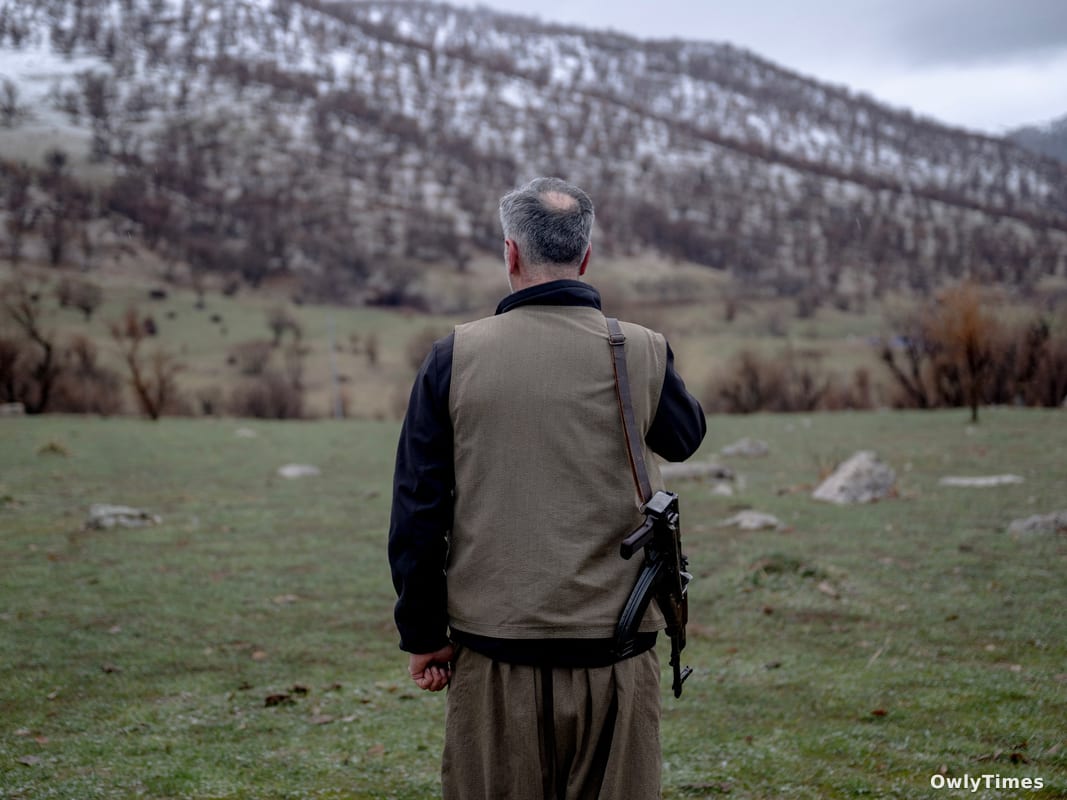
The backdrop to this bizarre claim is crucial. The recent protests in Iran, triggered by economic hardship exacerbated by decades of US sanctions, were already volatile. Simultaneously, the US was reportedly in talks with Kurdish opposition forces, attempting to arm them to incite an uprising. This isn't entirely new territory. The CIA has a long history of working with Kurdish groups in Iraq, dating back to the 2003 invasion. The Kurds, a distinct ethnic group spanning multiple countries, have long sought autonomy, and their strategic location makes them valuable—and often exploited—assets in regional power plays. The fact that Kurdish rebels have historically opposed Tehran and launched attacks within Iran’s Kurdistan province further complicates the picture.
The Numbers Game: Reality vs. Rhetoric
Trump’s claims extend beyond just arming protesters. He also asserted that Iran “slaughtered” some 45,000 civilians during the protests. This figure is wildly at odds with official Iranian reports, which state 3,117 deaths. The Human Rights Activists News Agency (HRANA), a US-based organization, has verified 6,872 deaths and is investigating over 11,000 additional cases, while a UN special rapporteur suggests the death toll could exceed 20,000. While these numbers are significantly higher than the Iranian government’s figures, they are still far removed from Trump’s claim of 45,000. This discrepancy highlights a familiar pattern: the weaponization of statistics to advance a political agenda, regardless of factual accuracy. It’s a tactic that impacts ordinary Iranians, who are caught in the crossfire of conflicting narratives and escalating tensions.
Why Memphis Manufacturers Are Watching Closely
This isn't just a story for Middle East policy wonks. The potential for a wider conflict in the region has tangible implications for businesses, particularly those involved in global supply chains. Memphis, a major logistics hub, relies heavily on international trade. An escalation of the US-Iran conflict could disrupt shipping lanes, increase energy prices, and create significant uncertainty for manufacturers and distributors. The ripple effects would be felt far beyond Washington and Tehran, impacting everyday consumers through higher prices and potential shortages. The fact that the US was reportedly considering arming Kurdish groups while negotiating with Iran demonstrates a level of strategic incoherence that breeds instability—and instability is bad for business.
The Kurdish Dilemma: Trusting Trump?
The situation leaves Iranian Kurdish opposition groups in a precarious position. As Rudaw reported, these groups are now grappling with whether to trust Trump’s statements, particularly after a Fox News report alleged that “thousands of Iraqi Kurds” had launched an offensive into Iran. The history of US involvement in the region is littered with examples of allies being abandoned or used as pawns, and the Iranian Kurds are acutely aware of this risk. Their denials of receiving US arms, coupled with their skepticism about Trump’s motives, reflect a deep-seated distrust of foreign powers promising support.
Ultimately, the most concerning aspect of this episode is the casualness with which the Trump administration appears to have considered a covert operation that could have easily spiraled out of control. It’s a reminder that even seemingly distant geopolitical conflicts have the potential to impact ordinary lives, from the price of gasoline to the stability of global markets.
Here’s what to watch: In the next six months, keep an eye on the level of coordination between US and Iraqi Kurdish forces along the Iran-Iraq border. If we see a significant increase in joint military exercises or intelligence sharing, it will signal a renewed effort to destabilize Iran through proxy forces—a strategy that carries enormous risks and could easily backfire.