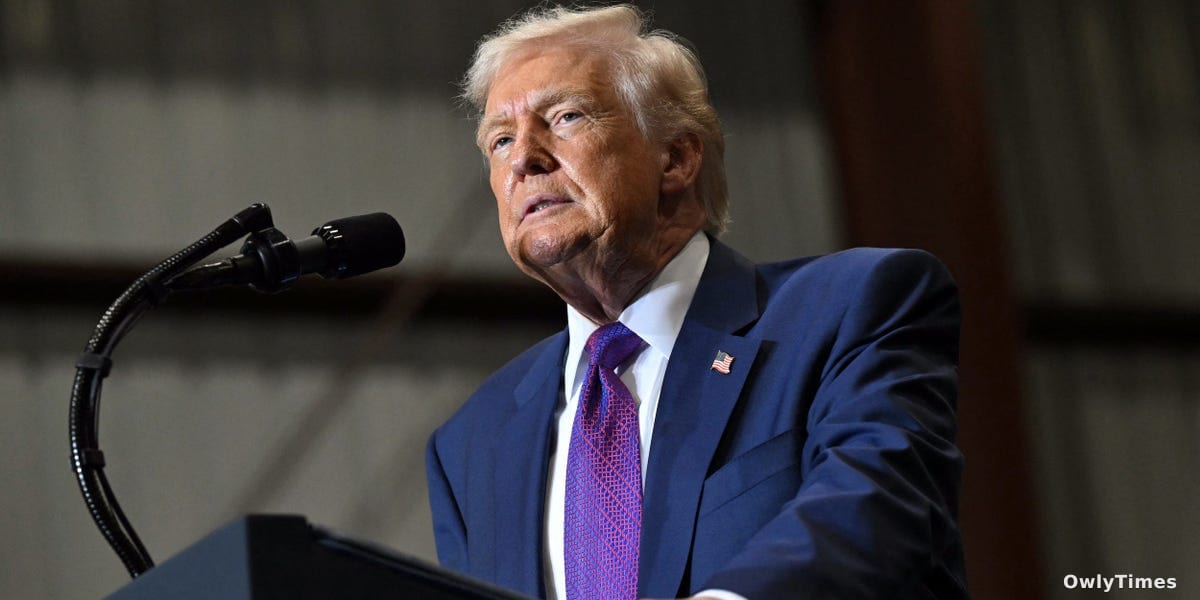

The Supreme Court’s recent 6-3 decision curtailing Donald Trump’s tariff authority wasn’t simply a legal setback; it was a calculated risk assessment by the court, forcing a confrontation over executive power and anticipating the predictable response: escalation. The ruling, striking down tariffs imposed under the International Emergency Economic Powers Act (IEEPA), wasn’t about free trade versus protectionism, but about the boundaries of presidential authority when Congress hasn’t explicitly delegated power. Trump’s immediate reaction – lashing out at the justices and announcing a 10% global tariff under Section 122 – confirms this analysis. He’s not conceding; he’s pivoting to a different, albeit temporary, lever of control, revealing a willingness to test the limits of alternative authorities and openly challenge the legitimacy of the court itself.
The core of the strategic calculus lies in understanding Trump’s consistent use of tariffs as a negotiating tactic and a core component of his political brand. Since 2018, tariffs have generated over $133 billion in revenue for the US Treasury, a figure frequently touted by the administration, despite initial promises of offsetting consumer costs. The Supreme Court ruling, however, specifically targeted tariffs imposed in April 2025 during what Trump termed “Liberation Day,” a broadside against perceived unfair trade practices. This wasn’t a blanket invalidation of all tariffs – those imposed under other authorities remain – but it significantly narrowed the scope of Trump’s unilateral power. The court, under Chief Justice John Roberts, explicitly demanded “clear congressional authorization” for such sweeping actions, a direct rebuke of the administration’s expansive interpretation of executive authority.
Who benefits and who loses from this unfolding situation is a complex equation. Initially, importers and consumers stand to benefit from the removal of the IEEPA-based tariffs, potentially lowering costs. However, the swift implementation of the 10% global tariff, authorized under Section 122, immediately offsets that benefit, creating uncertainty and potentially increasing costs across the board. American manufacturers reliant on imported components are particularly vulnerable. The real winners, in the short term, are those who thrive on disruption and political polarization. Trump solidifies his base by portraying himself as a fighter against a hostile judiciary, and the ensuing economic uncertainty provides a narrative of external forces hindering his agenda. The losers are businesses seeking stability, and potentially, the Republican party, facing a difficult vote on extending the Section 122 tariffs before the midterm elections.
The historical parallel to Lyndon B. Johnson’s confrontations with the Supreme Court over the Vietnam War is striking. In New York Times Co. v. United States (1971), the court limited the government’s ability to suppress publication of the Pentagon Papers, a move Johnson publicly condemned as undermining national security. Like Trump’s attacks on the current court, Johnson’s rhetoric aimed to delegitimize the judiciary and rally public support against judicial overreach. Both instances demonstrate a pattern of executive frustration when constrained by judicial review, and a willingness to frame those constraints as politically motivated. However, Johnson ultimately lacked the political capital to fundamentally alter the court’s trajectory. Trump, with a fiercely loyal base and a demonstrated ability to reshape the political landscape, presents a different challenge.
See the original Business Insider story for the full account.
The administration’s fallback to Section 122 tariffs is a temporary fix, lasting only 150 days without congressional extension. This is the critical vulnerability. A vote to extend these tariffs just months before the midterms would be politically fraught, forcing moderate Republicans to choose between supporting Trump’s trade agenda and potentially alienating voters concerned about rising costs. Treasury Secretary Scott Bessent’s dismissive comment about a potential refund process – suggesting it would be a “corporate boondoggle” – reveals a calculated attempt to downplay the financial implications and deflect criticism. The question isn’t whether refunds could be issued, but whether the administration will actively pursue legal avenues to avoid them, further escalating the conflict with the court.
The political chess move to watch next isn’t the implementation of the 10% tariff, but the administration’s strategy for navigating the 150-day window. Will Trump attempt to strong-arm Congress into extending the Section 122 tariffs, or will he seek alternative legal authorities, potentially triggering another legal challenge? More importantly, will he continue to publicly attack the legitimacy of the Supreme Court, and if so, will his appointees, Justices Amy Coney Barrett and Neil Gorsuch, publicly defend their decision, risking a further fracturing of the party? The answer to that last question will reveal the true extent of Trump’s influence and the future of the court’s authority.