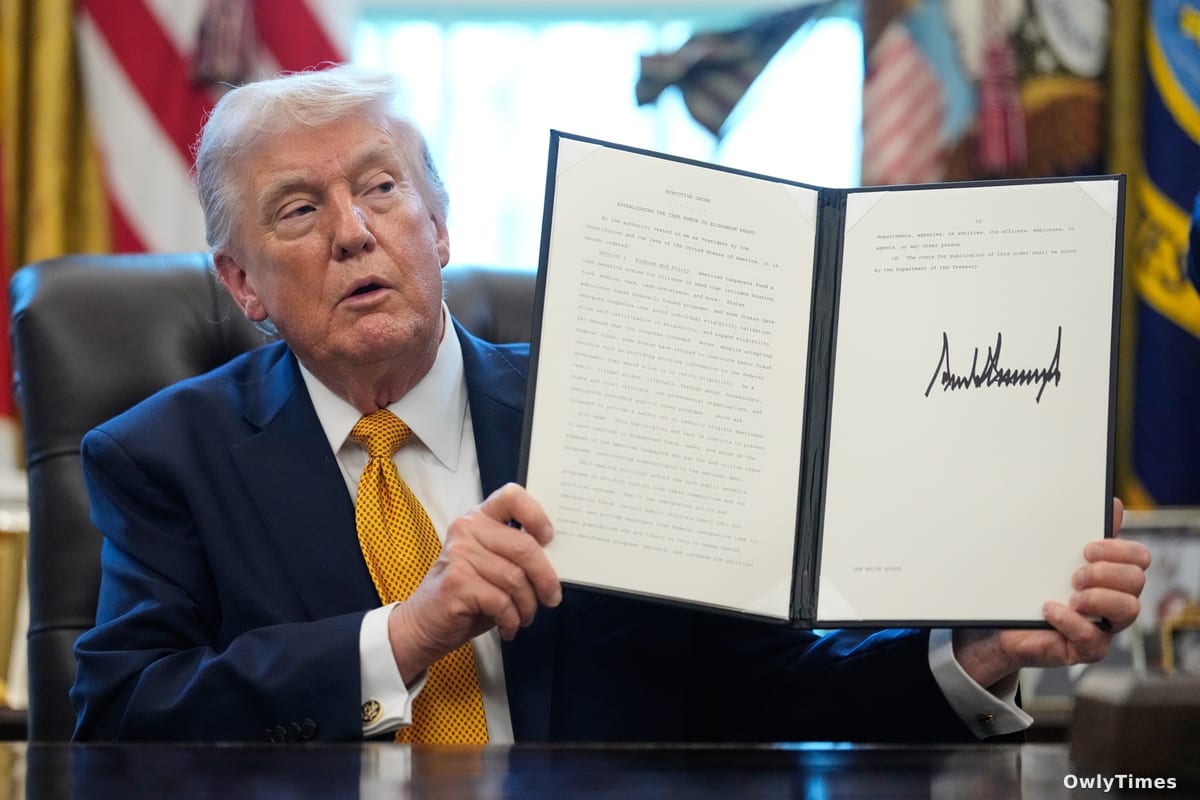

As President Trump reframes his political platform around a self-styled crusade against fraud, the scientific and economic reality of healthcare oversight reveals a stark disconnect. The administration recently established a task force through an executive order aimed at dismantling fraud networks, specifically targeting the Feeding Our Future nonprofit in Minnesota, which allegedly misappropriated nearly $250 million in COVID-19 relief funds. While the President claims, without providing empirical evidence, that similar systemic failures plague states such as California, Illinois, New York, Maine, and Colorado, the actual data on federal oversight suggests a more selective application of justice.
The Disparity Between Prosecution and Pardon
A new report from Protect Our Care, released ahead of today’s House Ways and Means hearing on Medicare fraud, offers a rigorous look at how these initiatives function in practice. The findings suggest that the administration’s aggressive rhetoric against public benefit fraud stands in direct contradiction to its track record of clemency for elite healthcare executives. Specifically, the analysis details 15 pardons granted during Trump’s second term to pharmacists, doctors, and business owners who collectively defrauded the U.S. government of more than $3 billion.
To provide context for these figures, this sum represents roughly 14 times the amount stolen in the Minnesota Feeding Our Future case. The list of pardoned individuals includes Paul Walczak, a Florida man who received a pardon in April 2025 after being sentenced for employment tax crimes, including failing to pay $10 million in taxes. Furthermore, in May 2025, the President pardoned Lawrence Duran, the owner of the American Therapeutic Corporation, who had previously been sentenced to 50 years in prison for a $205 million Medicare fraud scheme—at the time, the largest of its kind.
Limitations of the "Fraud Prevention" Narrative
When evaluating the impact of these policies, one must distinguish between the public framing of "fraud prevention" and the mechanics of the current healthcare environment. The administration’s One Big Beautiful Bill Act (OBBBA), which mandated an estimated $1 trillion in cuts to Medicare and Medicaid, justifies these reductions through the lens of rooting out waste. However, the methodology of these cuts involves placing onerous eligibility hurdles on patients, rather than addressing the institutional fraud committed by providers.
The limitations of this approach are visible in the broader healthcare landscape. According to the Center on Budget and Policy Priorities, current policies are projected to result in 15 million Americans losing coverage or becoming uninsured within the next eight years. Already, Affordable Care Act enrollment has declined by 5 percent this year, representing a loss of over one million patients. Critics, including Vaishu Jawahar, director of policy programs at Protect Our Care, argue that the focus on individual enrollee eligibility acts as a "smokescreen" while high-level systemic fraud remains largely unaddressed by the current administration.
Examining the Institutional Precedent
The current legislative focus on fraud is further complicated by the history of key political figures involved in healthcare policy. Senator Rick Scott (R-FL), a vocal proponent of dismantling the Affordable Care Act, served as CEO of Columbia/HCA until 1997. Following federal raids on his company, it was discovered that the firm had defrauded Medicare and Medicaid through cost-report schemes and physician bribery, eventually paying $1.7 billion in a settlement with the Department of Justice. As Protect Our Care notes, Scott invoked the Fifth Amendment 75 times during the investigation and departed with a severance package exceeding $300 million.
The next steps for this issue will be determined by the ongoing implementation of the OBBBA. With some states, such as Nebraska, accelerating new "fraud prevention" procedures as of May 1, the impact on patient enrollment numbers will serve as a primary metric. As the House Ways and Means Committee continues its hearings, the efficacy of the task force will be measured against whether it targets the systemic provider-side fraud that has historically accounted for the largest losses to the Medicare system, or whether it remains focused on the individual eligibility audits currently driving the decline in insured Americans.





