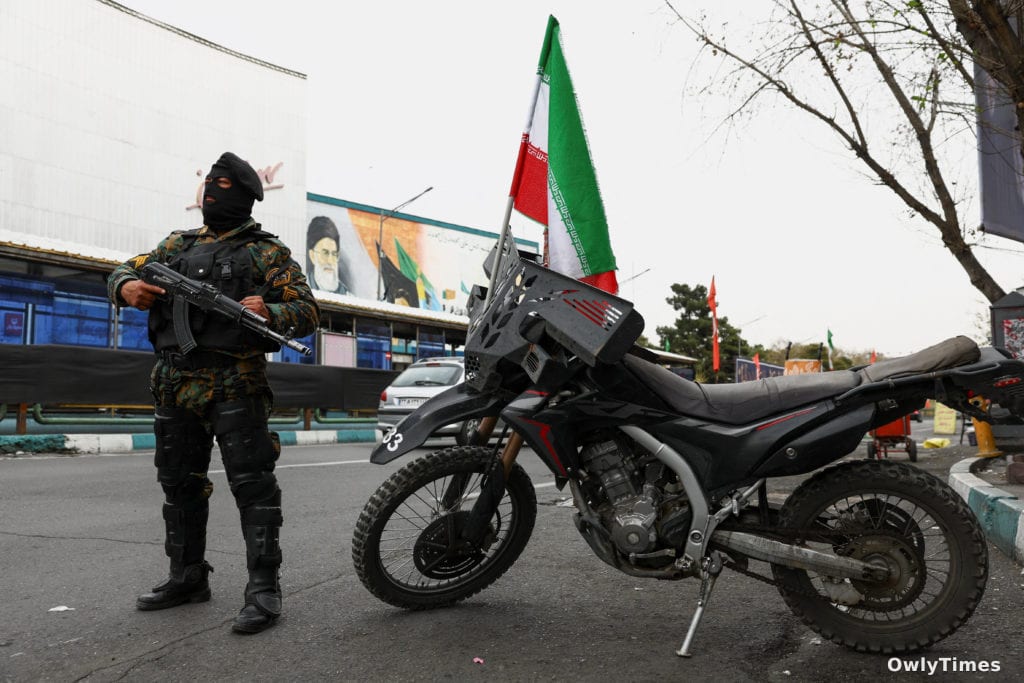

Is the world really bracing for World War III, or are we watching a very public, very dangerous game of chicken fueled by social media and outdated geopolitical assumptions? The escalating tensions between the U.S. and Iran over the Strait of Hormuz aren’t about oil, or even regional dominance – not primarily, anyway. The real story here isn’t a sudden escalation of conflict, it’s the terrifyingly clumsy intersection of a former reality TV star’s communication style with the infrastructure of global security. Donald Trump’s use of Truth Social to announce a five-day extension on a deadline for Iran to reopen the Strait of Hormuz isn’t just unorthodox; it’s a symptom of a deeper problem: the erosion of established diplomatic channels and the elevation of impulsive, performative signaling.
A Straitjacket on Diplomacy
The Strait of Hormuz, a narrow waterway connecting the Persian Gulf to the Arabian Sea and the Indian Ocean, is arguably the world’s most important chokepoint for oil. Roughly 20% of global oil supply passes through it daily, according to the U.S. Energy Information Administration – a figure that dwarfs the disruption caused by even major pipeline outages. Trump’s initial threat of strikes against Iranian power plants, followed by the oddly specific deadline delivered via social media, wasn’t a calculated military strategy; it was a pressure tactic designed for a media cycle. The fact that it almost worked – that the world collectively held its breath – is far more alarming than the threat itself. This isn’t statecraft; it’s brinkmanship conducted via app.
Drawn from PBS.
The immediate impact, even with the five-day extension, is already being felt by ordinary consumers. Oil prices jumped nearly 4% on Monday, a spike that translates directly into higher gasoline costs at the pump and increased shipping expenses for everything from electronics to clothing. While a 4% increase doesn’t trigger a recession, it’s a tangible reminder that geopolitical instability isn’t an abstract concept confined to cable news. It’s a tax on everyday life. And the uncertainty is arguably more damaging than the price increase itself, as businesses hesitate to invest and consumers postpone purchases.
The Illusion of Negotiation
Trump’s claim of a potential resolution, coupled with denials from Iranian officials, highlights a critical disconnect. While back channels undoubtedly exist – they always do, even between adversaries – the public posturing makes genuine negotiation nearly impossible. Iran’s Supreme Leader, Ayatollah Ali Khamenei, has consistently framed the issue as a matter of national sovereignty and has repeatedly warned against foreign interference in the region. To publicly concede to demands issued on Truth Social would be a political death sentence for any Iranian leader. The U.S. State Department has offered no concrete details about these alleged negotiations, further fueling skepticism. The entire scenario feels less like a diplomatic process and more like a carefully choreographed performance designed to project strength – or, perhaps, to distract from domestic political pressures.
The situation is further complicated by the existing sanctions regime imposed on Iran by the U.S. These sanctions, initially implemented in response to Iran’s nuclear program, have crippled the Iranian economy and contributed to widespread social unrest. While the Biden administration has expressed a willingness to re-enter the 2015 nuclear deal, negotiations have stalled, and the economic pressure on Iran continues to mount. This creates a volatile environment where miscalculation or escalation is all too easy. The U.S. Navy’s increased presence in the Persian Gulf, while intended as a deterrent, also raises the risk of accidental confrontation.
Beyond Oil: The Real Stakes
The focus on oil obscures a more fundamental issue: the control of maritime trade routes. China, a major importer of Middle Eastern oil, is increasingly reliant on the Strait of Hormuz. Any disruption to shipping would have a significant impact on the Chinese economy, and Beijing has a vested interest in maintaining stability in the region. This is why China has been quietly engaging with both the U.S. and Iran, attempting to mediate a solution. But China’s involvement also adds another layer of complexity to the situation, as it seeks to protect its economic interests and expand its influence in the Middle East.
The real story here isn't about securing oil flows – it's about the shifting balance of power in a multipolar world. The U.S. is no longer the sole guarantor of security in the Middle East, and its ability to dictate terms is diminishing. Iran, emboldened by its growing ties with China and Russia, is increasingly assertive in its regional ambitions. And the risk of a miscalculation, triggered by a tweet or a misinterpreted signal, is higher than ever.
Looking ahead, expect this pattern of impulsive escalation and last-minute de-escalation to continue. The underlying tensions won’t disappear, and the reliance on social media as a primary communication channel will only exacerbate the risk of unintended consequences. The question isn’t if another crisis will erupt, but when – and whether the world will be lucky enough to avoid a full-blown conflict. Watch closely for a shift in rhetoric from Trump towards emphasizing a “win” for the U.S., even if that “win” is merely a face-saving agreement that doesn’t address the core issues. That’s when the real danger will begin.