
Is the transatlantic alliance about to unravel, not from some grand geopolitical shift, but from a series of increasingly petty refusals? While headlines scream about the US-Israel war on Iran and potential escalation, the real story here isn't the conflict itself – it's the blatant, growing unwillingness of America’s supposed allies to play along. President Donald Trump’s long-held skepticism of NATO isn’t a future threat; it’s actively being validated by a cascade of “no’s” from European capitals, turning a simmering transatlantic tension into a full-blown crisis of confidence.
The situation isn’t a unified front of opposition, but a patchwork of denials and qualified agreements that collectively paint a damning picture. Spain, already the most vocal European opponent of the war, has outright closed its airspace to US military planes involved in the conflict, a move that prompted a direct threat of trade cuts from Trump. Italy initially denied US bombers access to a base in Sicily, though quickly attempted to downplay the incident as a case-by-case evaluation. Even the United Kingdom, historically Washington’s closest partner, is limiting its support to defensive missions – striking Iranian sites only if British interests are directly attacked, as Prime Minister Keir Starmer bluntly stated: “This is not our war.” France, meanwhile, drew Trump’s ire by refusing to allow US planes carrying weapons to Israel to fly over its territory.
This piece references the Al Jazeera report.
This isn’t simply about military logistics; it’s about a fundamental disagreement on the purpose of the alliance. Secretary of State Marco Rubio articulated the core of the issue during an interview with Al Jazeera, questioning whether NATO is merely a “defending Europe” club, or a mutual security pact with broader obligations. His implication – that a one-way street isn’t a very good arrangement – underscores the growing sentiment that the US is bearing a disproportionate burden for global security. The numbers bear this out. US military spending consistently accounts for over 70% of NATO’s total defense expenditure, a figure that has remained stubbornly high for decades despite repeated calls for European allies to increase their contributions. This imbalance has fueled Trump’s narrative of freeloading allies, and now, that narrative is gaining traction.
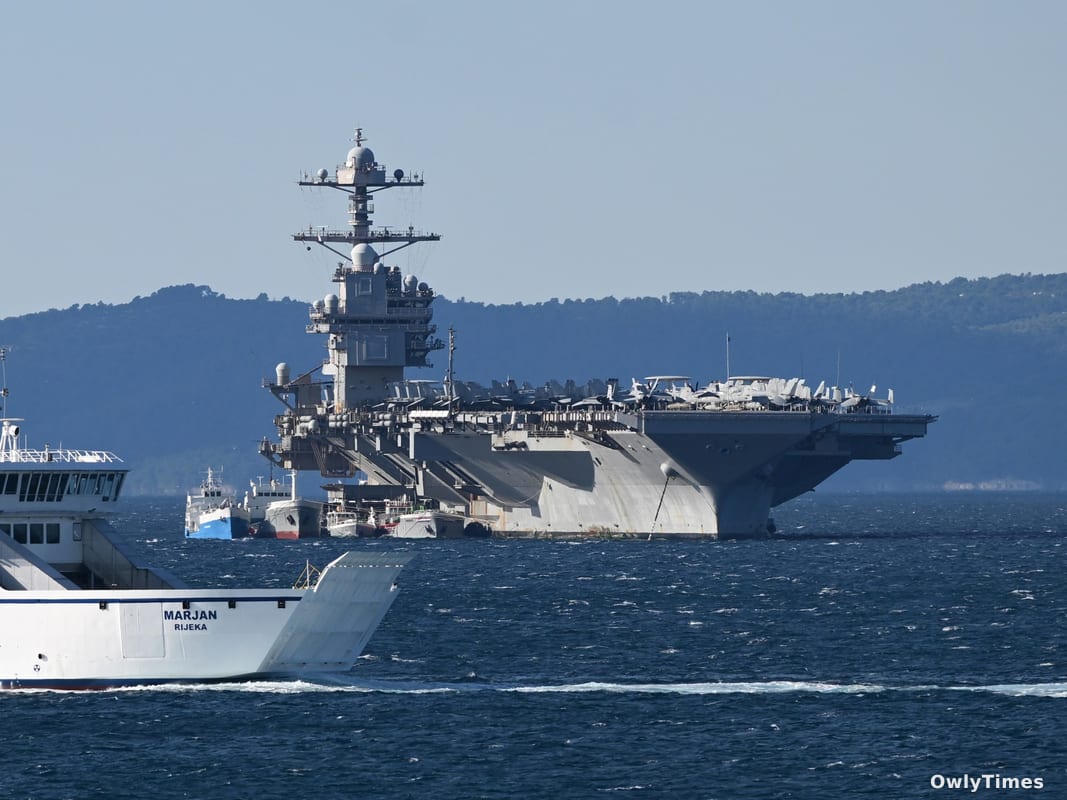
The standoff extends beyond airspace and bases to the critical Strait of Hormuz. Trump’s demand for a naval coalition to secure the waterway – through which roughly 20% of global oil and gas passes – has been met with a resounding chorus of “no’s” from Italy, the UK, France, Greece, and Germany. German Defence Minister Boris Pistorius succinctly summarized the European position: “This is not our war. We have not started it.” The irony is palpable: Trump is essentially demanding that European nations solve a problem – a blocked waterway impacting global energy prices, which have risen by up to 60% in some regions – that the “powerful US Navy” apparently cannot handle alone, as one unnamed European official pointed out. The economic repercussions are already being felt, with shipping disruptions and potential shortages looming. France is attempting to proactively organize a post-conflict mission to reopen the strait with 35 unnamed countries, a tacit acknowledgement that the current situation is unsustainable.
The danger isn’t just economic. Experts like Samir Puri, a visiting lecturer at King’s College London, warn that Trump’s increasingly hostile rhetoric, amplified by his MAGA base, could escalate the situation further. The “visceral anger” voiced by Trump and figures like Defense Secretary Pete Hegseth risks creating a self-fulfilling prophecy, where a weakened NATO becomes a reality not through strategic calculation, but through sheer force of personality and political momentum. The suggestion that allies should simply “TAKE” the Strait of Hormuz, as Trump posted on Truth Social, isn’t just bluster; it’s a glimpse into a worldview where alliances are transactional and respect for international norms is secondary to perceived national interests.
Looking ahead, watch for a significant shift in US foreign policy following the November election. If Trump wins a second term, expect a deliberate dismantling of the NATO framework, not through a formal withdrawal, but through a slow strangulation of cooperation and a relentless pursuit of bilateral deals. The question isn’t if NATO will change, but how dramatically, and whether European nations will finally be forced to confront the uncomfortable reality that relying on American security guarantees is no longer a viable strategy. The next six months will reveal whether the current wave of refusals is a temporary protest, or the first domino in the collapse of a 75-year-old alliance.