
The political friction surrounding offshore wind development reveals a fundamental strategic dilemma for the Republican Party: how to balance the populist, anti-regulatory fervor of President Donald Trump with the localized economic imperatives of swing-district lawmakers. By framing clean energy as a "Green New Scam," the administration is prioritizing ideological branding, yet this posture creates an acute vulnerability for representatives in coastal regions who depend on large-scale infrastructure projects to anchor their local economies. The tension is not merely environmental; it is a cold calculation of capital investment and job creation versus partisan loyalty.
The Cost of Ideological Alignment
Who benefits from the administration’s current stance? Primarily, the political base that views renewable energy as a cultural wedge issue. Who loses? Districts like the one represented by Jen Kiggans, where the $11.5 billion Coastal Virginia Offshore Wind project serves as a cornerstone for regional growth. When the administration orchestrated the cancellation of nearly $35 billion in U.S. clean energy projects last year—according to data from the business group E2—the economic damage was not distributed equally. Republican-held districts bore nearly twice the burden of these lost investments compared to Democratic districts, placing lawmakers like Kiggans in the crosshairs of a self-inflicted economic downturn.
The contradiction in Kiggans’ position is stark. She has positioned herself as a champion of local energy interests, yet she voted for legislation to gut the very tax credits that underpin the industry. Her defense—that she prioritized a broader package for tax relief and naval investment—highlights the precarious tightrope walked by frontline Republicans. As Stephen Farnsworth of the University of Mary Washington notes, these representatives are being squeezed by a president whose priorities often conflict with the regional economic realities of coastal Virginia, where there is little political upside to opposing a project designed to supply power to 660,000 homes.
Infrastructure as a Political Chessboard
The conflict over wind energy mirrors the broader struggle for control over regional development, reminiscent of the battle over the Gateway Tunnel project. In that instance, the administration’s attempt to block federal funding for critical transit infrastructure forced Republican Tom Kean Jr. into a public confrontation with his own party’s leadership. The resolution of both the Virginia wind project and the Gateway Tunnel by federal courts underscores a growing trend: when the executive branch attempts to bypass legislative intent to force a political outcome, the judiciary becomes the final arbiter of local economic stability.
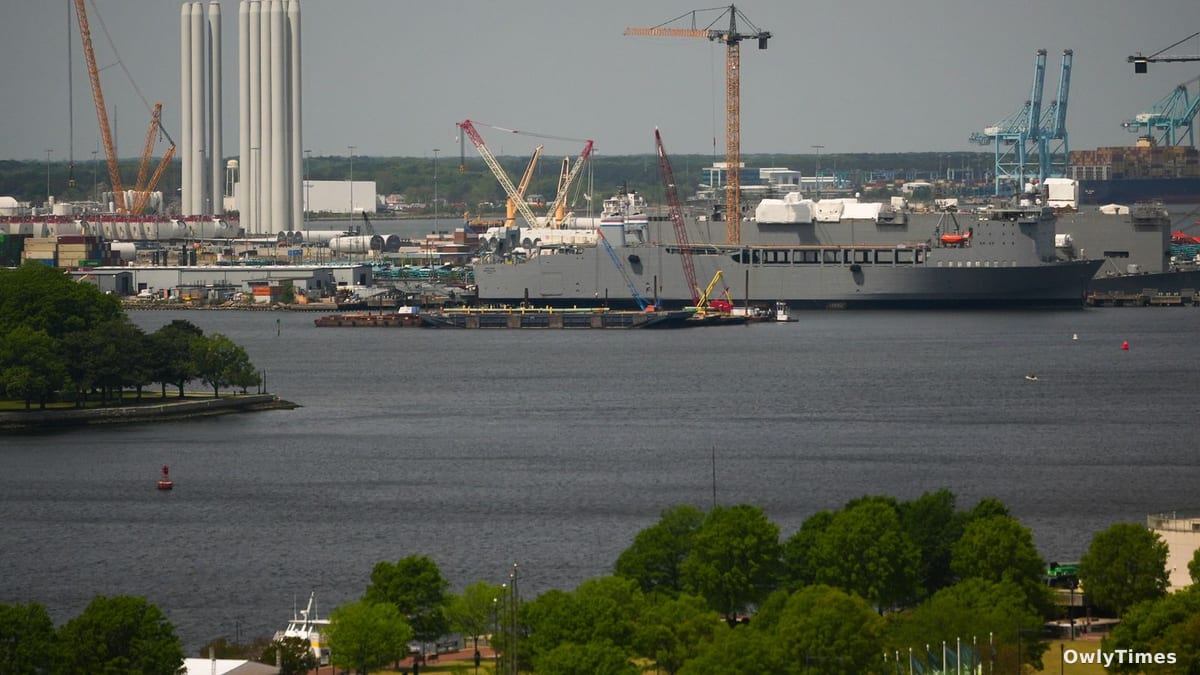
For the Coastal Virginia project, the scale of the investment is significant. With 176 turbines expected to generate 2.6 gigawatts of power, the facility is designed to meet the rising energy demands of the region’s expanding artificial intelligence data centers. The project, which has been in motion since 2013, represents a long-term commitment that is currently being tested by the political volatility of a presidential election year. The assertion by Dan Taylor of the BlueGreen Alliance—that Kiggans risked these 1,000 jobs by supporting the repeal of clean energy credits—serves as the primary line of attack for her political opponents, including Elaine Luria.
The Metric to Watch
The sustainability of this offshore development depends on its ability to bypass further executive interference. With the project now partially online and delivering its first power to the grid, the focus shifts to the reliability of these connections. The next reading of the project’s grid contribution metrics will demonstrate whether the infrastructure can withstand both the environmental conditions of the Atlantic and the unpredictable shifts in federal energy policy. Whether the project continues to scale or hits another regulatory wall will indicate if local economic interests can truly override the administration's "anti-wind" mandate.





