
The $5,300 Disconnect: Why Tulane’s Graduate Pipeline Favors Business – And What It Costs Other Disciplines
A stark contrast in attendance – packed STEM career fairs versus a near-empty graduate school event with fewer than 20 students – reveals a critical imbalance in resource allocation at Tulane University. While the university successfully cultivates a robust pipeline for business graduate programs, other disciplines are demonstrably underserved, a disparity highlighted by the spring 2025 Career Center events. This isn’t simply a matter of student interest; it’s a consequence of deliberate investment, and the numbers tell a clear story. Tulane’s fundraising goal of $5,300 to support student journalism underscores the broader need for institutional investment in all areas of academic pursuit, not just those with established revenue streams.
This piece references the tulanehullabaloo.com report.
The spring 2025 Career Center events – a STEM career fair and a graduate school fair – served as a revealing case study. The STEM fair overflowed into the Kendall Cram Lecture Hall and Qatar Ballroom, indicating strong employer engagement and, crucially, significant student turnout. In contrast, the graduate school fair was sparsely populated, with attendees reportedly not even adhering to professional dress codes. This isn’t a reflection of waning interest in graduate studies overall; rather, it’s a symptom of uneven promotion and support. The fact that Tulane University Law School was the only law school present, and Test Masters the sole LSAT prep course, speaks volumes about the limited visibility afforded to non-business graduate pathways.
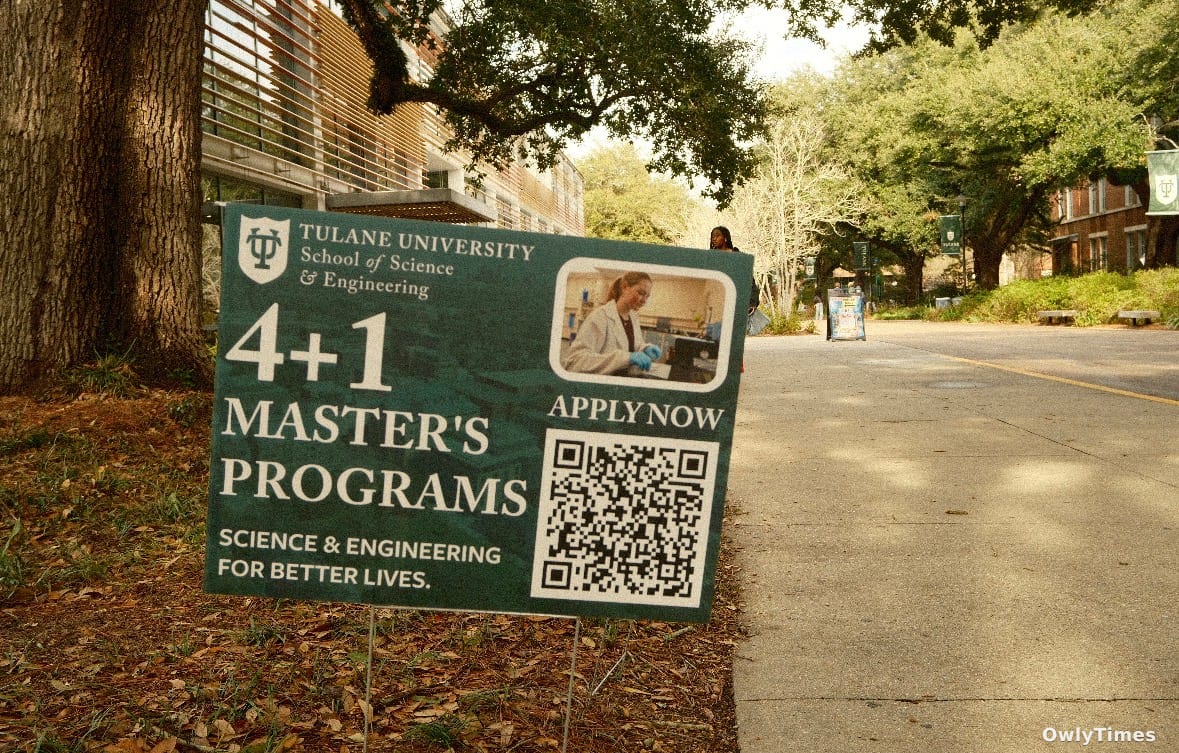
Freeman School of Business has demonstrably prioritized graduate program visibility through “targeted events, polished marketing materials, alumni panels and networking opportunities.” This isn’t accidental. It’s a strategic investment in a revenue-generating sector. While the exact revenue generated by Freeman School graduate programs isn’t publicly available, the average tuition for a Tulane MBA is approximately $72,000, suggesting a substantial financial incentive for continued promotion. Compare this to the comparatively minimal marketing efforts directed towards programs in fields like English, history, or political science, and the imbalance becomes glaring. The university’s recent addition of a law student talk and a School of Science and Engineering master’s discussion – while positive steps – represent incremental changes against a backdrop of systemic prioritization.
The consequences of this imbalance extend beyond academic departments. Limited visibility for graduate programs in the humanities and sciences impacts the university’s ability to attract top-tier researchers and secure grant funding. Doctoral programs, in particular, suffer from a lack of dedicated events and limited promotion of post-graduate research centers. This creates a self-perpetuating cycle: fewer students pursue advanced degrees in these fields, leading to reduced research output, diminished prestige, and ultimately, less institutional investment. The current situation effectively relegates these disciplines to a peripheral role within Tulane’s academic ecosystem. Even LSAT preparation is currently limited to students in legal studies within the business school, further cementing the preference.
This isn’t a question of Tulane’s capacity to build strong graduate pipelines – the success of the Freeman School demonstrates that capability. The challenge lies in extending that same level of commitment and resources to all disciplines. The university’s stated goal of becoming a major intellectual hub in New Orleans requires a broader vision than simply maximizing revenue from business programs. If Tulane genuinely values diverse academic futures, it must address this imbalance and ensure that support for graduate study is equitable across the board. The current $5,000 annual website hosting cost, funded through student contributions, pales in comparison to the potential return on investment from a fully supported graduate ecosystem across all fields.
What this means for your wallet: As a prospective student, consider whether Tulane’s institutional priorities align with your academic goals. If you’re pursuing a field outside of business, be prepared to proactively seek out resources and networking opportunities. For alumni, the question is whether continued donations should be contingent on demonstrable improvements in support for non-business graduate programs. Watch for a shift in university marketing materials and event programming over the next academic year – specifically, whether Tulane commits to a measurable increase in resources dedicated to graduate pathways beyond the Freeman School of Business.