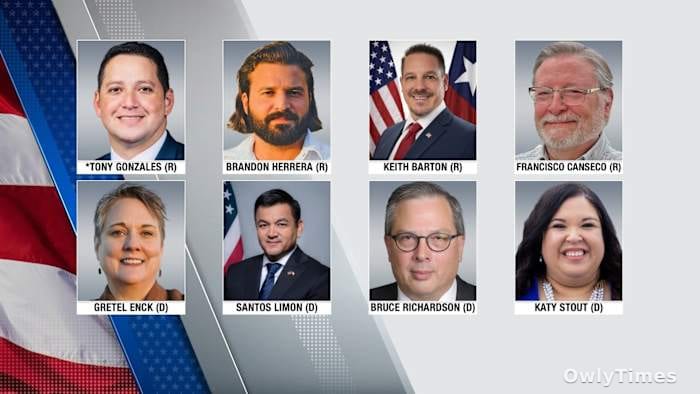

The strategic calculation in Texas’ 23rd Congressional District isn’t about policy debates – it’s about exploiting a vulnerability. The unfolding primary battle, fueled by allegations of misconduct against incumbent Tony Gonzales, isn’t a spontaneous uprising; it’s a calculated power play leveraging personal scandal to redraw the district’s political map. The sheer volume of challengers – four from each party – isn’t indicative of robust democratic engagement, but rather a scramble to capitalize on a perceived weakness in a district historically trending Republican. The timing, just two years after Gonzales narrowly avoided a runoff in 2024, suggests a coordinated effort to unseat him before he can further consolidate power.
District 23, encompassing 800 miles of the U.S.-Mexico border from San Antonio to El Paso, has long been a political bellwether, flipping between parties in the early 2000s. However, the last decade has seen a firm Republican hold, making Gonzales’ current predicament all the more remarkable. The catalyst is the death of his Uvalde-based aide, Regina Santos-Aviles, and the subsequent reports – now substantiated by the release of sexually explicit text messages – of an affair. Gonzales’ refusal to address these allegations for months isn’t simply a matter of personal privacy; it’s a strategic miscalculation, creating an opening for rivals to paint him as evasive and lacking integrity. Who benefits and who loses is stark: Gonzales loses credibility and support, while challengers gain an opportunity to position themselves as moral alternatives.
See the original ksat.com story for the full account.
The involvement of Donald Trump adds another layer of complexity. While the former President has endorsed Gonzales, the calls for his resignation from the other three Republican candidates – Keith Barton, Francisco “Quico” Canseco, and Brandon Herrera – demonstrate a willingness to defy Trump’s wishes, a rare occurrence within the current GOP landscape. Canseco’s admission that he was actively recruited to challenge Gonzales after hearing of the scandal underscores the deliberate nature of this primary fight. He framed his decision as a response to a crisis, but it’s fundamentally a calculated move to reclaim a seat he previously held from 2011 to 2013. This echoes historical precedents of intra-party challenges launched on the grounds of ethical failings – the 1987 challenge to House Speaker Jim Wright by fellow Democrats, for example, which ultimately led to Wright’s resignation.
The Democratic side presents a different dynamic. While the four candidates – Gretel Enck, Santos Limon, Katy Padilla Stout, and Bruce Richardson – lack the name recognition of some of their Republican counterparts, their collective focus on issues like affordability, healthcare, and immigration reflects a broader attempt to appeal to a diverse electorate. Enck’s confidence in flipping the district, despite its recent Republican leanings, suggests a belief that Gonzales’ scandal has fundamentally altered the political landscape. Limon’s second run, building on his 2024 experience, and Padilla Stout’s emphasis on “authenticity” and family concerns, represent attempts to connect with voters on a personal level. However, the Democrats face the significant hurdle of overcoming the district’s established Republican advantage.
Brandon Herrera’s campaign, fueled by a near-win in the 2024 runoff, is predicated on the idea that Gonzales has become vulnerable. His claims of a stronger team, better fundraising, and improved mapping demonstrate a methodical approach to capitalizing on the incumbent’s weaknesses. This mirrors the strategies employed in numerous successful primary challenges throughout American political history, where challengers meticulously build a campaign infrastructure to exploit an opponent’s vulnerabilities. The fact that Keith Barton, a Marine Corps veteran, is focusing on practical issues like water leakage – a significant concern in West Texas – demonstrates an attempt to appeal to voters beyond the scandal, framing himself as a pragmatic problem-solver.
The political chess move to watch next isn’t simply who wins the primary. It’s whether the scandal surrounding Gonzales will continue to dominate the narrative, or if he can successfully reframe the race around traditional Republican issues like border security and economic growth. More specifically, the question is whether the release of the text messages will trigger further investigations or calls for his resignation from within the party, potentially fracturing the Republican base and opening the door for a Democratic upset. The outcome will reveal not only the future of Texas’ 23rd Congressional District, but also the evolving dynamics of political accountability in the age of instant information and relentless scrutiny.





